Kashmir , September 18,2026-For generations, the Kashmir winter has been a slow siege on the Valley’s dairy cattle. From November to March, green fodder disappears under snow, and farmers fall back on dry paddy straw — bulky, low in protein, and poor in digestible energy. Milk yields drop by a third or more. Body condition slips. Calving intervals stretch. The animal that gave twelve litres a day in September is struggling to give seven by January.
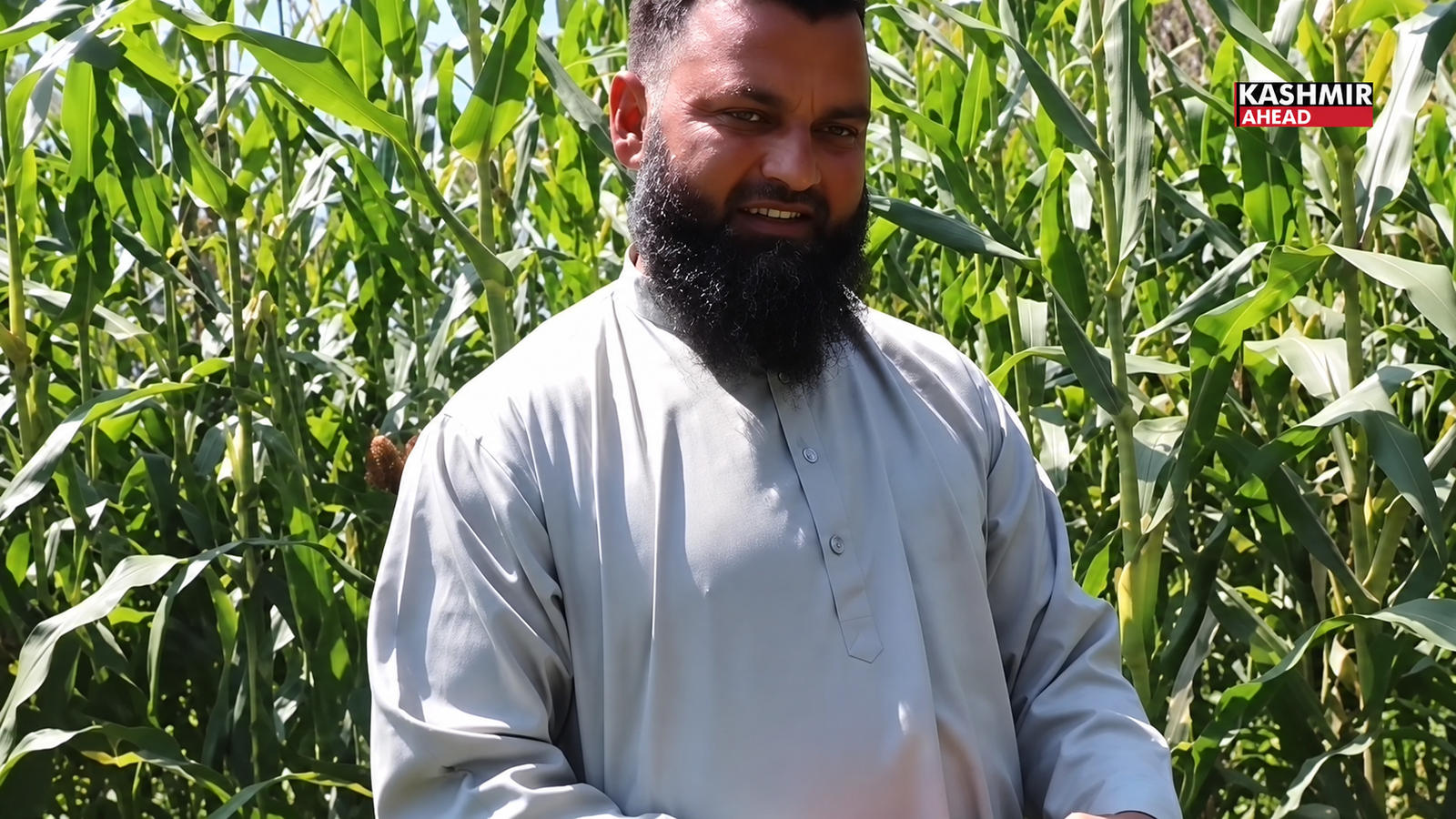
Mukhtar Ahmad Wani, a farmer from Pulwama, is betting that this cycle can be broken. He is setting up a commercial silage unit backed by a subsidy of ₹8.50 lakh under the Holistic Agriculture Development Programme (HADP), applied for through the Union Territory’s digital farmer platforms.
Why silage changes the arithmetic
Silage is green fodder — typically maize, sometimes oats or sorghum — harvested at peak nutritive stage, chopped, compacted to exclude air, and sealed so that lactic acid bacteria ferment it into a stable, sweet-smelling feed. Stored properly in bunkers, bales or bags, it keeps for eight to twelve months without refrigeration.
The nutritional gap is stark. Paddy straw offers roughly 3–4 percent crude protein and poor digestibility. Good maize silage delivers around 7–9 percent crude protein and far higher metabolisable energy, closer to fresh green fodder than to dry stover. For a crossbred cow in mid-lactation, that difference can mean two to four extra litres a day through the coldest months — plus better fertility and lower veterinary costs.
There is a second gain that rarely gets counted: time. Kashmiri households, often women, spend hours through winter arranging and carting fodder. A bagged silage supply chain collapses that labour into a purchase decision.
The HADP context
HADP is a flagship initiative of the J&K government, launched in March 2024, aimed at revamping the agricultural sector through 29 focused projects covering seed quality enhancement, niche crop cultivation, mechanisation, and market linkage development. Animal husbandry sits squarely inside that architecture, and fodder security is one of its acknowledged weak links.
The programme’s scale is no longer notional. HADP has facilitated the establishment of over 1.11 lakh units across all twenty districts of Jammu and Kashmir, benefiting more than 74,500 farming families. Officials have argued the economics hold up: a government subsidy of around ₹450 crore is expected to be recovered within roughly 2.6 years through enhanced farm incomes.
What makes Wani’s case representative rather than exceptional is the route he took. Applications, scrutiny and sanction now move through the UT’s digital rails — the Kisan Sathi Portal, which has handled some 3.5 lakh applications with a 78 percent approval rate, and the Daksh Kisan Learning Management System, with 1.7 lakh course enrolments and 82,000 farmers having completed courses. Around 500 Kisan Khidmat Ghars now operate as one-stop service hubs. The old model — a farmer travelling repeatedly to a district office, uncertain where his file sat — is being replaced by something trackable.
What still has to work
A silage plant is not self-executing. Wani will need a reliable maize supply, which means contracting acreage in a valley where land holdings are small and fragmented. He will need a chaff cutter, baler and wrapper in working order at harvest, when timing windows are days, not weeks. And he will need buyers — dairy farmers who must be persuaded that paying for feed they once gathered free is an investment rather than a cost.
That last barrier is cultural more than economic, and it usually falls only after neighbours watch one herd come through winter in visibly better shape.