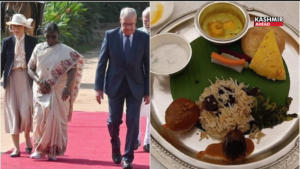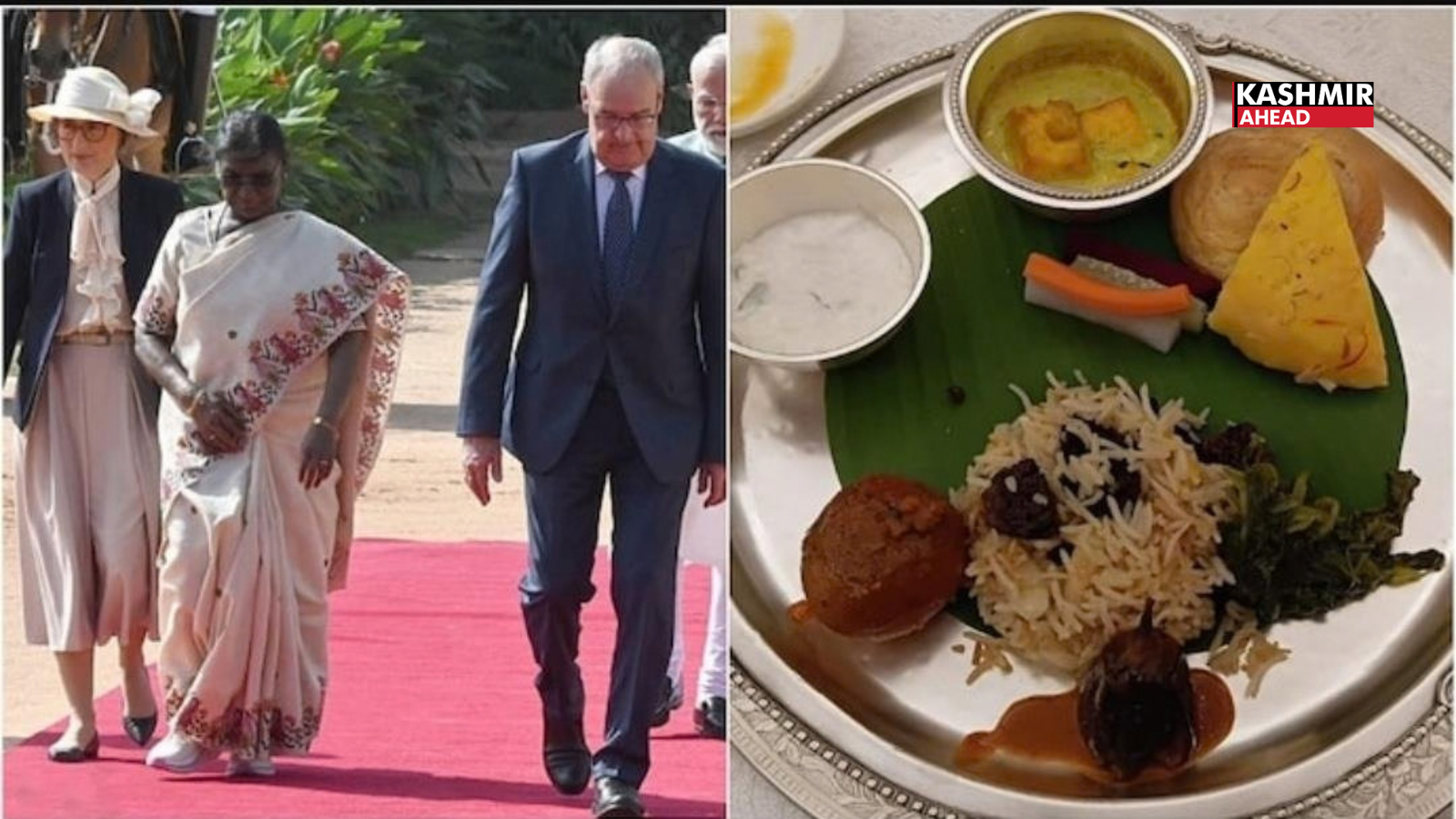
Kashmir, October 7,2026- The culinary traditions of Jammu & Kashmir and Ladakh found a prestigious platform at Rashtrapati Bhavan, where a menu rooted in Himalayan flavours was served at the banquet hosted for Swiss President Guy Parmelin.
The carefully curated spread brought together dishes from the Kashmir Valley and the high-altitude cold desert of Ladakh. It offered the visiting dignitary and his delegation a taste of regions known for both their scenic beauty and their distinctive food culture.
A menu steeped in tradition
Among the highlights was Nadur Kebab, a delicacy made from lotus stem, a staple of Kashmiri kitchens. Lightly spiced and crisp on the outside, the dish reflects the region’s long relationship with its lakes and waterways, where the lotus grows in abundance.
Alongside it was Haakh, the leafy green that features in almost every Kashmiri household. Slow-cooked with simple seasoning, it is often described as the everyday soul food of the Valley and a reminder that the region’s cuisine draws strength from humble, locally grown ingredients.
Dum Oluv, baby potatoes cooked slowly in a spiced gravy, represented the dum style of cooking central to Kashmiri cuisine. In this method, ingredients are sealed and simmered gently so the flavours deepen over time.
Sweet notes from the mountains
The dessert course gave equal prominence to the region’s sweet traditions. Shufta, a Kashmiri sweet made with dry fruits, aromatic spices and syrup, is traditionally prepared for festive occasions and special gatherings. Its inclusion underlined the importance of hospitality in Kashmiri culture, where guests are welcomed with generous spreads.
From Ladakh came Phaymer, a traditional sweet linked to the region’s barley-based food heritage. Barley has sustained communities in the trans-Himalayan landscape for centuries, and its presence on the menu brought attention to a cuisine shaped by altitude, climate and resourcefulness.
Kahwa to close the evening
The meal concluded with Kashmiri Kahwa, the fragrant green tea infused with saffron, cinnamon, cardamom and almonds. Served warm, the beverage is closely associated with Kashmiri hospitality and is often offered to guests as a gesture of welcome and goodwill.
Cuisine as cultural diplomacy
State banquets at Rashtrapati Bhavan are widely seen as occasions where food becomes a form of cultural diplomacy. By presenting regional specialities on such a stage, India highlights the diversity of its culinary landscape and the heritage of communities that are often less visible in international conversations about Indian food.
Featuring dishes from both J&K and Ladakh also reflects the shared Himalayan identity of the two regions, where ingredients such as dry fruits, saffron, barley, greens and lotus stem shape everyday cooking. Their appearance at an official banquet is a recognition of the artisans, home cooks and farmers who keep these traditions alive.
Food historians note that Kashmiri cuisine, shaped by Central Asian, Persian and local influences, is among the most distinctive in the subcontinent. Ladakhi cuisine, influenced by Tibetan and Himalayan traditions, offers a different but equally rich perspective. Showcasing both on one menu gave guests a broader sense of the region’s diversity.
Strengthening ties
The banquet formed part of the engagements during President Parmelin’s visit, which is aimed at strengthening the relationship between India and Switzerland. Both countries share a deep appreciation for mountain landscapes, and the symbolism of Himalayan cuisine being served to a guest from the Alps was not lost on observers.
For the people of Jammu & Kashmir and Ladakh, the recognition carries a sense of pride. Local chefs, food enthusiasts and heritage advocates have long argued that the region’s cuisine deserves wider national and global attention, and the Rashtrapati Bhavan menu marks a notable moment in that effort.