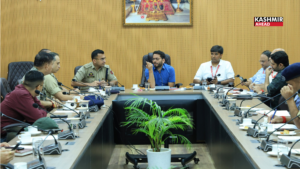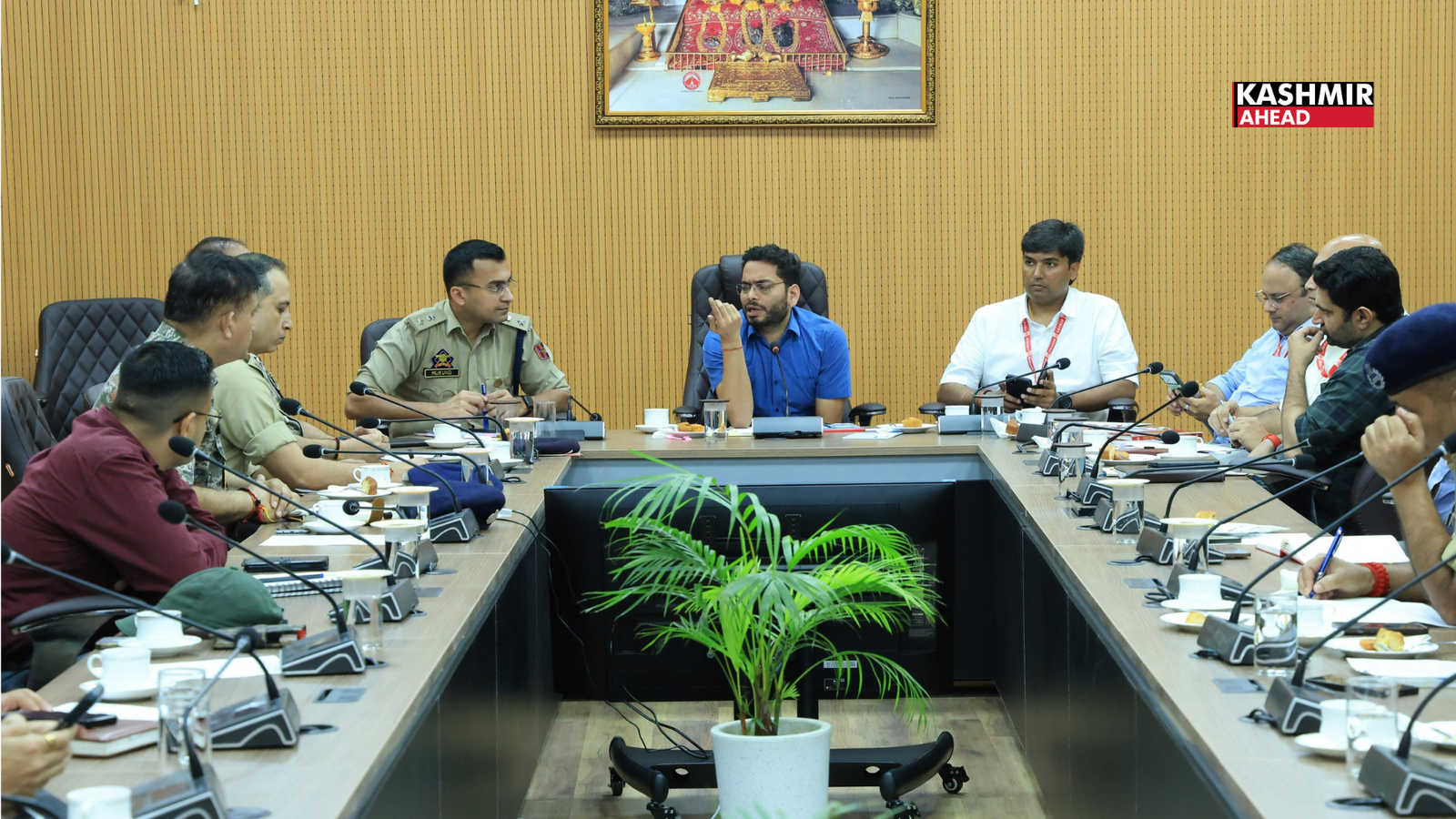
Katra, October 6,2026-With the Shardiya Navratra festival approaching, the Shri Mata Vaishno Devi Shrine Board (SMVDSB) has begun a round of preparatory reviews to ensure a smooth, safe and comfortable pilgrimage. Chief Executive Officer Sachin Kumar Vaishya chaired a coordination meeting with local civil authorities and security agencies to assess readiness for the busy festival period.
The meeting brought together representatives of the district administration, police, paramilitary and other security agencies, and the departments responsible for civic services in the Katra region. The CEO stressed that managing a pilgrimage of this scale cannot be left to one agency. It depends on close coordination between the Shrine Board and the various arms of government.
Shardiya Navratra is among the most important periods in the Vaishno Devi calendar. Over nine days, devotees from across India and abroad travel to the shrine in the Trikuta hills, and the crowds typically rise well above the usual daily flow. The base camp at Katra, the track to the Bhawan, and the surrounding town all come under heavy pressure during this time.
Security and crowd management were central to the discussion. Agencies were asked to ensure round-the-clock vigilance along the yatra route, at registration counters, transit points and the base camp. Congestion at narrow stretches or around the Bhawan can quickly become a safety risk, so coordinated deployment, surveillance and clear communication between agencies are essential.
Traffic and transport arrangements also came under review. Katra’s road access, parking areas and approaches to the base camp must handle a surge of vehicles, and officials typically examine traffic diversions, parking capacity and the movement of buses and taxis so that pilgrims can reach the starting point without long delays.
Health and emergency response form another important safety net. Medical aid posts, ambulances and rapid-response teams along the track are particularly vital for elderly pilgrims and those with health conditions. Readiness for emergencies, including landslides or bad weather in the hills, is also part of the preparation. Sanitation, clean drinking water, waste management and adequate lighting along the route matter even more when footfall is high, and civic agencies were encouraged to keep these services running without interruption.
The Shrine Board has long worked to make the yatra easier through its facilities, including online registration, helicopter services, battery cars, ropeway connectivity and resting areas along the track. Officials emphasized that these services should function efficiently during Navratra, with enough staff to guide and assist devotees. Pilgrims are generally advised to complete their registration in advance, carry valid identification, and follow instructions from security and Shrine Board personnel.
The yatra is also the backbone of Katra’s economy. Hoteliers, shopkeepers, transporters, pony and palanquin operators, and countless small vendors depend on a steady flow of pilgrims. A well-managed Navratra season benefits them directly, which gives local authorities an added stake in ensuring that arrangements hold up.
Mr. Vaishya urged all agencies to work in close coordination, to stay alert, and to resolve any gaps in good time rather than during the peak rush. Departments were asked to keep staff and resources ready and to maintain constant communication with one another and with the Shrine Board’s control room.
As the festival draws near, such reviews serve as a final check on a complex operation. For the lakhs of devotees who undertake the climb to the holy cave each year, the real measure of success is a yatra that is safe, orderly and spiritually fulfilling.