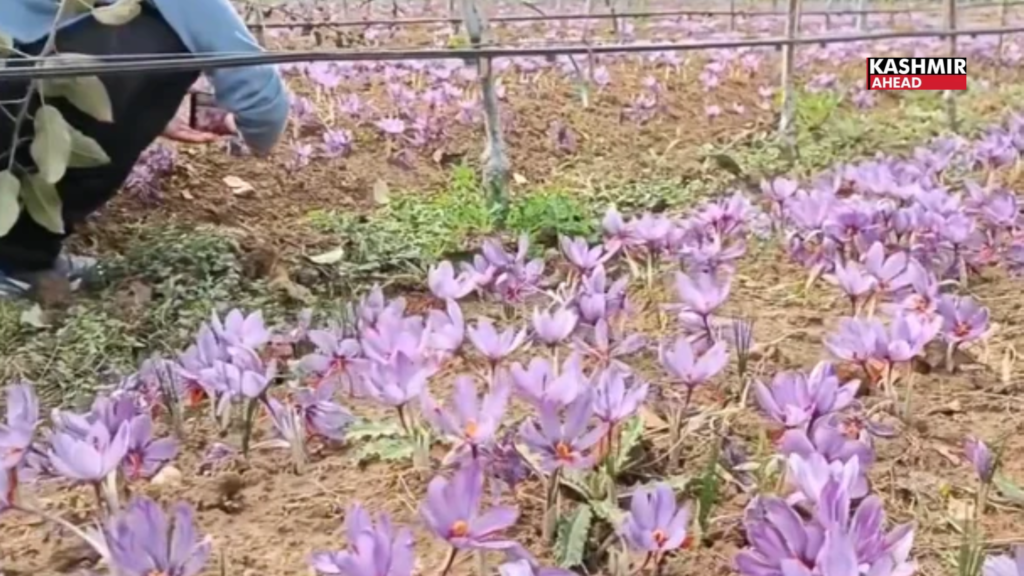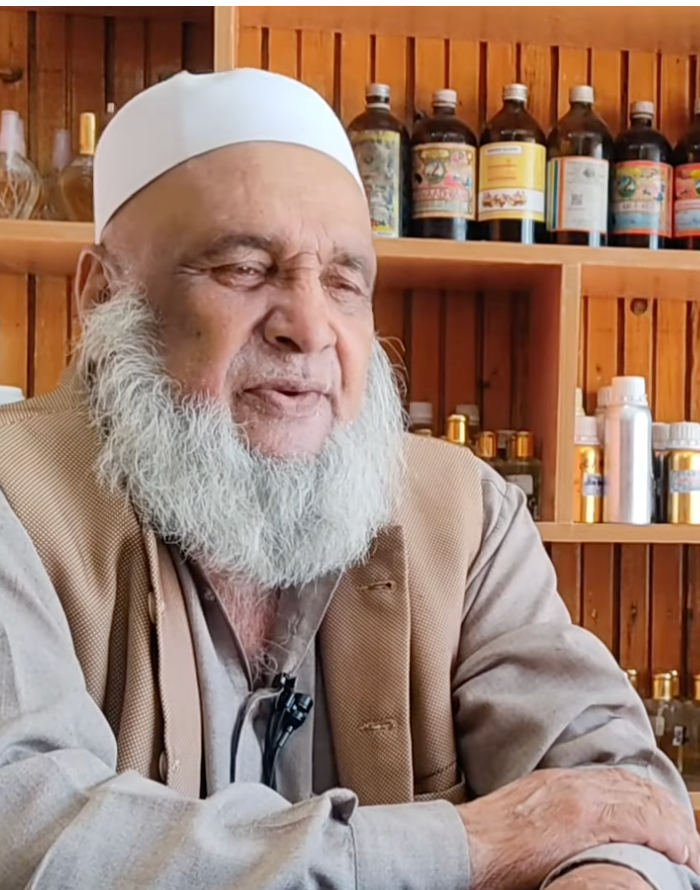
Kashmir,October 8,2025-Nestled in the heart of Srinagar’s ancient lanes, where the Jhelum River hums softly under wooden bridges, lives Ghulam Nabi Dar, a 68-year-old maestro of ittar—Kashmir’s soulful, alcohol-free perfume. In a world seduced by mass-produced scents, Dar’s workshop is a time capsule, its walls steeped in the aroma of wild roses, saffron, and cedarwood. Here, in a cluttered room lit by a single bulb, he weaves fragrances that carry the whispers of Kashmir’s mountains, a craft passed down through generations like a sacred hymn.Ittar, from the Persian word for fragrance, is no mere perfume—it’s a poem distilled. Unlike commercial sprays that fade in hours, Dar’s blends linger for days, evolving with the wearer’s pulse. His secret lies in the raw materials: delicate marigolds plucked at dawn from Gulmarg’s meadows, musk from high-altitude herbs, and vetiver roots kissed by Himalayan dew. “Each scent tells a story,” Dar says, his eyes crinkling as he stirs a copper deg (still) over a low flame.
“The flowers, the earth—they speak if you listen.”The art of ittar-making, known as deg-bhapka, is a patient dance with nature. Petals and spices are simmered in spring water from the Lidder River, their essence captured in sandalwood oil through bamboo pipes cooled by glacial runoff. The process, unchanged since the days of Mughal emperors, demands precision and reverence. A single batch of Dar’s prized “Saffron Dusk”—a warm, spicy elixir of saffron, amber, and alpine lavender—takes a week to craft, yielding just a handful of vials. These treasures find their way to connoisseurs in Istanbul, Paris, and beyond, each bottle a fragment of Kashmir’s fleeting beauty.Yet, this fragrant legacy is under threat. Climate shifts have disrupted the valley’s ecosystems: unpredictable rains flood iris fields, and warming slopes shrink the yield of rare snow lotuses. Dar’s apprentices, once eager to learn, now chase urban dreams, leaving the craft to age with its master. “My hands know the work, but my heart aches for its future,” he confesses, uncorking a vial of “Moonlit Pine,” a crisp, resinous scent that evokes Kashmir’s snow-draped forests. The government’s “Kashmir Aroma Project” aims to preserve this heritage with training programs and eco-friendly stills, but Dar shrugs.
“No machine can feel the seasons.”Tourists now flock to his shop, drawn by its UNESCO heritage status, sniffing vials like fine wine. For Dar, though, ittar is more than a product—it’s a prayer, a way to bottle Kashmir’s spirit amid its scars of conflict and change. As night falls and the call to prayer echoes over Srinagar, he seals another batch, the air heavy with hope and loss. In every drop, Dar preserves a piece of paradise.