In the last 12 years, particularly since the abrogation of Article 370 in 2019, Jammu and Kashmir (J&K) has undergone a profound transformation. What was once a region marred by instability, isolation, and underdevelopment has emerged as a beacon of progress, peace, and inclusive growth. Under the visionary leadership of Prime Minister Narendra Modi, Union Home Minister Amit Shah, and Lieutenant Governor Manoj Sinha, every household in J&K is now touched by Vikas (development) and dignity. Central schemes have been implemented with full saturation, infrastructure has reached remote corners, and opportunities in health, education, agriculture, tourism, and youth empowerment have redefined lives.
Healthcare has seen revolutionary change with the Golden Ayushman Card (AB-PMJAY SEHAT). Every citizen of J&K is eligible for free medical care up to ₹5 lakh per family annually. Over 85 lakh Golden Cards have been issued, with thousands of hospitals empanelled. Patients from remote areas now access quality treatment for critical illnesses without financial ruin.
Social security nets have expanded significantly. Old-age pensions, widow pensions, and disability support now reach over 10 lakh beneficiaries, with recent enhancements to ₹1,250–₹2,000 per month depending on age. For the first time, transgender persons are covered. Elderly citizens receive regular support, restoring their dignity and security.
Electricity has illuminated even the remotest tribal villages and Bakarwal settlements. Grid connectivity has transformed daily life, powering homes, schools, and livelihoods. The Amarnath Ji Holy Cave now has reliable grid power, enhancing pilgrim safety and experience. Initiatives like PM Surya Ghar Muft Bijli Yojana promise free electricity to households, positioning J&K as a future energy hub.
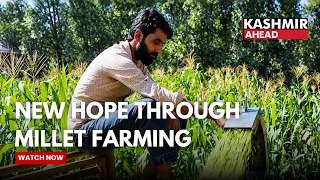
Agriculture and horticulture, the backbone of J&K’s economy, are witnessing a new revolution through the Holistic Agriculture Development Programme (HADP). With a ₹5,013 crore outlay and 29 integrated projects, HADP focuses on high-density plantations, niche crops, seed multiplication, protected cultivation, value addition, and market linkages. Over 92,000 units have been established, generating substantial employment and income. Farmers benefit from direct transfers under PM-KISAN, Kisan Credit Cards, and schemes boosting saffron, apples, cherries, and livestock. Crop diversification and mechanization are pushing incomes higher.
Education has stabilized with uninterrupted schooling. Enrolment ratios have improved, new medical colleges, AIIMS, and infrastructure have been added. Children in far-flung areas now study in better-equipped schools, while scholarships for minorities, SCs, STs, and Pahari students have surged.
Housing dignity comes via Pradhan Mantri Awas Yojana (PMAY). Lakhs of houses have been completed or are under construction in rural and urban areas, providing pucca homes with basic amenities to the poor. Swachh Bharat Mission has made villages ODF+ and plastic-free.
Youth empowerment is a priority. Mission Youth has engaged over 5 lakh young people with skill training, entrepreneurship support (Mumkin, Spurring Entrepreneurship schemes), and subsidies for startups. Self-Help Groups (SHGs), numbering over 90,000, have empowered nearly 8 lakh women, many becoming Lakhpati Didis through financial independence and micro-enterprises.
Sports facilities have proliferated across districts, with modern stadiums, indoor halls, synthetic turfs, and Khelo India centres. Jobs for kin of terror victims—hundreds provided in recent drives—offer healing and economic security.
Tourism has boomed. Record footfalls—over 2 crore visitors in recent years—have shattered previous records. Facilities at Shri Mata Vaishno Devi Shrine and Shri Amarnath Ji Yatra have improved dramatically, with better connectivity, sanitation, and amenities. New policies, home stays, adventure tourism, and events like the Kashmir Marathon position J&K as a year-round destination. This surge generates lakhs of jobs and boosts economies.
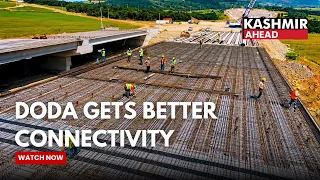
Infrastructure strides include roads under PMGSY, tunnels, railways, airports, and power projects. Peace has returned, enabling these developments. Amit Shah’s efforts in integrating J&K fully into the national mainstream and LG Manoj Sinha’s on-ground compassionate governance—focusing on inclusive policies, terror victim rehabilitation, and grassroots delivery—have been instrumental.
Women, tribals, migrants, and specially-abled citizens feel included. Panchayati Raj empowerment, direct benefit transfers, and digital initiatives ensure transparency and reach.
Challenges remain, but the trajectory is clear. J&K is marching towards Viksit Bharat, blending development with dignity, growth with social justice, and progress with peace. Under Modi, Shah, and Sinha’s leadership, the region is not just catching up but leading in resilience and aspiration.