Baramulla, August 20,2026- Tucked away near Tangmarg in Baramulla district, the small hamlet of Vailoo Kunzer (also known as Vailoo Kralpora) has quietly become the beating heart of one of Kashmir’s most extraordinary craft achievements — while also standing as a window into the struggles facing the region’s carpet weavers today.
A Village That Made History
After eight years of meticulous labour, a group of dedicated carpet weavers in the tiny hamlet of Kralpora/Vailoo completed what is regarded as Kashmir’s largest handmade carpet a project that has come to symbolise both the artistry and the endurance of the region’s weaving tradition. Crafted in the traditional Kashan style, the undertaking required engineers to remake a loom in the village, since Kashmir had no existing loom large enough for a project of this scale, joining two major looms across a 45-foot-wide frame.
The scale of the effort was matched by the scale of the workforce involved. According to weaver Habibullah Sheikh, the project began with a core team of 25 artisans, each carrying decades of experience, before an additional 25 skilled craftsmen were brought in to help complete the work — bringing the total to roughly 50 master weavers working over the course of nearly a decade.
An Art Passed Through Generations
Vailoo Kunzer’s achievement is rooted in a craft tradition that stretches back centuries in Kashmir, introduced when Persian and Central Asian artisans were brought to the Valley to train local weavers. Hand-knotted Kashmiri carpets, known locally as “Kalin,” are still woven using Taleem papers — coded guidelines that function almost like a weaver’s alphabet, passed down and followed meticulously across generations. Baramulla district alone has historically hosted the highest concentration of carpet-training centres in the Valley, reflecting just how central weaving has been to the local economy and identity.
Skill Without Sufficient Reward
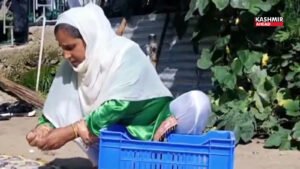
Yet even as villages like Vailoo Kunzer produce carpets that fetch attention on regional and international stages, artisans across Kashmir describe an industry under strain. Weavers elsewhere in the Valley have spoken of wages that have fallen to what many describe as a pittance, even as finished carpets continue to sell for hundreds of dollars abroad. Much of the gap, weavers say, comes down to a lack of direct market access — artisans rarely deal with end buyers, leaving intermediary sellers to capture the bulk of the profit while the weavers themselves are paid on a piece-rate basis for months of painstaking work.
Surveys of carpet-weaving households in neighbouring districts have found daily earnings for many artisans hovering in a narrow, modest band — a stark contrast to the months or years of specialised skill each carpet demands. Some veteran weavers say they now discourage their own children from learning the craft, citing the toll it takes physically and financially for returns that no longer match the effort involved.
A Legacy Worth Protecting
Despite these pressures, the completion of Vailoo Kunzer’s landmark carpet has been held up as a source of hope for an industry that many fear is fading. Community members and craft advocates say the achievement demonstrates that the skill, patience and heritage behind Kashmiri carpet weaving remain fully intact — what is missing is a fairer economic structure to sustain it.
For a craft that has survived centuries of change, supporting artisans through better wages, direct market linkages and renewed public interest may be what determines whether villages like Vailoo Kunzer continue producing masterpieces for generations to come, or whether the looms eventually fall silent. As one Baramulla weaver put it, the carpets carry more than knots and colour — they carry the story of a people determined not to let their heritage unravel.