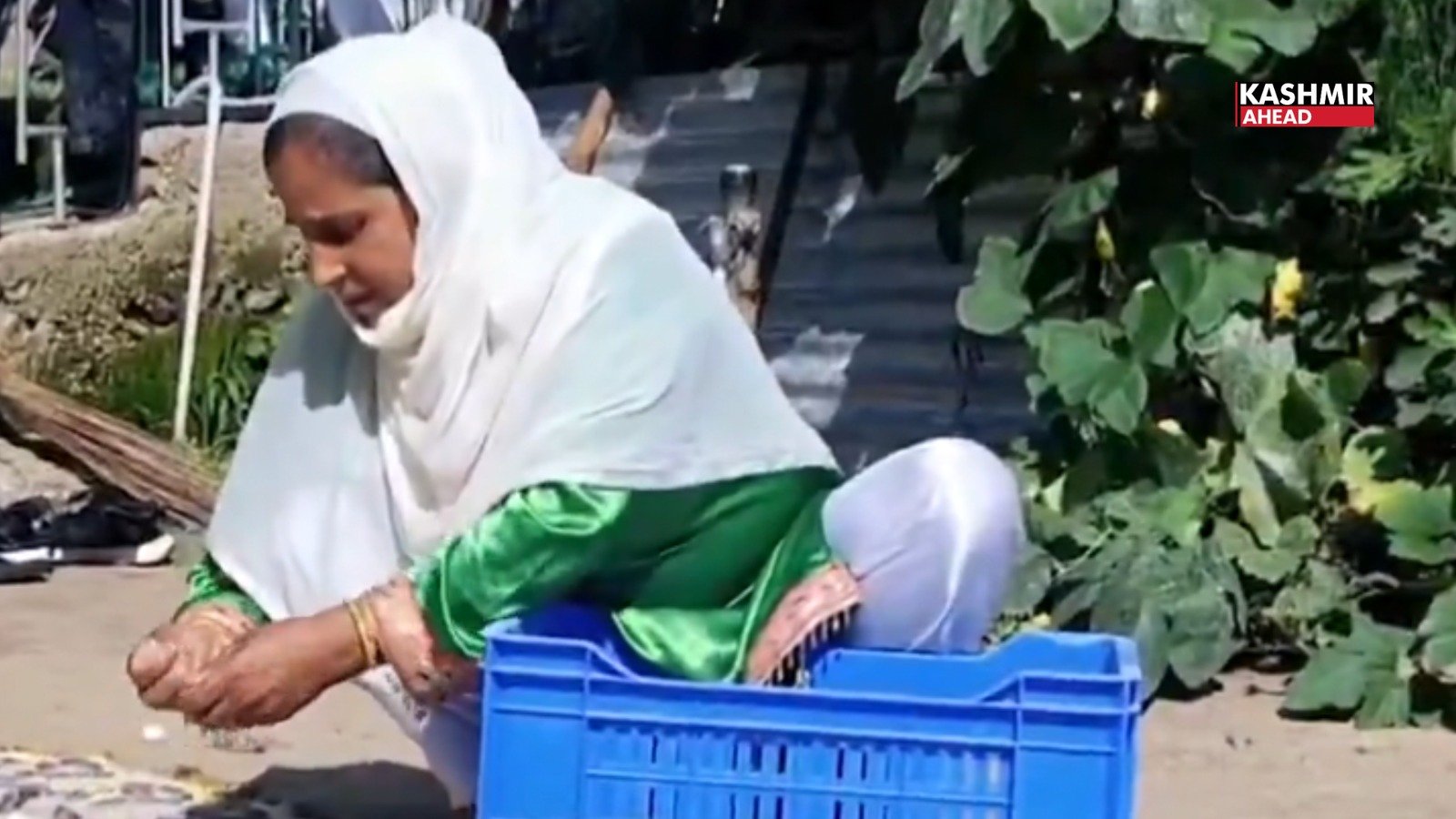
Bandipora, August 20,2026- Sericulture in Bandipora is driving a quiet but significant transformation across north Kashmir, with hundreds of rural families building sustainable livelihoods through mulberry cultivation, silkworm rearing and cocoon production.Amid the orchards and paddy fields of north Kashmir, a quieter but equally significant transformation is underway — one measured not in apples or rice, but in mulberry leaves and silk cocoons. Across Bandipora district, hundreds of rural families are building sustainable livelihoods through sericulture, turning an age-old practice into a modern engine for the local economy.
An Old Craft, A New Lifeline
Sericulture — the cultivation of mulberry trees, rearing of silkworms and production of cocoons for silk — has deep roots in Kashmir, where the temperate climate and elevation between the Greater Himalayas and the Pir Panjal range make it especially suited to bivoltine silk farming. In Bandipora, the Sericulture Development Department has worked for years to expand this practice, running departmental nurseries and farms across the district to keep rural households supplied with quality mulberry saplings and silkworm seed.
For many families, particularly those from economically weaker sections with limited landholdings, sericulture has become an essential supplementary income stream rather than a full-time occupation, fitting neatly around other seasonal agricultural work. Across Jammu and Kashmir, an estimated 27,000 families are engaged in the practice, with Bandipora counted among the region’s major cocoon-producing districts alongside Baramulla, Kupwara and Anantnag.
From Leaf to Livelihood
The process begins with mulberry cultivation — trees that take years of careful nurturing to mature and are maintained with significant government investment. Their leaves feed silkworms through carefully managed rearing cycles, with the department distributing Double Hybrid F1 Silkworm Seeds (DFLs) to rearers in surrounding villages each season. Once matured, the silkworms spin cocoons, which are then sold into structured market channels, giving rural households a direct route from farm to income.
To support this chain, the department has continued investing in infrastructure such as the Vijpara seed unit in Hajan, where upgraded facilities are designed to significantly boost the local supply of quality silkworm seed. Officials have stressed that expanding poly-house cuttings and introducing improved mulberry varieties are key to increasing both the quality and quantity of cocoon output in the years ahead.
Economic Weight Behind a Traditional Practice
The numbers underline why the sector matters. Jammu and Kashmir produced roughly 800 metric tonnes of cocoons in a recent year, generating an estimated Rs 25 crore in the pre-cocoon segment and a further Rs 30 crore in post-cocoon and yarn production — figures that translate directly into household income across dozens of villages. Notably, women make up a majority of the workforce involved in silkworm rearing, meaning the sector also plays an outsized role in supporting rural women’s economic participation.
Not Without Challenges
The sericulture economy remains fragile in places. In parts of Bandipora, including areas of Sonawari, residents have recently raised alarm over illegal felling of mature mulberry trees — losses that experts warn can set back cocoon production for years, given how long the trees take to mature and how heavily their cultivation is subsidised by the state. Locals have called for stricter enforcement to protect what they describe as a lifeline for silkworm rearers and their families.
A Model for Rural Diversification
Even so, officials and researchers point to sericulture as a strategically important tool for rural livelihood diversification in a region where agriculture’s share of the economy has been shrinking and landholdings remain fragmented. With continued investment in nurseries, training and market linkages, Bandipora’s mulberry farms and rearing sheds are increasingly being held up as a template — proof that centuries-old traditions, backed by modern support, can still offer a steady, sustainable path forward for rural Kashmir’s next generation.