Kupwara, May 15,2026- Lieutenant Governor Manoj Sinha on Thursday emphasized the importance of agricultural transformation in border areas of Jammu and Kashmir, stating that strengthening farming infrastructure, irrigation facilities, and market access is essential for ensuring long-term prosperity in rural regions like Kupwara.
During his visit to Trehgam in north Kashmir’s Kupwara district, the Lieutenant Governor highlighted how agriculture, horticulture, self-employment, and tourism together are reshaping the economic landscape of border villages that were once considered remote and underdeveloped.
“I want farmers here to access superior seeds, reliable irrigation, and strong market linkages,” LG Manoj Sinha said while interacting with local residents and farmers.
His remarks underline the administration’s growing focus on strengthening the agricultural economy in rural and border areas where farming remains the primary source of livelihood for thousands of families.
Kupwara district, known for its fertile land, natural water resources, and favourable climatic conditions, has immense potential in agriculture and horticulture. Farmers in the region cultivate crops such as maize, paddy, pulses, vegetables, and fruits, while horticulture activities including apple cultivation and walnut production also contribute significantly to household incomes.
However, farmers in several border villages have historically faced challenges related to irrigation, transportation, modern farming technology, and market connectivity. Officials say the administration is now focusing on addressing these gaps through targeted developmental initiatives aimed at modernizing agriculture and improving rural livelihoods.
The Lieutenant Governor stressed that access to high-quality seeds and scientific farming practices can substantially increase productivity and help farmers improve crop yields. Authorities are also working towards expanding irrigation facilities to ensure that farmers are less dependent on unpredictable weather conditions.
Reliable irrigation has become increasingly important in Jammu and Kashmir due to changing weather patterns and irregular rainfall. Farmers in many areas have welcomed the government’s push for improved irrigation systems, saying it will help them cultivate crops more efficiently and reduce losses during dry periods.
Market connectivity remains another major area of focus. Officials believe that stronger market linkages can help farmers receive better prices for their produce and reduce dependence on middlemen. The administration is encouraging direct market access, improved road connectivity, and better transportation facilities so that agricultural produce from border villages can reach larger markets across Jammu and Kashmir and other parts of the country.
Local farmers say that better market access is essential for increasing profitability and encouraging youth to remain connected with agriculture instead of migrating in search of jobs.
Apart from agriculture, self-employment initiatives are also contributing significantly to economic growth in Trehgam and surrounding areas. LG Manoj Sinha said the region has made remarkable progress in entrepreneurship and livelihood generation, particularly through self-help groups and Mission Youth initiatives.
According to official figures, around 205 self-help groups (SHGs) and 85 units established under Mission Youth are currently operational in Trehgam. Many of these groups are directly linked to agriculture and allied activities such as dairy farming, mushroom cultivation, poultry farming, food processing, tailoring, and handicrafts.
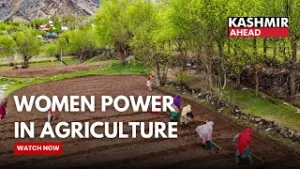
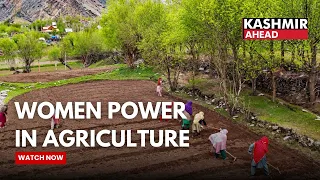
Women associated with SHGs are increasingly participating in agri-based enterprises and small businesses, creating additional sources of income for their families. Rural women are playing an important role in strengthening the local economy by adopting entrepreneurship and cooperative farming activities.
Officials say the rise of self-help groups has helped create awareness about financial independence, savings, and sustainable livelihood generation in rural areas. Several SHGs are also involved in producing local food items and handicrafts that are being marketed beyond the district.
Mission Youth schemes have further encouraged young people to establish small businesses linked to agriculture, tourism, and local services. Young entrepreneurs in Kupwara are exploring opportunities in organic farming, horticulture, food processing, and agri-tourism.
Experts believe the integration of agriculture with entrepreneurship and tourism can significantly transform the rural economy of border districts. Improved connectivity and rising tourist arrivals are creating demand for locally grown produce, traditional foods, and rural tourism experiences.
Tourism itself has emerged as a major contributor to economic growth in Kupwara district. The revival of the historic Sharda Temple in Teetwal has played a crucial role in boosting tourism activity in the region.
The Lieutenant Governor said the restoration of the temple has breathed new life into the tourism sector and opened fresh opportunities for local residents. Increased tourist footfall has generated demand for agricultural products, local handicrafts, transport services, restaurants, and homestays.
Farmers and local producers say tourism growth has indirectly benefited agriculture by increasing demand for fresh fruits, vegetables, dairy products, and traditional food items in tourist destinations.
According to official figures shared by the Lieutenant Governor, tourist arrivals in Kupwara have witnessed extraordinary growth over the past few years. While only around 6,900 tourists visited the district during 2018-19, the number surged dramatically to nearly 3.77 lakh in 2024-25.
The increase in tourist footfall is being viewed as a major opportunity for border villages to diversify their rural economy beyond conventional farming. Authorities believe agri-tourism and eco-tourism can become important sectors for generating sustainable livelihoods in the coming years.
Villages in Kupwara are increasingly attracting tourists interested in experiencing rural life, natural beauty, traditional Kashmiri culture, and local cuisine. This has encouraged many farmers and villagers to establish homestays and tourism-related ventures.
Officials say the administration is focusing on integrated rural development where agriculture, tourism, entrepreneurship, and infrastructure work together to create long-term economic stability.
Infrastructure development has also played a key role in supporting agricultural growth in border areas. Improved roads and transportation networks are helping farmers transport their produce more efficiently, while better electricity and internet connectivity are enabling access to modern technology and digital marketplaces.
Farmers are also being encouraged to adopt modern agricultural practices and diversify into high-value crops, horticulture, and allied activities. Agricultural experts believe that scientific farming techniques, better irrigation, and market integration can significantly improve productivity and rural incomes in Kupwara district.
Local residents say the changing environment in border villages is encouraging younger generations to view agriculture as a viable and profitable profession. Many educated youth are now exploring farming alongside entrepreneurship and tourism-related activities.
The Lieutenant Governor expressed confidence that continued investment in rural development and agriculture will transform border villages into economically vibrant regions.
“I’m confident that in the next one or two years, every border village will script its own story of prosperity,” LG Manoj Sinha said.
Residents and farmers have welcomed the administration’s developmental initiatives, stating that the growing focus on agriculture, irrigation, market access, tourism, and self-employment is bringing renewed hope to remote villages in Kupwara district.
Experts believe that Kupwara’s transformation can become a model for sustainable rural development in other frontier regions of the country. By strengthening agriculture while simultaneously promoting tourism and entrepreneurship, the administration is working towards building a diversified and resilient rural economy.
As Trehgam and nearby border villages continue to witness rapid changes, the region is gradually emerging as an example of how agricultural modernization, infrastructure development, and community participation can together create new opportunities for growth and prosperity in rural Jammu and Kashmir.