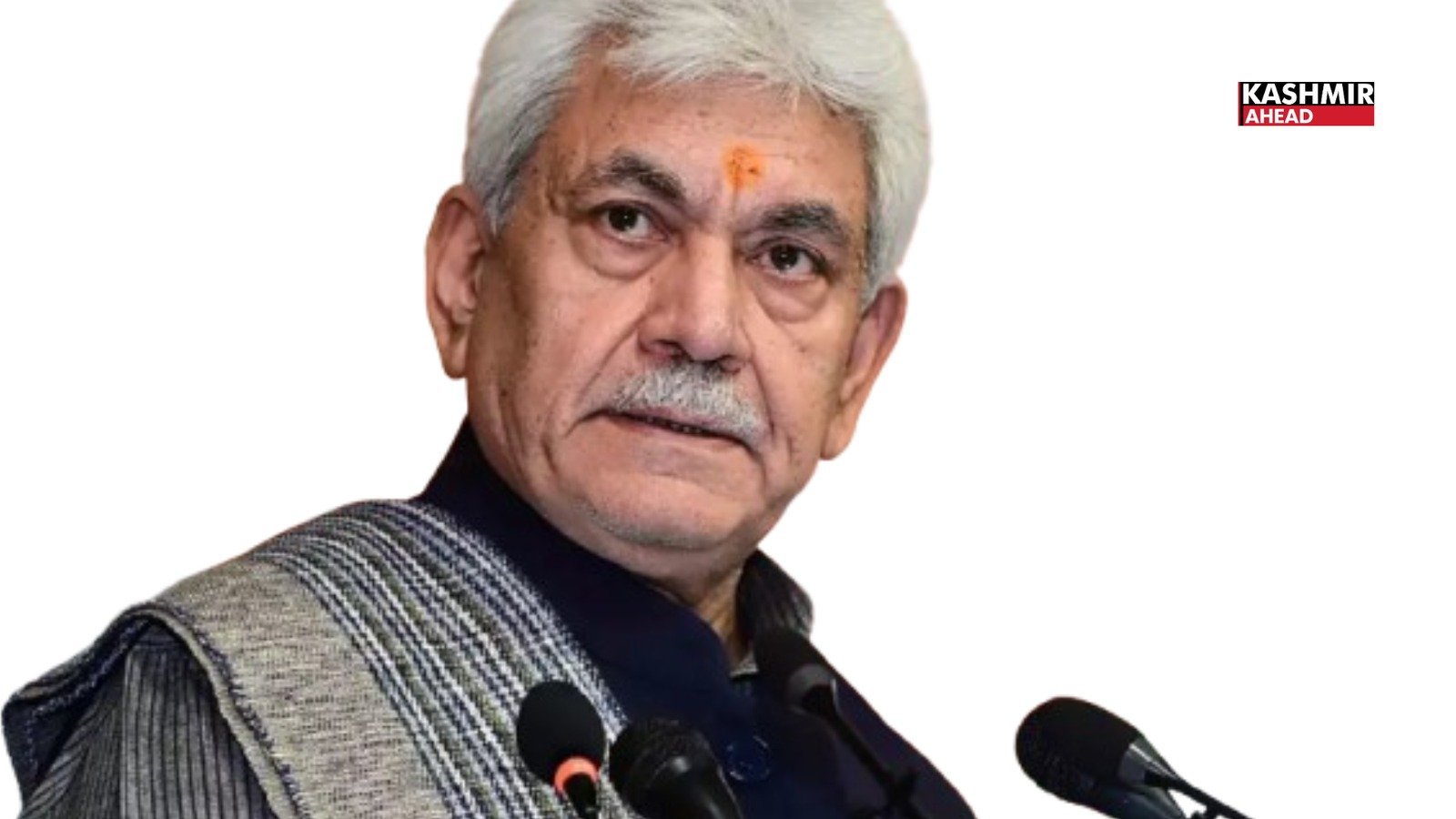
Kashmir, August 18,2026-Diversity in Jammu and Kashmir is a bridge, not a barrier — that was the message Lieutenant Governor Manoj Sinha carried to Pulwama’s ‘Mulaqat’ programme this week. The gathering brought together youth, civil society members, and people from different faiths and communities, organised by the Save Youth, Save Future Foundation to talk, rather than merely coexist.
There is a particular strength that comes not from sameness, but from difference held together with care. A stronger Jammu and Kashmir, Sinha argued, emerges only when that idea is lived out, not merely spoken.
It is easy for such lines to pass as ceremonial rhetoric, the kind every public address seems obligated to include. But sitting inside Sinha’s remarks was a more deliberate argument: that dialogue itself is a form of infrastructure.
Not roads or power grids, but something just as load-bearing — a bridge between hearts, as he put it, a foundation for trust, and a quiet pathway toward peace and prosperity. In a region where distrust has often been the more familiar architecture, that reframing matters.
Sinha reached for the Rig Veda to make the point — Sangachchhadhwam Samvadadhwam, Sam Vo Manamsi Janatam — walk together, speak together, let your minds be united. It is a verse older than any of the divisions it was invoked against.
That is perhaps the argument in itself: that the impulse to disagree is recent history, while the impulse to gather is civilisational memory. He called diversity not a weakness to be managed but a strength to be tended, sustained through centuries by mutual respect.
Why Diversity in Jammu and Kashmir Runs Deeper Than Politics
There was also an appeal to a more local idiom — Kashmiriyat, the old insistence that identity is best measured in conduct and compassion, not in the label a person carries. Alongside it sat the wider civilisational claim of Vasudhaiva Kutumbakam, the world as one family.
Both ideas ask the same uncomfortable question: whether unity is something a society merely declares, or something it has to keep re-earning, gathering by gathering, generation by generation. Genuine diversity in Jammu and Kashmir, in this reading, is not a slogan but a daily practice.
To his credit, Sinha did not leave the vision floating in the abstract. He offered a six-point roadmap: interfaith dialogue built into schools, Youth Peace Ambassadors trained to lead rather than simply attend, heritage sites protected as shared inheritance, digital literacy as a defence against misinformation, equal access to opportunity, and Village Peace Committees stitched into local governance.
Each point, taken alone, sounds almost administrative — the kind of language that belongs in a policy note rather than a speech about the human heart. But together they form something closer to scaffolding: a set of everyday mechanisms through which an abstract value like harmony might actually survive contact with ordinary life.
Policies, admittedly, are easier to announce than to sustain. But naming the mechanism is still a meaningful departure from naming only the sentiment, and it is worth noting how rarely the two are offered together in public address. Government of India’s official handloom and heritage portal offers similar community-led models worth comparing against this roadmap.
Perhaps the most honest thing Sinha said all evening was also the most limiting one for his own office: that governments can write laws and administrations can build systems, but harmony, in the end, has to be built by people themselves.
It is a rare admission from anyone in power — that the thing being promised cannot actually be delivered from above. It has to be met halfway, in the daily, unglamorous choice to listen rather than assume.
The day closed with a Tiranga Yatra flagged off from the Sports Stadium, a more familiar civic ritual layered atop a less familiar one — the difficult, unfinished work of actually understanding one’s neighbour. Ceremonies end, banners come down, and the crowd disperses back into its ordinary week.
What Sinha seemed to be gesturing toward, however, is something that does not conclude so neatly — a habit of conversation renewed indefinitely, community by community, season after season. This is what sustained diversity in Jammu and Kashmir would actually require: not a single evening’s applause, but a thousand smaller, unremarkable ones that follow it.
A classroom where a difficult question about faith is allowed to be asked rather than avoided. A village committee that keeps meeting after the initial enthusiasm has worn off. A young person who chooses to be a peace ambassador not because a scheme names them one, but because the habit of listening has become instinctive.
Jammu and Kashmir’s history offers little reassurance that such habits form easily or hold indefinitely. But it also offers, in moments like this one, a reminder that they can at least be attempted in earnest — and that the attempt itself, repeated often enough, is not nothing.
A bridge, after all, is not built in a single afternoon of good intentions. It is built one plank, one conversation, one act of trust at a time — and it is only ever as strong as the willingness of both sides to keep walking toward each other.