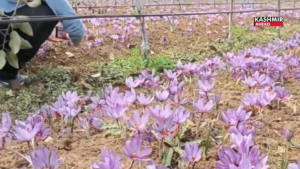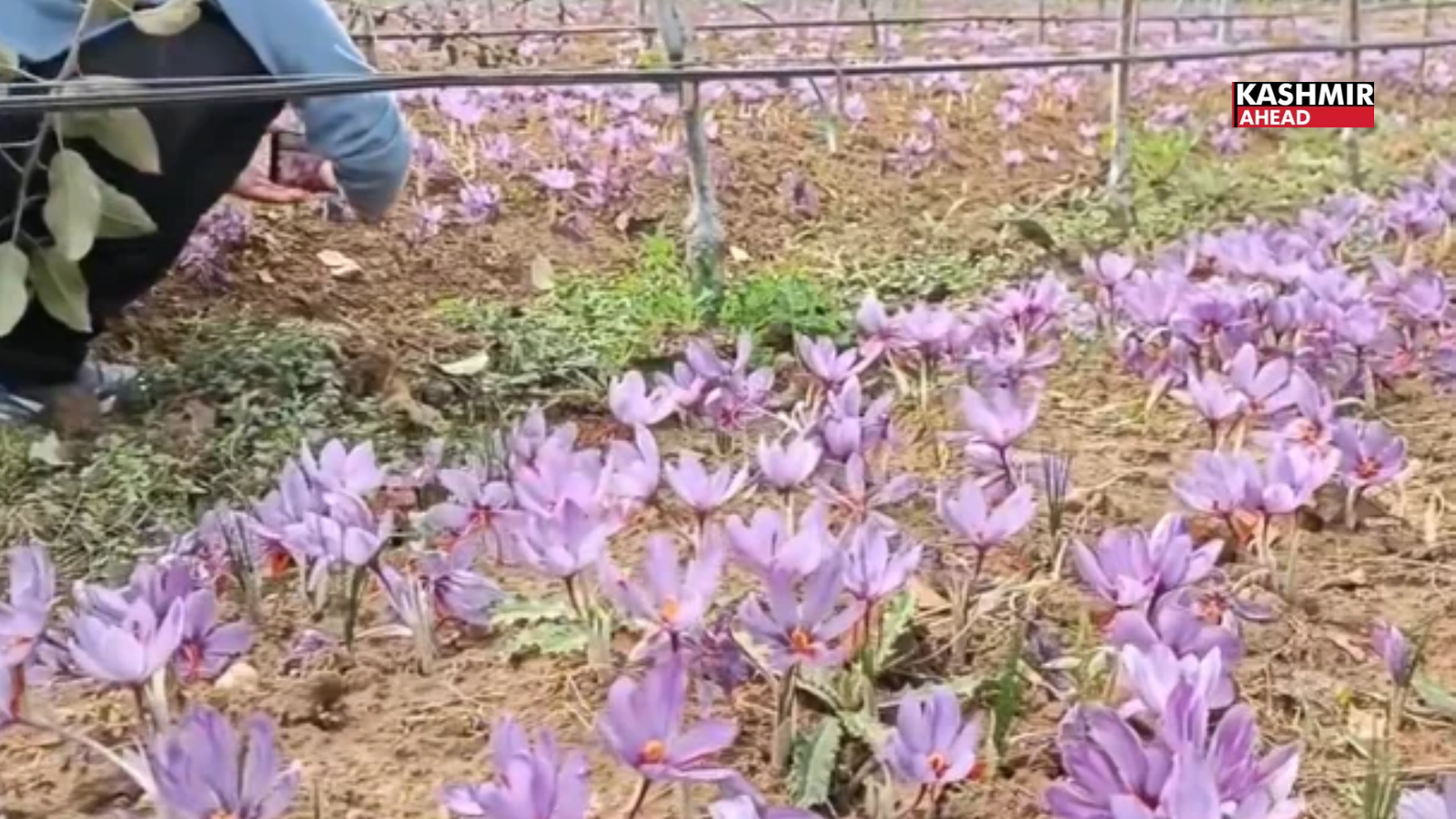
Pampore, October 18,2026- In a region where saffron is both heritage and livelihood, Mohammed Sultan Rather is testing whether the prized crop can share ground with another of Kashmir’s economic mainstays, the apple. The Pampore farmer is trialling saffron cultivation inside a high-density apple orchard, and in the second year of the experiment the results are encouraging.
A Question of Land
Pampore, often called the saffron bowl of Kashmir, has grown the spice on its karewa plateaus for centuries. Kashmiri saffron carries a Geographical Indication tag and is prized for its colour, aroma and high crocin content. Yet the sector has been under strain. Saffron acreage has shrunk over the past two decades, a decline commonly blamed on erratic rainfall, ageing corm stock, land conversion and the lure of more profitable uses of land, including housing and orchards.
Apples, meanwhile, have moved towards high-density plantations. These use dwarfing rootstocks, trellis support and closely spaced rows to bring trees into fruit sooner and deliver higher yields per unit of land. They are productive, but the orchard floor between rows often sits underused. Rather’s trial asks whether that space could earn its keep.
Why the Two Crops May Fit Together
The logic rests largely on the saffron plant’s unusual calendar. Saffron corms are planted in late summer and flower in October and November, after the apple harvest has largely finished. The grass-like leaves then grow through winter and spring, when apple trees are bare or just coming into leaf, and the plant goes dormant in summer. In theory, this means the two crops draw on sunlight, space and labour at different times of year rather than competing head-on.
If the pairing holds up, an orchardist would gain a second, high-value income stream from land already under cultivation, without clearing new ground or abandoning apples.
Encouraging, but Early
Rather’s second-year results have drawn interest because first-year trials with any new cropping combination can mislead: corms often take time to establish, and flowering can vary widely with weather. A second season of healthy growth and flowering suggests the plants are adapting to the orchard environment rather than merely surviving it.
Caution is still warranted. Saffron is sensitive to soil drainage, and orchards are irrigated and sprayed on schedules built around apples. Excess moisture can rot corms, and some agrochemicals may not suit the crop. Shade from mature canopy, the density of planting and the long-term effect on apple yields all need multi-season monitoring. Saffron also takes several years before corm multiplication delivers a commercially meaningful harvest, so a two-year trial is a promising start rather than proof.
What It Could Mean for Kashmir
If the model proves sound, the implications reach beyond one farm. Kashmir’s farmers face shrinking holdings and rising input costs, and crop diversification is a recurring theme in agricultural policy. Programmes such as the National Saffron Mission have aimed to revive the crop through irrigation, better corm material and processing support, but expanding saffron’s footprint is limited by the availability of suitable land. Integrating it into existing orchards could widen that footprint without competing for fresh acreage.
Agricultural scientists and extension workers would need to test the approach across different sites, soil types and orchard designs before recommending it widely. Questions around optimal spacing, corm depth, irrigation schedules and spray management would all need answers grounded in data.
A Farmer-Led Experiment
What stands out is that the experiment comes from a grower rather than a laboratory. Farmer-led trials like Rather’s often surface practical possibilities that research stations overlook, and they carry credibility with neighbours who tend to adopt what they see working in a nearby field.
For now, Rather’s orchard offers an early, hopeful signal. If further seasons confirm it, the combination of Kashmir’s two best-known crops could become a template for making smaller landholdings work harder, and a fresh chapter for a saffron tradition that needs one.