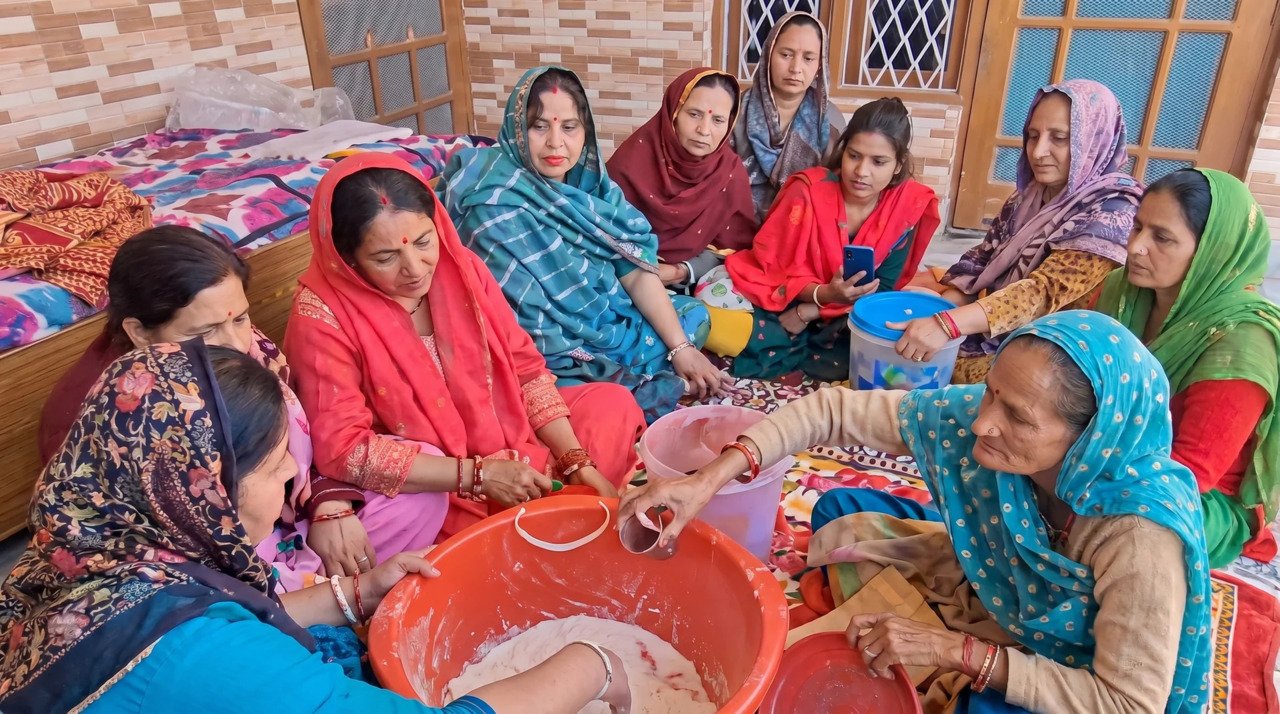
Kashmir , May 14,2026- The UMEED Self Help Group initiative is emerging as a powerful driver of women-led socio-economic transformation across rural Jammu & Kashmir, empowering thousands of women through skill development, entrepreneurship, and collective enterprise building.
Under the UMEED program, women in SHGs are actively engaged in traditional crafts, dairy farming, poultry, tailoring, nursery raising, walnut processing, and small-scale food enterprises. These community-led units are not only generating sustainable incomes but also strengthening rural economies and promoting financial independence among women.
In Anantnag district, inspiring success stories such as that of Shaista Jaan highlight the impact of the initiative. Motivated by UMEED facilitators, she formed a SHG focused on dairy and tailoring. Starting with limited resources, her group now supplies milk to cooperatives and embroidered garments to markets in Srinagar, providing livelihoods and dignity to several women.
Similarly, in Rajouri’s Thanamandi block, women who once depended on distant markets now produce embroidered goods locally, earning steady monthly incomes after receiving training in design, quality control, and entrepreneurship. In Ganderbal, Mahmoona Akhtar’s SHG-based poultry and dairy unit supports multiple dependents while mentoring younger women entrepreneurs.
Across Budgam and border villages such as Teetwal, SHG-led ventures in local cuisine, handicrafts, and livestock rearing are turning household-level skills into sustainable micro-enterprises. These initiatives are also contributing to improved education, nutrition, and healthcare outcomes within families, especially for children and girls.
Beyond economic gains, the UMEED SHG model is fostering social change. Women report increased participation in household decision-making, improved confidence, reduced vulnerability, and greater mobility. The program has also supported awareness campaigns on health, hygiene, and education through village organizations.
The initiative has demonstrated resilience in challenging conditions, including remote terrain, seasonal disruptions, and past instability. Through mobile training units, digital support systems, and simplified access to credit, SHGs have continued to expand even during crises such as the COVID-19 pandemic, when many groups pivoted to producing essential items like masks and sanitizers.
Officials note that the three-tier SHG federation structure is strengthening grassroots governance and enabling better market access. Future plans include scaling up high-value enterprises, improving market linkages, and integrating with youth skilling missions to further enhance employment opportunities.
The UMEED model is increasingly being recognized as a national benchmark for inclusive development, showcasing how women-centric community institutions can drive sustainable and equitable growth.
As Jammu & Kashmir moves toward deeper economic empowerment, the initiative stands as a symbol of grassroots change—transforming rural households into hubs of productivity and self-reliance.