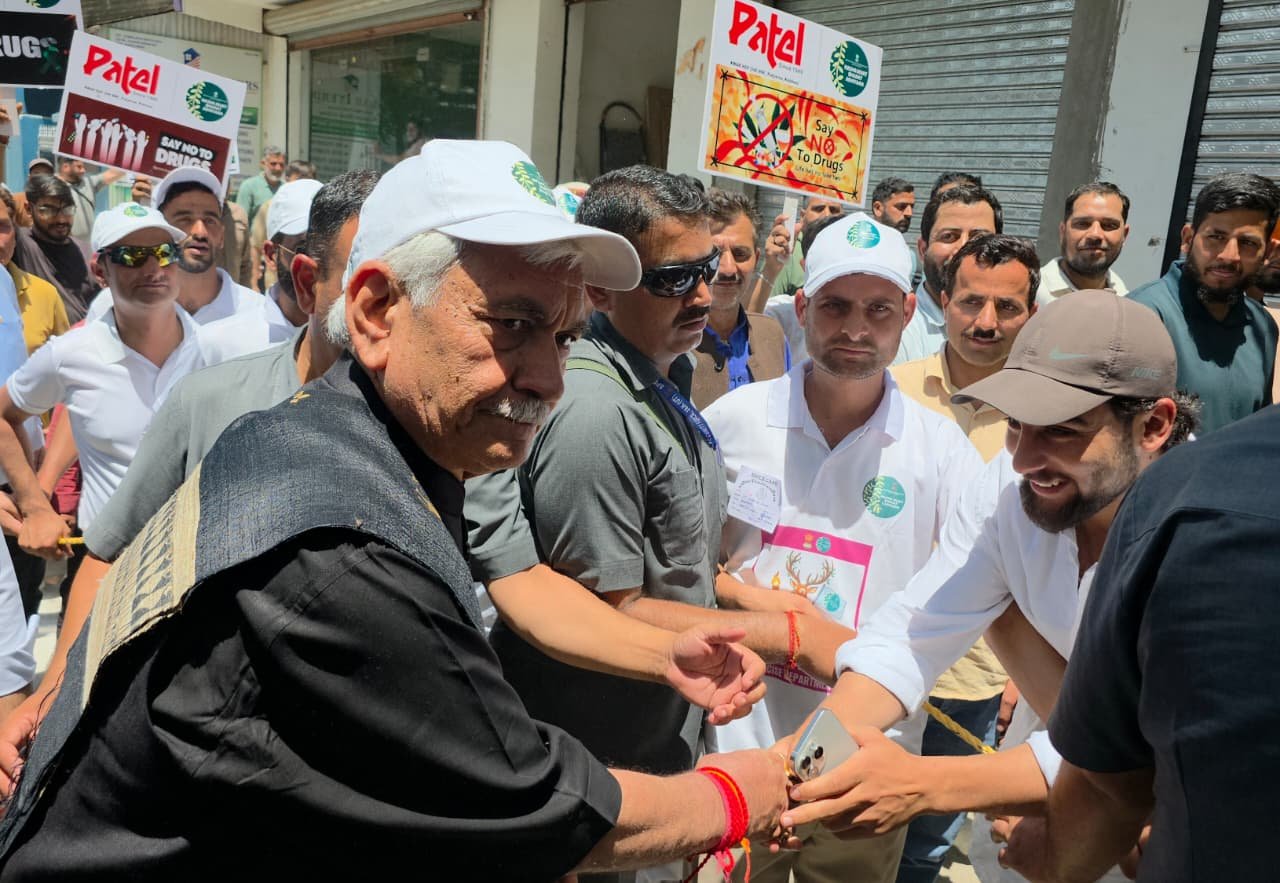
Kishtwar, June 6,2026- In a powerful demonstration of public resolve against drug abuse and narco-terrorism, Lieutenant Governor Shri Manoj Sinha led a massive anti-drug padyatra in Kishtwar, marking the culmination of the administration’s 100-day campaign against substance abuse. The event witnessed unprecedented participation from youth, students, civil society organizations, community leaders, government officials, security personnel, and citizens from different walks of life, all united by a common goal—to build a drug-free Jammu & Kashmir.
The padyatra transformed the streets of Kishtwar into a platform for awareness, hope, and collective action. Participants carried banners, placards, and messages advocating healthy lifestyles while rejecting the growing threat of drug addiction. The atmosphere reflected a strong public commitment to safeguarding the future of Jammu & Kashmir’s younger generations.
Addressing the gathering, Lieutenant Governor Manoj Sinha emphasized that the fight against drugs is not merely a government initiative but a people’s movement that requires the active participation of every citizen. He stressed that Jammu & Kashmir can achieve its fullest potential only when its youth are empowered to pursue education, innovation, entrepreneurship, sports, and social progress without the burden of addiction.
“Every choice matters. Choose life, choose freedom, choose yourself,” the Lieutenant Governor said, urging young people to become champions of positive change within their communities.
A Defining Moment in the Fight Against Drug Abuse
The Kishtwar padyatra represented the culmination of a 100-day anti-drug campaign launched across Jammu & Kashmir to raise awareness about the devastating impact of narcotics on individuals, families, and society. During the campaign, thousands of awareness programs, educational workshops, community outreach initiatives, and public engagements were conducted across districts to educate citizens about the dangers of substance abuse.
The campaign focused particularly on youth, recognizing that they are both the most vulnerable to addiction and the most powerful force for social transformation. Schools, colleges, universities, sports clubs, religious institutions, and community organizations played an active role in spreading awareness and encouraging healthy choices.
The overwhelming participation seen in Kishtwar reflected the growing public support for the administration’s vision of a drug-free Union Territory.
The Youth Hold the Key to Jammu & Kashmir’s Future
Throughout his address, LG Manoj Sinha repeatedly highlighted the importance of protecting the aspirations and dreams of young people.
He stated that Jammu & Kashmir’s future belongs to its youth and that society has a collective responsibility to provide them with opportunities, guidance, and support. According to him, young people possess tremendous potential to lead the region towards prosperity, innovation, and development, but drug addiction threatens to undermine those possibilities.
The Lieutenant Governor called upon parents, teachers, community leaders, and civil society groups to remain vigilant and actively engage with young people. He emphasized that preventing addiction requires strong family support systems, awareness, education, and community participation.
The message resonated strongly with the large number of students and young participants who joined the padyatra, many of whom pledged to become ambassadors of the anti-drug movement in their respective communities.
Building a Society Based on Wellness and Opportunity
One of the central themes of the event was the promotion of healthy lifestyles and positive choices. LG Sinha urged youth to embrace sports, education, skill development, entrepreneurship, and community service as pathways toward personal growth and success.
He emphasized that true freedom comes from living a healthy and productive life, free from the destructive influence of drugs. The administration’s anti-drug campaign has therefore focused not only on discouraging substance abuse but also on creating opportunities that encourage young people to channel their energy and talent into constructive pursuits.
Participants in the padyatra echoed these sentiments, expressing their commitment to fostering a culture where wellness, achievement, and social responsibility take precedence over addiction and harmful behavior.
The Lieutenant Governor noted that every family benefits when communities remain drug-free and that the collective well-being of society depends on the choices individuals make every day.
A Strong Message Against Narco-Terrorism
A significant aspect of the Lieutenant Governor’s address focused on the connection between drug trafficking and terrorism.
He reiterated that narco-terror networks pose a serious threat to Jammu & Kashmir’s social fabric and security. Drug traffickers seek not only to profit from addiction but also to destabilize communities by targeting young people and undermining social cohesion.
LG Sinha stressed that the Government of India and the Jammu & Kashmir administration are firmly committed to dismantling these networks through coordinated action involving law enforcement agencies, intelligence organizations, border security forces, and local authorities.
He highlighted the importance of public cooperation in identifying and reporting illegal drug activities, emphasizing that defeating narco-terrorism requires a united societal response.
The administration’s strategy combines strict enforcement measures with preventive and rehabilitative initiatives, ensuring that both supply and demand aspects of the drug problem are addressed simultaneously.
Strengthening Law Enforcement and Border Security
The Lieutenant Governor praised the efforts of security agencies and law enforcement personnel who have been working tirelessly to disrupt drug trafficking operations across the Union Territory.
He noted that significant efforts are being made to strengthen border security, improve intelligence coordination, and enhance the capacity of law enforcement agencies to combat organized criminal networks involved in narcotics trafficking.
These measures are aimed at preventing illegal drugs from entering communities and protecting vulnerable populations from exploitation by traffickers.
The administration has consistently maintained that there can be no compromise in the fight against those who seek to poison society through the illegal drug trade.
Rehabilitation and Recovery: A Human-Centered Approach
While emphasizing strict action against traffickers, LG Sinha also highlighted the importance of rehabilitation and recovery programs for individuals affected by addiction.
He stated that addiction is a challenge that requires compassion, understanding, and support. The administration continues to expand access to rehabilitation facilities, counseling services, awareness programs, and community-based interventions designed to help individuals recover and rebuild their lives.
According to the Lieutenant Governor, a successful anti-drug strategy must balance enforcement with rehabilitation, ensuring that those struggling with addiction receive the help they need while traffickers face the full force of the law.
This approach reflects a broader commitment to healing communities and restoring hope to families impacted by substance abuse.
Communities Unite for Change
The Kishtwar padyatra demonstrated the growing strength of community-led action against drugs. Citizens from diverse backgrounds came together with a shared sense of responsibility and determination.
Community leaders, educators, youth groups, women’s organizations, and civil society representatives all played active roles in the event, reinforcing the idea that combating addiction requires cooperation across all sections of society.
The Lieutenant Governor praised this collective spirit, noting that lasting change can only be achieved when communities take ownership of the challenge and work together toward solutions.
The event also served as a reminder that every voice matters in the fight against drugs. Whether through awareness campaigns, mentoring young people, supporting rehabilitation efforts, or reporting illegal activities, every citizen has a role to play.
A Vision for a Drug-Free Jammu & Kashmir
The broader vision behind the JK Drug Free Mission extends beyond reducing addiction rates. It seeks to create a safer, healthier, and more prosperous society where young people can pursue their dreams without fear, limitation, or exploitation.
LG Manoj Sinha emphasized that a drug-free Jammu & Kashmir would unlock enormous opportunities for economic growth, educational advancement, tourism development, social stability, and community well-being.
He called upon citizens to remain committed to the mission long after the conclusion of the 100-day campaign, stressing that the fight against drugs must continue every day.
According to the Lieutenant Governor, the movement’s success will ultimately be measured not by the number of events conducted but by the positive transformation achieved within communities.
Hope, Unity, and Determination
As the padyatra concluded, participants took a collective pledge to strengthen the fight against drug abuse and support efforts aimed at protecting future generations.
The event left behind a powerful message: Jammu & Kashmir’s future will be brighter when its youth are empowered, its communities are united, and its citizens stand together against addiction and narco-terrorism.
From the streets of Kishtwar, a clear call echoed across the Union Territory—that every choice matters, every action counts, and every citizen can contribute to building a healthier and safer future.
The massive participation witnessed during the padyatra reflected more than support for a campaign; it reflected a growing public movement determined to ensure that Jammu & Kashmir’s future is defined by opportunity, resilience, and hope rather than addiction and despair.
As the JK Drug Free Mission moves forward, the message from Kishtwar remains clear: united against drugs, united for hope, and united for a stronger Jammu & Kashmir.