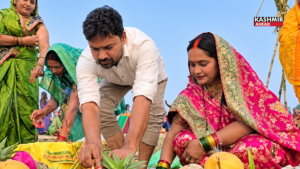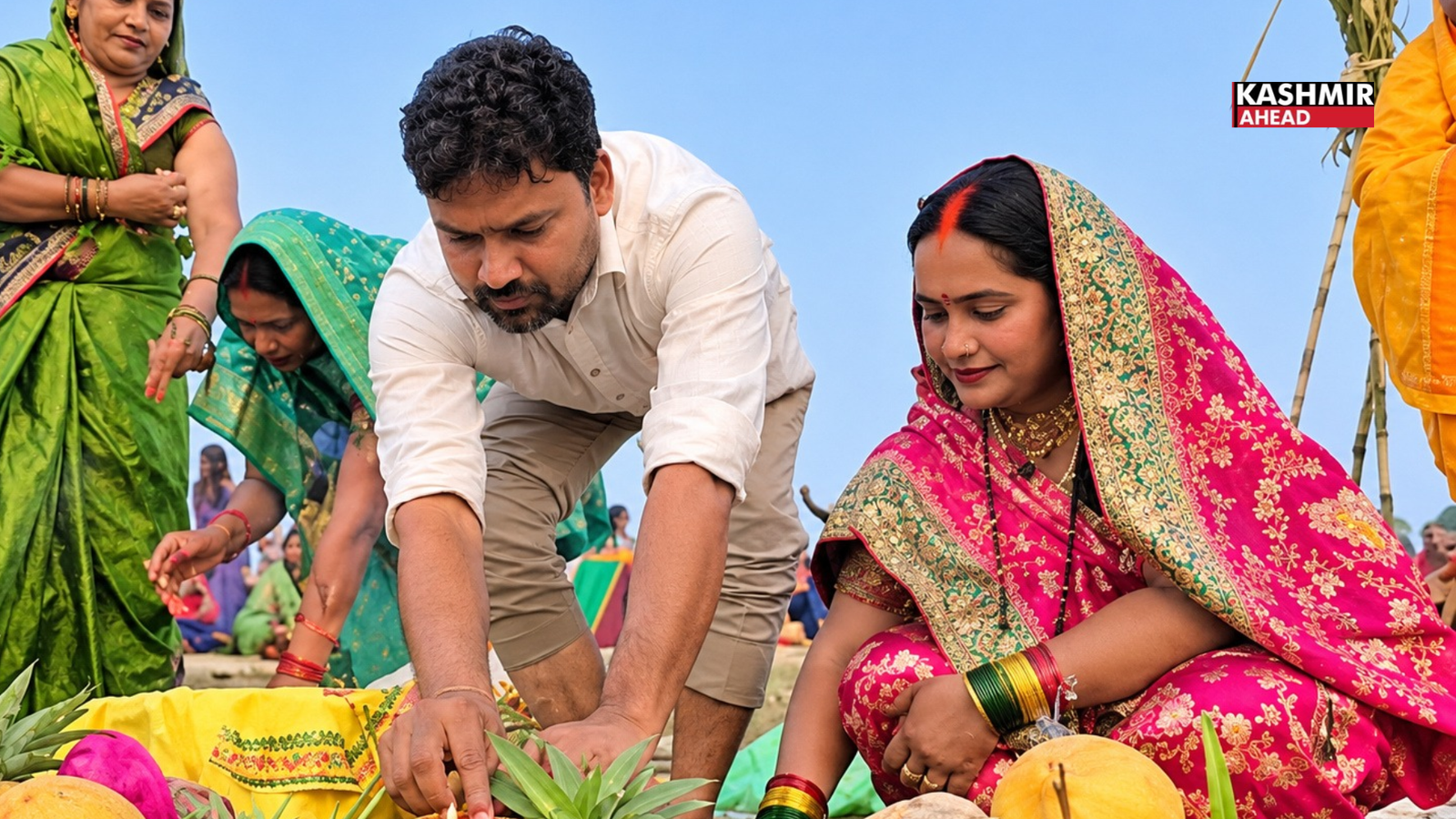
Samba, November 16,2026- Chhath Puja was celebrated with religious fervour and devotion in Samba district, where women and their families gathered along the banks of the Basantar River to perform traditional rituals and offer Arghya to the Sun God. The festival witnessed enthusiastic participation from devotees who prayed for the happiness, prosperity, good health and well-being of their families.
The riverbank turned into a place of devotion as women observed the traditional customs associated with Chhath Puja. Devotees offered prayers to Surya Dev and Chhathi Maiya, following age-old rituals that hold deep religious and cultural significance among communities celebrating the festival.
Women participating in the celebrations performed the traditional Arghya ceremony, offering prayers to the setting and rising Sun while standing along the riverbank. The rituals were observed with faith and dedication, reflecting the importance of the festival in preserving religious traditions and cultural values.
The celebrations also witnessed participation from people who have settled in Samba after migrating from different states. These families joined the local gatherings and performed traditional rituals, bringing their cultural practices and customs to the banks of the Basantar River.
For many devotees, Chhath Puja is not merely a religious festival but an occasion to express gratitude to the Sun God, who is worshipped as the source of energy, life and prosperity. The festival is particularly significant for women who observe traditional practices and offer prayers for the long life, happiness and good health of their family members.
One of the most important aspects of Chhath Puja is the offering of Arghya to the Sun. Devotees gather near rivers, ponds and other water bodies to perform the rituals, seeking blessings from Surya Dev and Chhathi Maiya. The observance involves traditional customs that have been passed down through generations and continue to hold a special place in the lives of devotees.
At Samba, the banks of the Basantar River provided a common space for families to come together and participate in these religious activities. The gathering reflected the strong connection between faith, nature and cultural traditions associated with the festival.
The participation of people who have made Samba their home after moving from other states also highlighted the role of religious festivals in maintaining cultural identity. Despite living away from their native places, these families continue to observe their traditional festivals with devotion, ensuring that their customs and religious practices remain an integral part of their lives.
Chhath Puja is widely celebrated across different parts of India, particularly among communities that follow the traditional worship of the Sun God and Chhathi Maiya. Over the years, the festival has also become an important occasion for people living outside their native states to come together and celebrate their shared cultural heritage.
Beyond its religious significance, the festival promotes community participation and strengthens social bonds. Families and devotees gather at designated water bodies, participate in rituals and share the spirit of devotion and togetherness.
The celebrations along the Basantar River reflected the diverse cultural character of Samba district, where people from different regions and backgrounds participate in religious and cultural activities while preserving their respective traditions.
For the women observing the festival, the occasion carried special significance as they offered prayers for the well-being of their families. Their participation in traditional rituals also highlighted the important role played by women in preserving and passing on India’s cultural and religious heritage to younger generations.
The Chhath Puja celebrations in Samba once again showcased how faith and traditions bring communities together. The gathering of devotees along the Basantar River highlighted the continued importance of age-old customs and the spirit of cultural harmony, making the festival a meaningful occasion for residents and families who have settled in the district from different parts of the country.