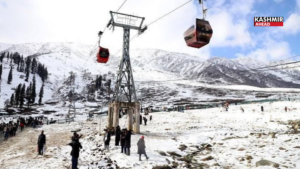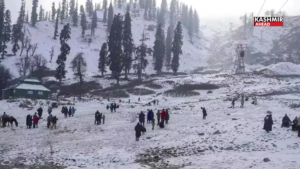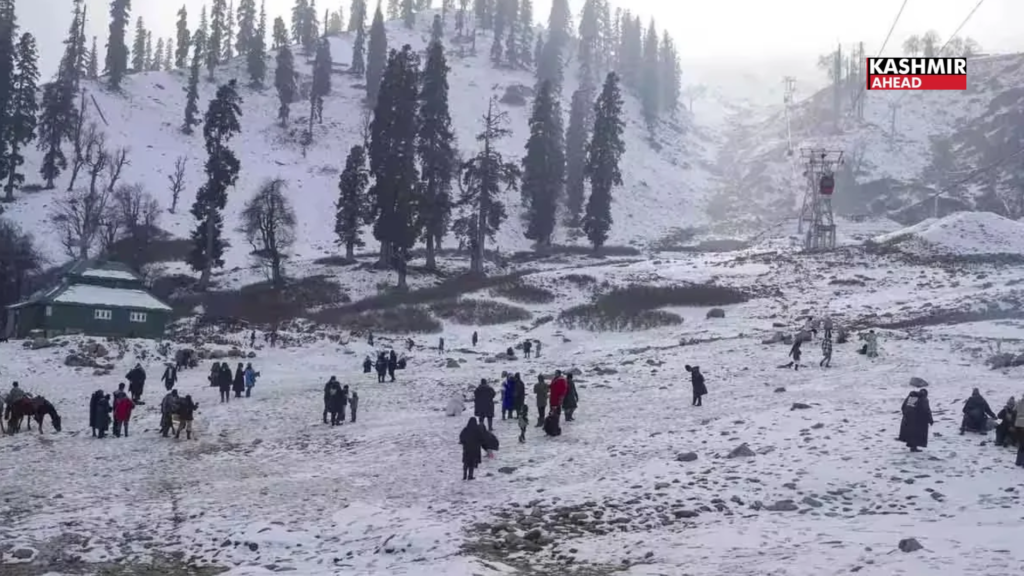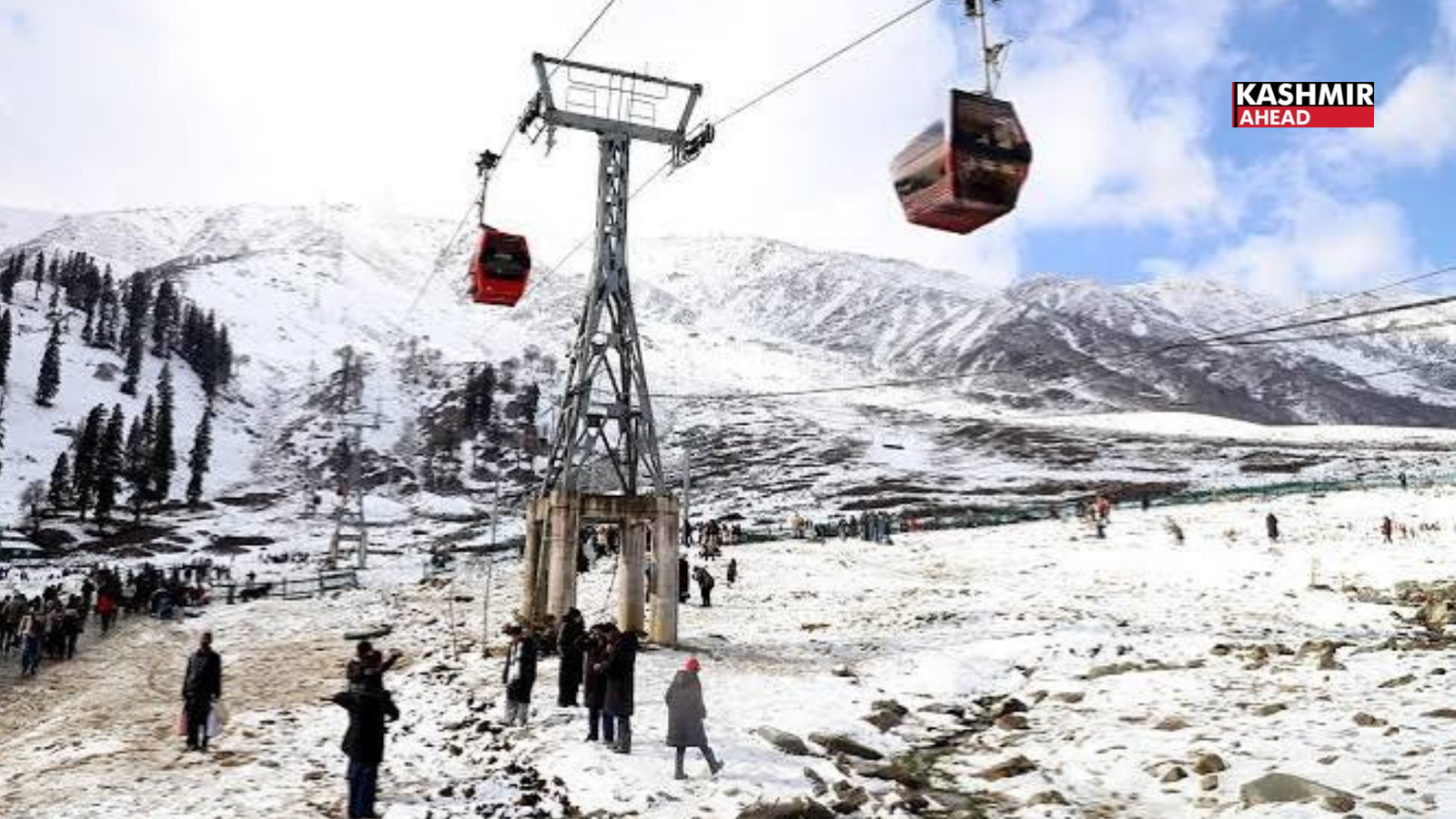
Srinagar, November 16,2026-Winter conditions continued to strengthen across Jammu and Kashmir as Gulmarg in north Kashmir’s Baramulla district recorded the season’s lowest minimum temperature of minus 2.5 degrees Celsius on November 15, marking a further dip in night temperatures across the higher reaches of the Valley.
According to the Meteorological Department, Gulmarg was the coldest recorded location in Jammu and Kashmir, with its minimum temperature settling 1.9 degrees below the seasonal average. The popular tourist destination also recorded a maximum temperature of 5 degrees Celsius, which was 4.2 degrees below normal.
The falling temperatures come amid fresh snowfall in several higher-altitude areas of the Union Territory, signalling the gradual intensification of winter conditions across the region.
Srinagar recorded a minimum temperature of 3.3 degrees Celsius, around 2 degrees above its seasonal normal of 1.3 degrees Celsius. The summer capital also registered a maximum temperature of 16.2 degrees Celsius, slightly above the seasonal average.
In south Kashmir, Pahalgam recorded a minimum temperature of 2.8 degrees Celsius, while the maximum settled at 13.7 degrees Celsius. Qazigund registered a minimum of 3.4 degrees Celsius and a maximum of 13 degrees Celsius.
Kupwara recorded a minimum temperature of 4 degrees Celsius, with the maximum settling at 15.6 degrees Celsius. Kokernag registered a minimum of 3.5 degrees Celsius and a maximum of 12.4 degrees Celsius.
The temperature difference between the higher reaches and the plains reflects the strengthening cold conditions in the mountainous areas, where night temperatures have increasingly moved towards the freezing point.
Meanwhile, fresh snowfall was reported in several higher-altitude locations of Jammu and Kashmir. Sonamarg, Gurez Valley and Zojila Pass received approximately 1 to 2 inches of fresh snow during the intervening night of November 14 and 15.
Gulmarg also witnessed a light spell of snowfall, although no significant accumulation was reported on the ground. Light snowfall was additionally observed at Sinthan Top, Margan Top and Peer Ki Gali during the early morning hours.
The fresh snowfall followed a strong Western Disturbance that affected Jammu and Kashmir on November 12 and 13, bringing widespread rainfall to the plains and moderate to heavy snowfall across several mountainous areas.
During the previous weather spell, Sadhna Top and Razdan Pass received more than a foot of snow, while Sinthan Top recorded approximately 8 to 10 inches of snowfall. The precipitation brought a noticeable change in weather conditions, particularly across the higher reaches.
In Jammu division, Jammu city recorded a maximum temperature of 29.2 degrees Celsius and a minimum of 14.6 degrees Celsius. Katra registered a maximum of 25.5 degrees Celsius and a minimum of 13.5 degrees Celsius.
Banihal recorded temperatures of 19.5 degrees Celsius maximum and 4.6 degrees Celsius minimum, while Batote registered 19.5 degrees Celsius and 6.7 degrees Celsius, respectively. Bhaderwah recorded a maximum of 16.8 degrees Celsius and a minimum of 2.8 degrees Celsius.
Meanwhile, the Meteorological Department forecast mainly dry weather across Jammu and Kashmir from November 15 to 21. Cloudy conditions are likely to develop around November 20 and 21, although no major weather activity was indicated during this period.
The department also forecast predominantly dry weather from November 22 to 25, suggesting a continuation of relatively stable weather conditions across the Union Territory.
The gradual decline in temperatures and fresh snowfall in the higher reaches have added to the winter atmosphere in Kashmir, particularly in popular tourist destinations such as Gulmarg and Sonamarg. The changing weather conditions also mark the transition towards the colder part of the season, when temperatures are expected to remain low, especially during night hours.
With Gulmarg recording sub-zero temperatures and several higher-altitude areas receiving fresh snowfall, winter conditions are becoming increasingly visible across the Valley. The latest weather developments have once again brought attention to Kashmir’s changing seasonal landscape as the region moves closer to the peak winter period.