For decades, the name “Kashmir” has evoked images of snow-capped mountains, serene lakes, and vibrant cultural heritage, but it has also been synonymous with conflict, unrest, and geopolitical tension in the global imagination. To much of the international audience, Kashmir is a region defined by violence, curfews, and political strife, a narrative shaped by selective media coverage and entrenched biases. However, under the leadership of Lieutenant Governor Manoj Sinha, the Union Territory of Jammu and Kashmir is undergoing a transformation that challenges these outdated perceptions. Far from being a region trapped in perpetual turmoil, Kashmir today is witnessing a renaissance driven by decisive governance, economic revitalization, and a commitment to breaking free from the shackles of corruption and inefficiency. This article aims to provide an international audience with a fresh perspective on Kashmir, highlighting the transformative efforts of Manoj Sinha’s administration and dispelling the myths that have long clouded the region’s reality.
The Misunderstood Narrative of Kashmir
The international perception of Kashmir has often been shaped by a narrow lens, focusing predominantly on its geopolitical complexities. The region’s history as a contested territory between India and Pakistan, coupled with intermittent violence, has dominated global headlines. Media outlets frequently portray Kashmir as a militarized zone, emphasizing conflict over the lived experiences of its people or the region’s potential for progress. This skewed portrayal has led to a perception of Kashmir as a place of endless unrest, where normalcy is unattainable. Such narratives overlook the resilience of the Kashmiri people, their rich cultural tapestry, and the ongoing efforts to foster peace and development.
The revocation of Article 370 in August 2019, which ended Jammu and Kashmir’s special status and integrated it more fully into India, was a pivotal moment that intensified international scrutiny. While some global media framed this as a suppression of Kashmiri autonomy, the move was also seen by many within India as a step toward addressing long-standing governance challenges and fostering equitable development. The reality, as always, lies in the nuances—nuances that are often lost in polarized reporting. Since 2019, and particularly under Lieutenant Governor Manoj Sinha’s leadership since August 2020, Jammu and Kashmir has embarked on a path of administrative reform, economic growth, and social empowerment that demands a reevaluation of the global narrative.
Manoj Sinha: A Catalyst for Change
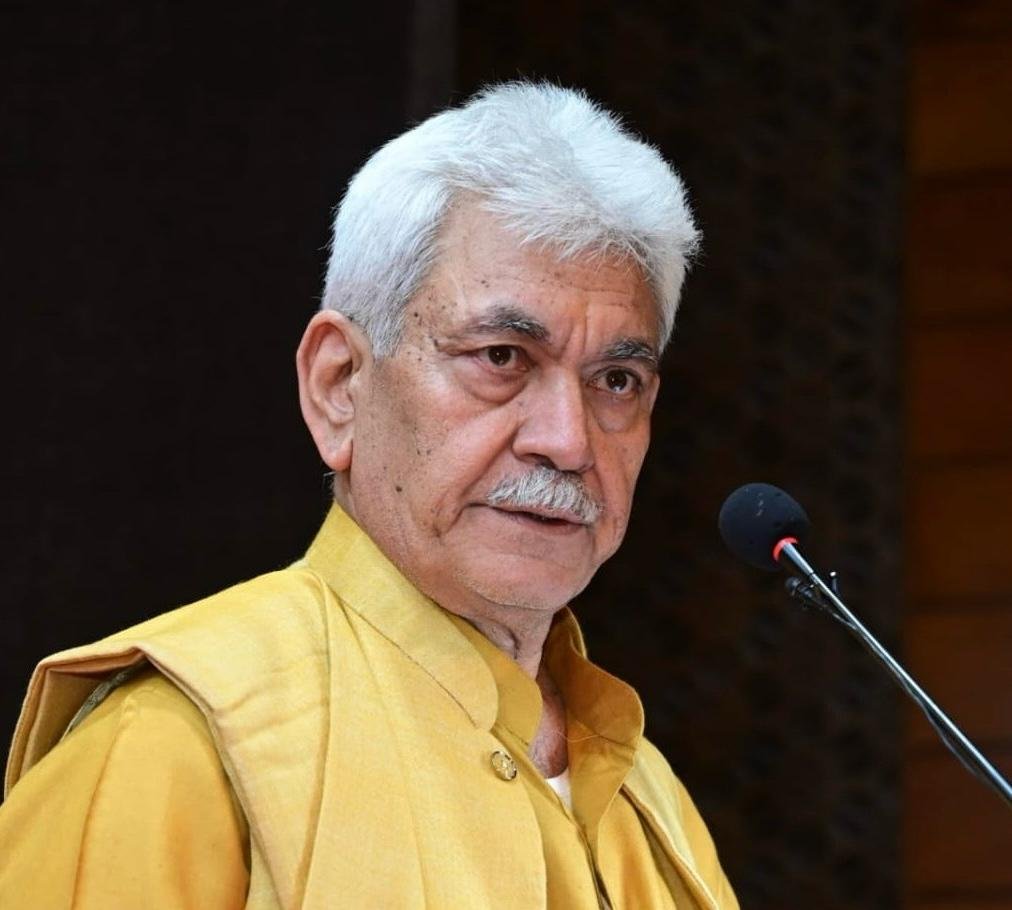
Appointed as Lieutenant Governor in August 2020, Manoj Sinha brought to Jammu and Kashmir a reputation for pragmatic leadership and a no-nonsense approach to governance. A former Union Minister with a background in engineering and public administration, Sinha was no stranger to complex challenges. His tenure has been marked by a deliberate departure from the bureaucratic inertia and systemic corruption that had long plagued the region’s administration. Instead, Sinha has introduced a model of governance defined by transparency, efficiency, and a commitment to delivering tangible results for the people of Jammu and Kashmir.
One of Sinha’s most significant contributions has been his ability to disrupt the entrenched status quo. For decades, governance in Jammu and Kashmir was hampered by inefficiency, political favoritism, and a culture of corruption that stifled progress. Sinha’s administration has prioritized quick decision-making and adaptability, ensuring that policies are not only formulated but also implemented with measurable outcomes. His zero-tolerance policy toward corruption has dismantled networks of patronage that once dominated the region’s administrative machinery, creating a more accountable and responsive system.
Economic Revitalization: Redefining Kashmir’s Potential
One of the most compelling aspects of Sinha’s tenure has been his focus on economic revitalization. Contrary to the international perception of Kashmir as a region mired in instability, Sinha’s administration has worked tirelessly to position Jammu and Kashmir as a hub for investment and economic growth. The introduction of the New Industrial Policy 2021–30, under Sinha’s guidance, has attracted unprecedented investment to the region. By offering incentives such as tax breaks, land subsidies, and streamlined regulatory processes, the policy has drawn interest from both domestic and international investors. As a result, over ₹84,000 crore (approximately $10 billion USD) in investment proposals have been received, spanning sectors like tourism, agriculture, healthcare, and information technology.
Tourism, long considered the backbone of Kashmir’s economy, has seen a remarkable revival under Sinha’s leadership. The global image of Kashmir as an unsafe destination is being challenged by record tourist inflows, with over 2 crore (20 million) visitors in 2022 alone, a figure that has continued to grow. Initiatives like the promotion of offbeat destinations, adventure tourism, and heritage circuits have diversified the tourism sector, while infrastructure improvements—such as upgraded roads, airports, and hospitality facilities—have made the region more accessible. The iconic Dal Lake, often romanticized in global media, is now complemented by lesser-known gems like Gurez Valley and Bangus, which Sinha’s administration has actively promoted to showcase Kashmir’s diverse beauty.
Agriculture and allied sectors, critical to the livelihoods of millions of Kashmiris, have also received significant attention. Sinha has spearheaded initiatives to modernize farming practices, promote organic agriculture, and enhance market access for local produce like apples, saffron, and walnuts. The establishment of Farmer Producer Organizations (FPOs) and cold storage facilities has empowered farmers, reducing post-harvest losses and ensuring better prices. These efforts are not only boosting rural incomes but also challenging the narrative of a region solely defined by conflict, highlighting instead its economic potential and entrepreneurial spirit.
Empowering the Youth: Education and Employment
The youth of Jammu and Kashmir, often portrayed in international media as disenfranchised and prone to unrest, are at the heart of Sinha’s vision for a transformed Kashmir. Recognizing that a young, skilled population is key to sustainable development, his administration has prioritized education and employment opportunities. The reopening of schools, colleges, and universities, which were frequently disrupted in the past due to strikes and curfews, has restored academic stability. Scholarships, skill development programs, and vocational training initiatives have been rolled out to equip young Kashmiris with the tools to compete in a globalized economy.
The Jammu and Kashmir government, under Sinha’s leadership, has also made strides in generating employment. Over 40,000 government jobs have been filled through transparent recruitment processes, a stark contrast to the nepotism that once characterized public sector hiring. Additionally, schemes like the Mission Youth initiative have provided entrepreneurship opportunities, financial support, and mentorship to young Kashmiris, fostering a culture of innovation and self-reliance. These efforts are reshaping the narrative around Kashmiri youth, presenting them not as victims of circumstance but as architects of a brighter future.
Security and Stability: A Foundation for Progress
While international media often focuses on Kashmir’s security challenges, Sinha’s administration has made significant strides in stabilizing the region. The decline in incidents of violence and terrorism-related activities in recent years reflects a multi-pronged approach that combines robust security measures with community engagement. Sinha has emphasized dialogue with local stakeholders, ensuring that governance is inclusive and responsive to the needs of the people. The reduction in stone-pelting incidents, once a hallmark of unrest, and the increased participation in democratic processes, such as local elections, signal a growing trust in the administration.
The international community’s perception of Kashmir as a militarized zone often ignores the efforts to normalize civilian life. Sinha’s administration has worked to reduce the heavy-handedness associated with security operations, focusing instead on intelligence-driven, targeted actions against militancy. Simultaneously, infrastructure projects, such as the construction of roads, tunnels, and railway lines, are connecting remote areas, fostering a sense of integration and accessibility that was previously lacking.
Cultural Preservation and Global Outreach
Kashmir’s cultural heritage, from its Sufi traditions to its intricate handicrafts, is a source of immense pride but is often overshadowed by conflict narratives. Sinha’s administration has taken steps to preserve and promote this heritage, both for local pride and to attract global interest. Festivals like the Kashmir Literature Festival, cultural fairs, and handicraft exhibitions have been organized to showcase the region’s artistic legacy. The promotion of Pashmina shawls, Kashmiri carpets, and traditional cuisine on international platforms is helping rebrand Kashmir as a cultural hub rather than a conflict zone.
Sinha has also recognized the importance of countering misinformation on the global stage. By engaging with international delegations and promoting tourism, his administration is directly challenging the one-dimensional narrative of Kashmir as a place of strife. The hosting of G20 Tourism Working Group meetings in Srinagar in 2023 was a landmark event, signaling to the world that Kashmir is open for business and dialogue. Such initiatives are gradually shifting perceptions, inviting the international community to see Kashmir not just through the lens of conflict but as a region of opportunity and resilience.
Challenges and the Path Ahead
Despite these achievements, challenges remain. The legacy of conflict, coupled with decades of mistrust, cannot be erased overnight. International media, often influenced by geopolitical agendas, continues to focus on isolated incidents rather than the broader trajectory of progress. The communication blackout following the abrogation of Article 370, while temporary, left a lasting impression on global perceptions, and Sinha’s administration must continue to address concerns about civil liberties and press freedom.
Moreover, the aspirations of the Kashmiri people, particularly the youth, must remain at the forefront. While economic and administrative reforms are critical, ensuring that the voices of ordinary Kashmiris are heard in shaping their future is equally important. Sinha’s emphasis on grassroots governance, through initiatives like the Back to Village program, which brings officials directly to rural communities, is a step in this direction, but sustained efforts are needed to build lasting trust.
A New Kashmir for a Global Audience
The story of Kashmir under Manoj Sinha’s leadership is one of transformation, resilience, and hope. It is a story that challenges the international community to look beyond outdated stereotypes and recognize the region’s potential as a beacon of progress in South Asia. By disrupting the status quo, rooting out corruption, and prioritizing economic and social development, Sinha has laid the foundation for a Kashmir that is not defined by conflict but by opportunity.
For an international audience accustomed to seeing Kashmir through the prism of violence, this is an invitation to reconsider. Visit the vibrant markets of Srinagar, engage with the entrepreneurial youth of the Kashmir Valley, or explore the untouched beauty of Ladakh. The reality of Jammu and Kashmir today is far richer and more dynamic than the headlines suggest. Under Manoj Sinha’s stewardship, Kashmir is not just managing its day-to-day affairs—it is redefining its identity and reclaiming its place on the global stage.