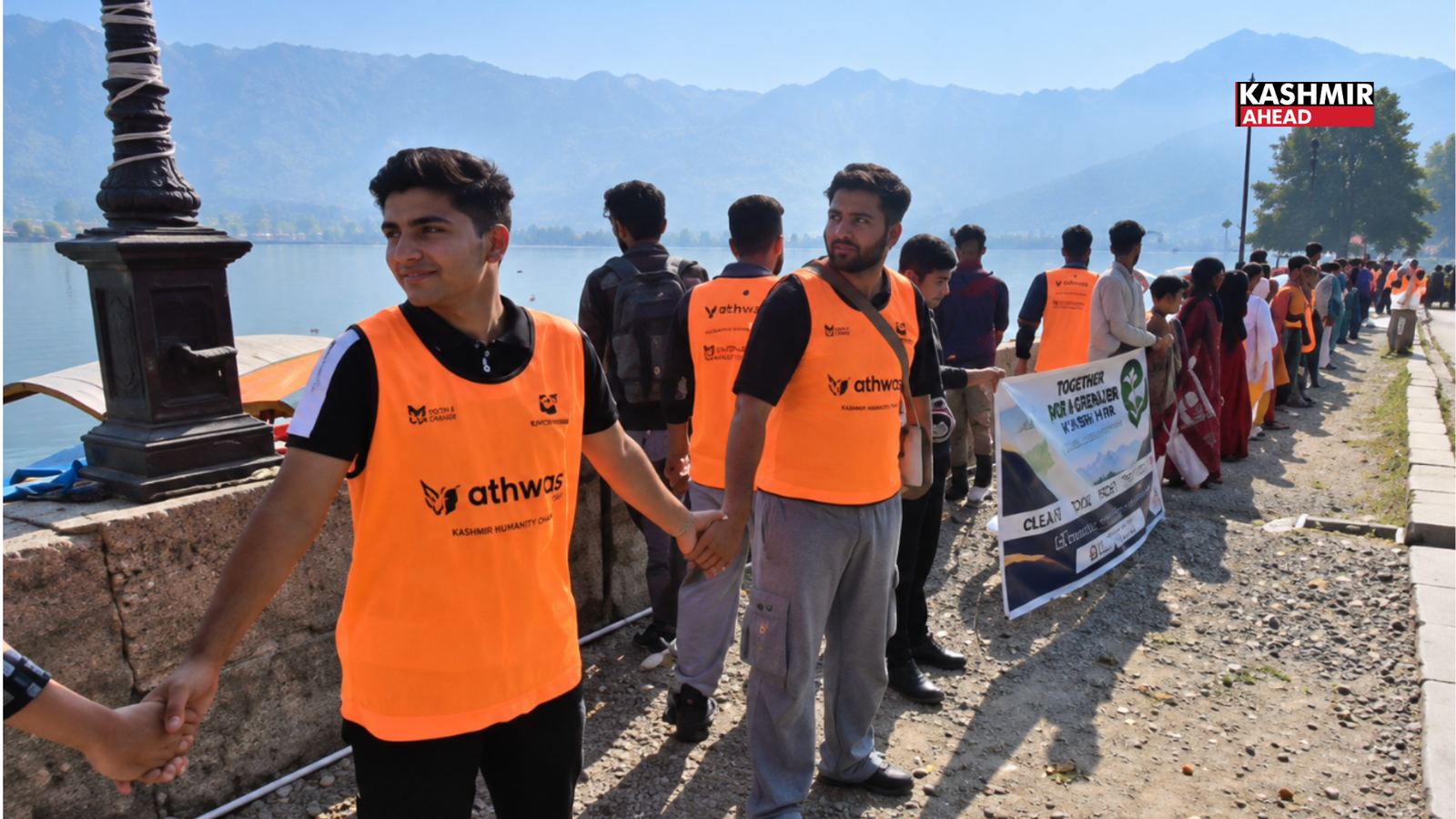
Srinagar, September 20,2026- In a striking display of collective environmental responsibility, hundreds of students, volunteers, Rotarians, and community members gathered today to form a massive human chain across Dal Lake, marking the observance of World Cleanup Day. The event stood as a powerful symbol of unity, drawing attention to the pressing need for cleaner, healthier water bodies across Kashmir.
Participants from various walks of life converged along the shores and stretches of Dal Lake, joining hands to create an unbroken chain that extended across a significant portion of the iconic waterbody. The sheer scale of participation reflected a growing awareness within the local community about the environmental challenges facing one of Kashmir’s most treasured natural landmarks.
Students formed a particularly enthusiastic segment of the gathering, demonstrating the increasing involvement of younger generations in causes related to sustainability and conservation. Their participation highlighted a broader shift in how environmental responsibility is being embraced not just by policymakers and organizations, but by everyday citizens, including school and college-going youth who are increasingly recognizing their role in protecting natural resources for future generations.
Rotarians and volunteer groups played a central role in organizing and mobilizing the event, showcasing the impact of civic and community-driven initiatives in addressing local environmental concerns. Such collaborations between volunteer organizations, educational institutions, and local residents are increasingly seen as vital to sustaining long-term conservation efforts, particularly in regions where natural resources face mounting ecological pressure.
Dal Lake itself holds immense significance, not only as a major tourist attraction that draws visitors from across the country and around the world, but also as an integral part of Kashmir’s cultural and ecological identity. Over the years, however, the lake has faced numerous environmental challenges, including pollution from human activity, encroachment, and the gradual degradation of its aquatic ecosystem. These challenges have raised concerns among environmentalists and local authorities alike about the long-term health and sustainability of the lake.
Today’s human chain initiative aimed to bring renewed public attention to these issues, using a visually powerful and symbolic gesture to communicate a message of collective responsibility. By physically linking hands across the lake, participants sought to demonstrate that environmental conservation is not solely the responsibility of government bodies or specialized organizations, but a shared duty that requires active participation from the broader community.
Organizers of the event expressed optimism that the visibility generated by such a large-scale demonstration would inspire continued engagement in cleanup and conservation activities throughout the year, rather than remaining a one-time symbolic gesture. Many emphasized that sustained efforts — including regular cleanup drives, waste management initiatives, and public awareness campaigns — are essential to protecting Dal Lake and other vital water bodies in the region from further environmental decline.
World Cleanup Day, observed globally each year, serves as an occasion for citizens to actively participate in environmental action, often through organized cleanup drives, awareness walks, and community-led initiatives. The observance in Srinagar this year, centered around the symbolic human chain across Dal Lake, added a unique and locally resonant dimension to the global movement, tying international environmental consciousness to a landmark that holds deep local significance.
As the event concluded, many participants reflected on the importance of translating symbolic actions into lasting change. While the human chain itself served as a powerful visual statement, organizers and volunteers alike underscored that true environmental progress would depend on continued vigilance, active participation, and long-term commitment from the community.
Ultimately, today’s gathering at Dal Lake reinforced a hopeful message — that when students, volunteers, and community members come together with a shared purpose, even a single day of collective action can spark meaningful conversations about environmental stewardship, setting the stage for more sustained efforts to preserve Kashmir’s natural heritage for generations to come.