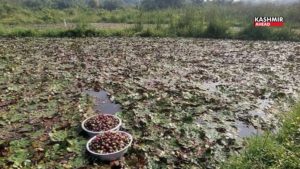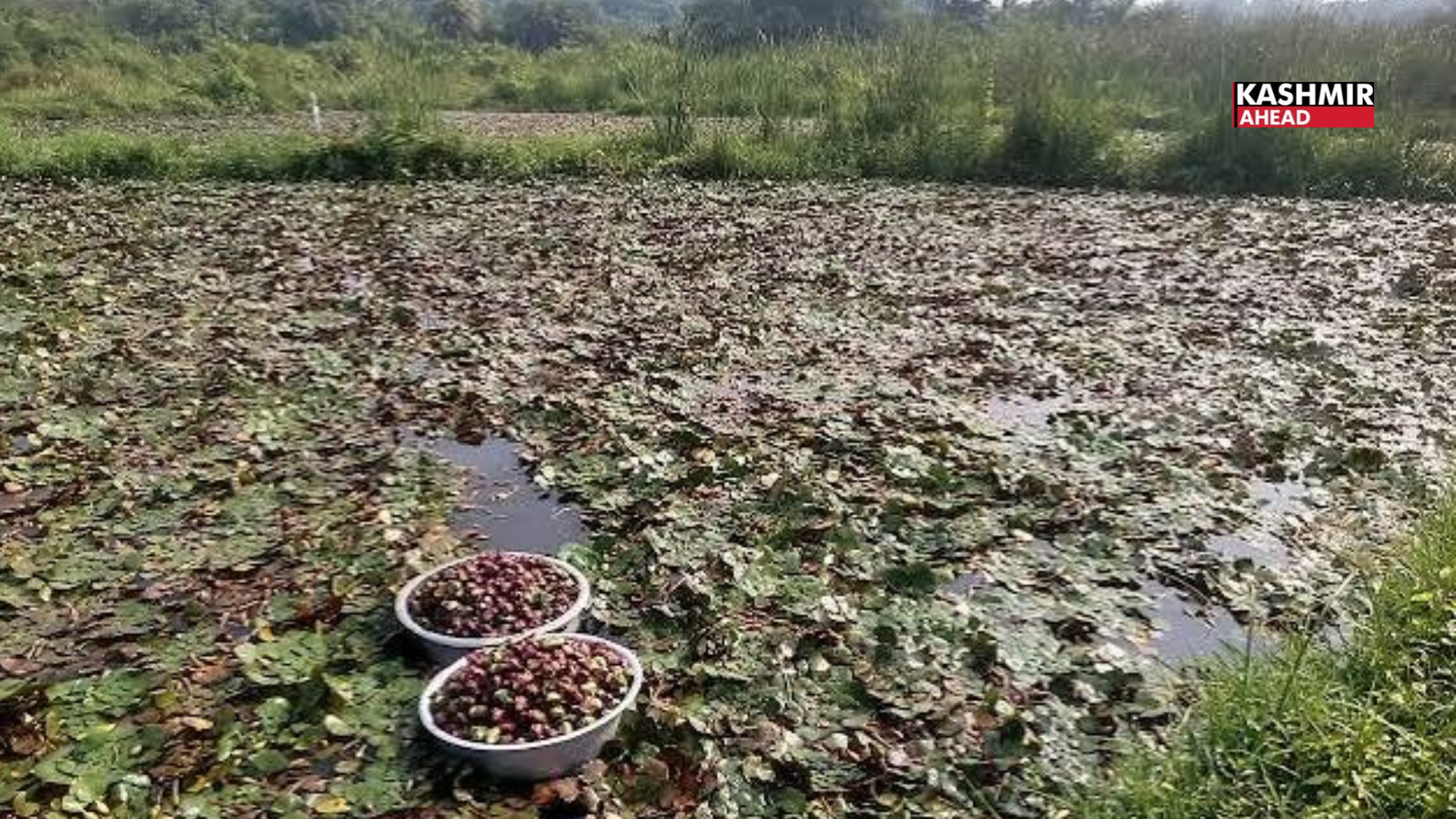
Wular Lake, November 20,2026- Amid the vast wetlands of Wular Lake in north Kashmir, a centuries-old tradition continues to connect local communities with nature. As the harvesting season arrives, residents venture into the muddy waters of one of Asia’s largest freshwater lakes to collect water chestnuts, a seasonal crop that has supported generations of families living along its shores.
For many locals, water chestnut harvesting is more than an agricultural activity. It is an important source of livelihood, a part of Kashmir’s cultural heritage and a traditional occupation passed down from one generation to another.
A Traditional Practice Rooted in Generations
Every year, local harvesters enter the shallow and marshy stretches of Wular Lake in search of water chestnuts growing beneath the water, mud and aquatic vegetation. The work requires considerable physical effort, patience and knowledge of the lake’s changing water conditions.
One of the most distinctive features of this traditional practice is the use of short wooden skis, locally known as Pachee Khraw Khoor. These specially used wooden supports help harvesters move across the marshy wetlands where walking normally becomes difficult.
While some people carefully walk through relatively shallow waters, others navigate deeper stretches covered with thick, sticky mud. Balancing themselves in these challenging conditions, they search for water chestnuts hidden beneath the muddy surface.
The harvesting process is largely manual and requires experience. Locals familiar with the lake understand where the crop grows and how to collect it without damaging the surrounding vegetation.
A Source of Livelihood for Local Families
For communities living around Wular Lake, water chestnut harvesting plays an important role in their seasonal economy. The collected produce is sold in local markets and provides income to families who depend on the lake’s natural resources.
Many households have continued this occupation for decades, following practices learned from their parents and grandparents. For them, the lake is not simply a geographical landmark but a source of food, employment and economic security.
The seasonal activity also reflects the close relationship between Kashmir’s rural communities and its wetlands. Generations have developed traditional methods to utilise the lake’s resources while adapting to its natural environment.
However, despite its importance, harvesters say maintaining this traditional livelihood has become increasingly challenging.
Pollution Raises Concerns Over Declining Production
Local harvesters have expressed concern over the growing pollution in Wular Lake, claiming that it has affected water chestnut production over the years.
According to residents, the quantity of water chestnuts collected during the harvesting season has declined, creating difficulties for families that depend on the crop for their income.
Pollution, increasing pressure on wetland resources and changes in the lake’s ecological conditions have raised concerns about the long-term sustainability of traditional harvesting activities.
The declining yield not only affects the earnings of local harvesters but also threatens an occupation that has remained an important part of the region’s cultural and economic identity.
For families whose livelihoods are closely connected with the lake, the changing conditions have become a matter of serious concern.
Protecting Wular Means Protecting Livelihoods
Wular Lake is an important wetland ecosystem in Jammu and Kashmir and plays a significant role in maintaining the region’s ecological balance. Its waters and surrounding wetlands support diverse aquatic life, vegetation and several traditional livelihood activities.
The lake also contributes to flood management and provides resources to communities living in its surrounding areas.
Environmental protection and conservation efforts are therefore important not only for preserving biodiversity but also for safeguarding the livelihoods of people who depend on the wetland.
Local communities believe that reducing pollution, protecting aquatic vegetation and maintaining the lake’s ecological health are essential to ensuring that traditional activities such as water chestnut harvesting can continue.
Keeping an Age-Old Tradition Alive
Despite difficult working conditions and concerns over declining production, local harvesters continue to enter the muddy waters of Wular Lake every season.
Their efforts represent the resilience of communities that have maintained a close relationship with the wetland for generations.
As Kashmir continues to witness changes in its environment and economy, the traditional practice of water chestnut harvesting remains a reminder of the region’s rich cultural heritage and the importance of sustainable livelihoods.
Preserving Wular Lake is therefore about more than protecting a natural water body. It is also about protecting the lives, traditions and economic future of the communities that call its shores home.
For the people of Wular, every harvested water chestnut carries a story of hard work, tradition and an enduring connection with nature.