By Diksha Benipuri | Kashmir Ahead
Kashmir , October 26,2026-Jammu and Kashmir is now pursuing skill development and clean energy expansion through two major government schemes and that is the Pradhan Mantri Skilling and Employability Transformation through Upgraded ITIs (PM-SETU) scheme and the PM Surya Ghar: Muft Bijli Yojana.The main focus of PM-SETU is to modernise industrial training institutes and strengthen industry-linked employment opportunities.While on the other hand PM Surya Ghar focuses on expanding rooftop solar installations among households and government buildings.
The latest available progress figures highlight the implementation framework, achievements, financial position and next steps for both programmes.
PM-SETU: Modernising Industrial Training Institutes
Launched in May 2025, PM-SETU seeks to transform Industrial Training Institutes (ITIs) into modern, industry-oriented Centres of Excellence. The initiative focuses on upgrading infrastructure, introducing industry-relevant training, improving educational delivery and strengthening employability among young people.
In Jammu and Kashmir, the scheme is being implemented through a cluster-based structure designed to connect selected ITIs with shared facilities, industry partnerships and improved training systems.
Two Clusters Planned Across Jammu and Srinagar
The proposed network comprises two integrated clusters covering a total of 10 ITIs.
The Jammu cluster will be anchored by ITI Jammu, with four spoke institutes located at R.S. Pura, Kathua, Samba and Nowshera. The Srinagar cluster will be led by ITI Srinagar, supported by four spoke institutes at Kangan, Ganderbal, Charar-e-Sharief and Budgam.
This arrangement is intended to establish hub institutions that coordinate training and infrastructure development across their respective networks. The cluster approach is expected to facilitate resource sharing, improve institutional coordination and support the delivery of industry-aligned vocational courses.
Administrative Preparations Completed
As of June 30, 2026, several foundational steps for PM-SETU had been completed in Jammu and Kashmir. These included identification of the clusters, constitution of the State Steering Committee, creation of a dedicated state budget head and designation of bank details for implementation.
Government Order No. 1725-JK(GAD), dated December 3, 2025, was also issued in connection with the scheme’s administrative framework.
The selection process for Anchor Industry Partners (AIPs) has been completed, with recommendations submitted to the Ministry of Skill Development and Entrepreneurship, Government of India, for consideration by the National Steering Committee.
However, no scheme funds had been received by the reporting date. Securing financial support and finalising the industry partnerships remain essential steps before the planned infrastructure upgrades can move forward.
Training to Focus on Industry Requirements
The proposed transformation under PM-SETU includes improvements to both physical facilities and training delivery. Planned interventions include modern workshops, smart classrooms, digital learning facilities and stronger apprenticeship connections.
The programme also envisages industry-aligned governance and curricula designed around practical skills and employment requirements. Once the Anchor Industry Partners are finalised and funds are secured, the next phase will involve cluster-wise upgradation and the operationalisation of improved training facilities.
The overall objective is to make vocational education more responsive to emerging industrial needs and prepare a workforce equipped for future employment opportunities.
PM Surya Ghar: Expanding Rooftop Solar in J&K
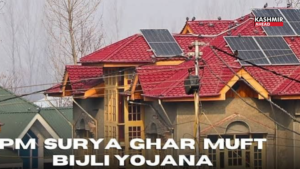
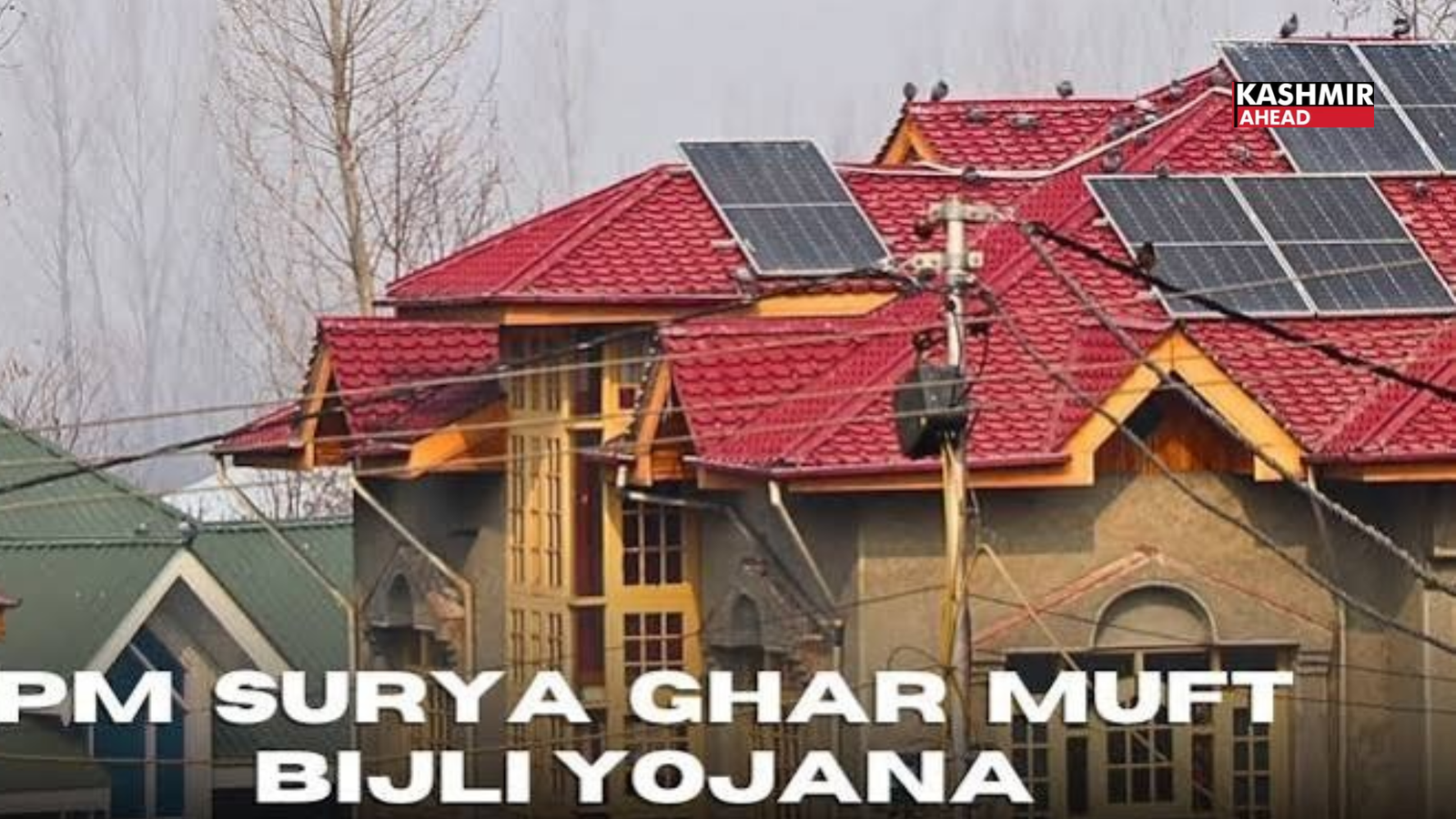
The PM Surya Ghar: Muft Bijli Yojana is supporting household rooftop solar adoption and the installation of solar systems on government buildings across Jammu and Kashmir.
The scheme combines Central Financial Assistance with additional support from the Union Territory administration. Domestic consumers are eligible for an additional J&K subsidy of Rs 3,000 per kilowatt, up to a capacity of 3 kW. J&K Bank has also been onboarded to facilitate loans for eligible beneficiaries.
The programme aims to reduce household electricity expenses, expand renewable-energy capacity and promote greater energy self-reliance.
Household Rooftop Solar Progress
According to the reported July 2026 figures, 45,689 household rooftop solar systems had been installed against a target of 83,500. This represents approximately 54.72 per cent of the target.
Of the installed systems, 41,330 had been commissioned, while the total installed rooftop capacity stood at 163.69 MW. Beneficiaries had received Rs 341.37 crore in Central Financial Assistance and Rs 13 crore in additional J&K subsidy.
The reported implementation figures also include 64,021 vendors selected by consumers, 50,710 consumer-vendor agreements and 50,140 loan applications disbursed, as recorded in the supplied progress data. The scheme’s outreach activities included 67.50 lakh bulk SMS messages, 1,634 information, education and communication campaigns, and training for 2,800 engineers.
The figures indicate progress in household adoption, while the difference between installed and commissioned systems highlights the importance of completing inspections and grid-connection formalities.
Solarisation of Government Buildings
The government-building component covers installations under both the Capital Expenditure (CAPEX) and Renewable Energy Service Company (RESCO) models.
The reported data records 8,600 government buildings solarised against a target of 22,494, equivalent to approximately 38.23 per cent. Installed capacity under this component was reported at 91.84 MW.
Implementation activities included material delivery for 1,224 buildings, work orders issued for 1,276 buildings and more than 2,300 buildings undergoing technical appraisal. The figures also record 5,137 work orders placed and a power purchase agreement signed with the Health and Medical Education Department for 8 MW.
The stated target for completing government-building solarisation under the CAPEX model is March 2027.
Financial Progress and Next Steps
For FY 2025–26, the supplied figures show expenditure of Rs 354.37 crore against an available amount of Rs 354.37 crore, indicating 100 per cent utilisation of the reported allocation.
For FY 2026–27, Rs 135.37 crore was reported as available, with the implementation plan indicating full expenditure of the amount. Priority actions include speeding up household installations, improving loan conversion, expediting distribution company inspections and net-metering approvals, and advancing government-building solarisation under both implementation models.
Model Solar Villages to Support Clean Energy
The scheme also includes plans to develop 20 Model Solar Villages, with one proposed in each district. Detailed Project Reports for 10 villages in the Kashmir division had been tendered, while the corresponding reports for 10 villages in the Jammu division remained under process.
These villages are intended to support wider renewable-energy adoption and demonstrate the potential of locally deployed solar infrastructure.
Building Skills and Energy Security
Together, PM-SETU and PM Surya Ghar address two important development priorities for Jammu and Kashmir: workforce readiness and clean-energy adoption. PM-SETU is laying the groundwork for industry-linked vocational training, while PM Surya Ghar is expanding household and public-sector access to solar power.
The next phase will depend on timely funding, stronger institutional coordination and completion of planned installations and upgrades. Effective implementation could improve employment prospects, reduce electricity costs and contribute to a more skilled and energy-resilient Jammu and Kashmir.