Kashmir, August 19,2026- Sergio Gor Jammu and Kashmir visit marks a significant diplomatic moment for India-US relations. On August 19, 2026, United States Ambassador to India Sergio Gor made his first visit to Jammu and Kashmir since assuming office.
His Jammu and Kashmir visit marks a fresh chapter as the US ambassador calls J&K an important part of India and signals a review of the US travel advisory. On August 19, 2026, United States Ambassador to India Sergio Gor made his first visit to Jammu and Kashmir since assuming office, meeting Chief Minister Omar Abdullah in Srinagar. Emerging from the discussions, Gor described the Union Territory as “an important part of India,” called it “an incredibly beautiful place,” and indicated that Washington would review its longstanding Level 4 “Do Not Travel” advisory for the region.
The remarks carry substantial diplomatic weight. Gor, who also serves as President Donald Trump’s Special Envoy for South and Central Asia, is the first serving US ambassador to undertake a standalone visit to the Union Territory since the abrogation of Article 370 in 2019 and the first such high-level engagement after the April 2025 Pahalgam terror attack. His clear affirmation of Jammu and Kashmir’s status aligns with India’s consistent position that the region is an integral part of the country and that its affairs remain an internal matter.
Speaking to reporters after the meeting, Gor said: “It’s a pleasure to be here. This is an important part of India. I am here, visiting for the first time. It is an incredibly beautiful place. I am thrilled to be here.” He described the talks as “very good,” “warm,” and “cordial,” noting that follow-up discussions would be taken to Washington and Delhi. In a post on X, the ambassador added that the conversation focused on Abdullah’s priorities and ways to deepen economic collaboration for mutual benefit.
On the travel advisory, Gor was measured but clear. The United States currently maintains its highest-level warning for most of Jammu and Kashmir (excluding eastern Ladakh and Leh), citing terrorism and civil unrest. “The United States puts out travel warnings and every so often we re-evaluate those travel warnings. I cannot make any big announcements here today, but it is something we are going to look at,” he stated. He credited “New Delhi, the chief minister here, the government here” with taking “incredible steps” to improve safety and expressed hope that more Americans could eventually experience the region’s beauty and opportunities.
Chief Minister Omar Abdullah welcomed the engagement. He described the meeting as productive and focused on practical areas of cooperation, particularly tourism, horticulture, and the new economy. Abdullah noted that while certain legacy issues exist, the conversation would continue both with Washington and with the central government in New Delhi. He expressed optimism that engagement between the United States and Jammu and Kashmir would widen and deepen in the years ahead.
Why the Visit Matters
The significance of Gor’s statements and presence operates on several levels. Diplomatically, an explicit recognition by the US ambassador that Jammu and Kashmir is an important part of India reinforces New Delhi’s sovereignty narrative at a time when Pakistan continues to internationalise the issue. Coming from a close associate of President Trump who holds the dual role of ambassador and special envoy for the broader region, the message carries added authority.
Economically, the potential review of the travel advisory is highly consequential. Tourism remains a vital livelihood source for thousands of families in the Kashmir Valley. A Level 4 advisory acts as a strong deterrent for American and other Western travellers, affecting hotels, houseboats, transport operators, guides, and related services. Even a measured downgrade would signal improved confidence in the security environment and could encourage greater international footfall, investment interest, and people-to-people contact. Gor’s emphasis on the region’s beauty and opportunities directly addresses this economic dimension.
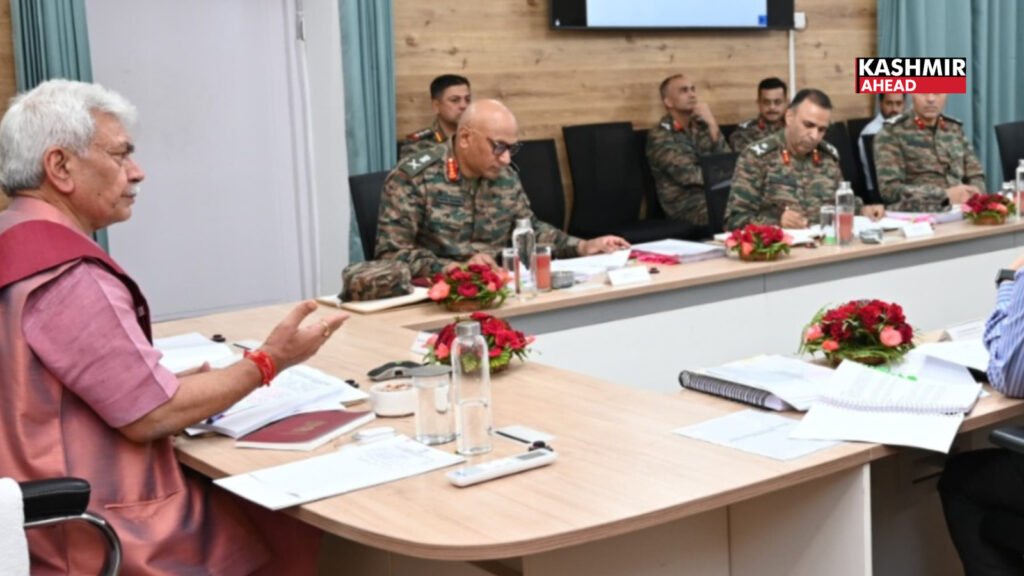
Strategically, the visit occurs against the backdrop of evolving India-US relations. Gor has been credited in diplomatic circles with helping stabilise and advance the bilateral partnership after earlier frictions. His decision to prioritise Jammu and Kashmir early in his tenure, combined with planned meetings with Lieutenant Governor Manoj Sinha and a subsequent visit to Ladakh, suggests a more granular American interest in the region’s development trajectory, security improvements, and economic potential rather than treating it solely through the lens of conflict.
The timing is also notable. It follows years of intensive security and developmental efforts by the central and local governments. While challenges remain, the ambassador’s public acknowledgment of progress on the ground provides external validation that can strengthen confidence among investors and tourists. At the same time, Abdullah’s careful framing—focusing on economic cooperation while noting that core political questions are to be resolved with New Delhi—reflects a pragmatic approach that keeps the engagement constructive.
Broader regional implications follow. A more open American posture toward travel and economic ties with Jammu and Kashmir undercuts narratives that portray the region as permanently unstable or disputed in a manner that invites external intervention. It also opens space for practical cooperation in sectors where the United States and India already share interests—sustainable tourism, agribusiness and horticulture value chains, technology-enabled services, and youth skill development.
Looking Ahead
Gor’s visit does not resolve every issue, nor did he claim it would. No immediate change to the travel advisory was announced, and complex political questions around statehood and special status remain matters for the Indian political process. Yet the tone, the language of affirmation, and the willingness to re-examine a restrictive advisory mark a constructive shift.
For Jammu and Kashmir, the episode offers a diplomatic opening that local stakeholders can build upon—through improved facilitation for visitors, transparent communication of security gains, and concrete proposals for collaboration in tourism and horticulture. For India-US relations, it demonstrates that engagement can extend beyond the national capitals into the country’s diverse regions.
In describing Jammu and Kashmir as an important part of India and expressing genuine appreciation for its beauty and potential, Ambassador Sergio Gor has delivered a clear message of recognition and possibility. The real test will lie in the follow-up actions that convert these words into sustained economic and people-to-people ties. For a region long defined in international discourse by conflict, the visit represents a welcome recalibration toward opportunity and partnership.