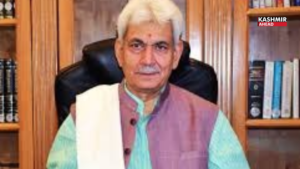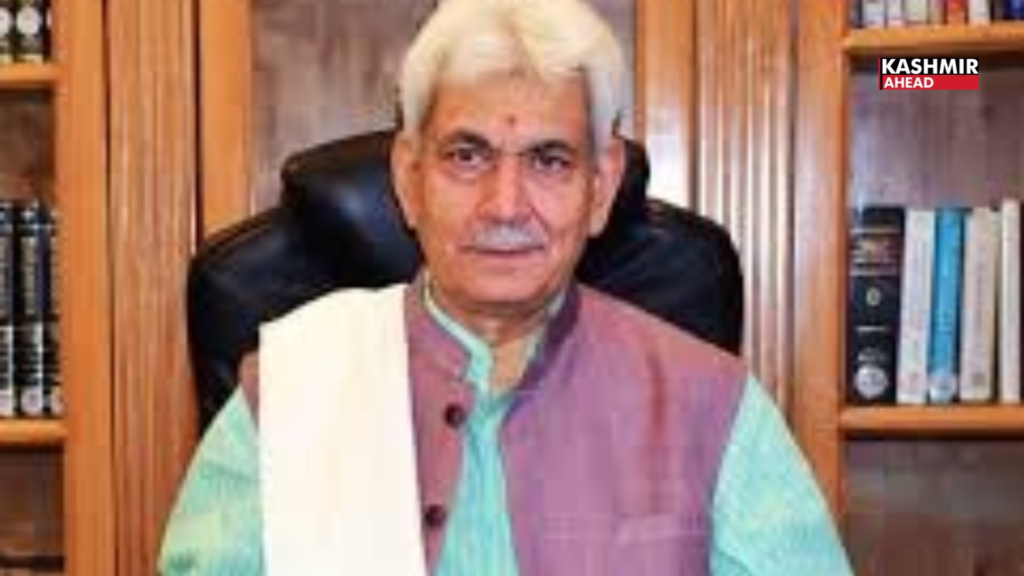
Srinagar, November 7,2026-The recent inscription of Kalhana’s Rajatarangini on UNESCO’s Memory of the World Asia-Pacific Regional Register is far more than a ceremonial honour. It is global recognition of a 12th-century Sanskrit masterpiece that remains unmatched in the Indian tradition for its critical historical method, literary power, and continuous account of a civilisation. As Lieutenant Governor Manoj Sinha noted, this recognition of Kalhana’s Rajatarangini—alongside the Mahabharata and Kautilya’s Arthashastra—reaffirms the timeless value of India’s civilisational traditions and their contribution to humanity. It also reminds us of our collective responsibility to preserve and promote this invaluable wisdom for future generations. For Jammu and Kashmir, and for the nation, it is a proud moment that illuminates why this “River of Kings” continues to flow with relevance nearly nine centuries after it was composed.
Kalhana, a Kashmiri Brahmin scholar, completed the Rajatarangini around 1148–1150 CE during the reign of King Jayasimha. Written in elegant Sanskrit verse, the work comprises approximately 7,826 verses organised into eight books, or Tarangas (“waves”). The metaphor is deliberate: kings rise and fall like waves on a river, yet the stream of Kashmir’s history continues unbroken. The narrative stretches from legendary origins—linking early rulers such as Gonanda to the world of the epics—to the political realities of Kalhana’s own lifetime. Early books blend myth, tradition, and recoverable history; from the rise of the Karkota dynasty (notably under the celebrated Lalitaditya Muktapida) the account becomes a more dependable historical record, continuing through the Utpala and Lohara dynasties to the consolidation of power under Jayasimha after the turbulence that followed King Harsha’s death in 1101.
What distinguishes Rajatarangini most sharply is Kalhana’s historical method. In the opening verses he declares that the narrator of kings’ deeds must be free of attachment and aversion, regarding events with the impartiality of Time itself. This was a radical stance in a literary culture where court poetry often served as praise (prashasti). Kalhana consulted at least eleven earlier chronicles (many now lost, including works by Kshemendra, Helaraja, and others), the Nilamata Purana, royal genealogies, copper-plate and stone inscriptions, land grants, coins, and oral testimony from elderly courtiers. He compared sources, noted contradictions, and openly admitted when evidence was insufficient for firm conclusions. He criticised rulers—dead and living—with remarkable frankness, evaluating them by their contribution to the welfare of subjects (prajanupalanam) and adherence to rajadharma. This combination of source criticism, chronological ordering (using traditional eras such as Kaliyuga and Shaka), attention to causation, and ethical judgment marks Rajatarangini as India’s earliest surviving work of critical historiography. Unlike the Puranas or purely panegyrical court literature, it treats the past as something that can be investigated, weighed, and narrated with relative detachment.
The literary achievement is equally outstanding. Rajatarangini is a mahakavya—a great poetic composition—yet its purpose is historical. Kalhana harnesses the resources of Sanskrit poetry not merely for ornament but to give the flow of events dramatic force and moral clarity. Descriptions of courts, campaigns, famines, temple-building, and political intrigue are vivid; character sketches are sharp. The work offers windows into medieval Kashmir’s society: administration and taxation, the role of Brahmin elites and Buddhist institutions that long coexisted, the prominence of powerful queens such as Didda, economic life, religious practices, and the valley’s connections with the wider Indian and Central Asian worlds. It preserves traditions that would otherwise have vanished and provides the foundational continuous narrative for the political history of early Kashmir. Later chroniclers—Jonaraja, Srivara, and others—explicitly continued the Rajatarangini tradition, extending the record toward the Mughal period.
Scholars have long recognised its exceptional status. From early 19th-century Orientalists such as H.H. Wilson to Aurel Stein’s magisterial critical edition and translation (completed around 1900), and modern historians of India, the consensus holds that no other Sanskrit text of the period matches its combination of chronological ambition, source awareness, and narrative scale. While it is not free of the limitations of its age—legendary material in the early books, occasional supernatural explanations, and the social perspectives of a learned Brahmin author—these do not diminish its pioneering character. It stands as the principal indigenous source for reconstructing the history of Kashmir before the late medieval period and a model of how regional history could be written with intellectual seriousness.
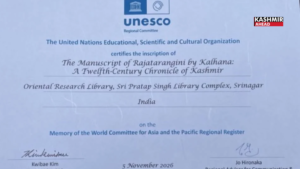
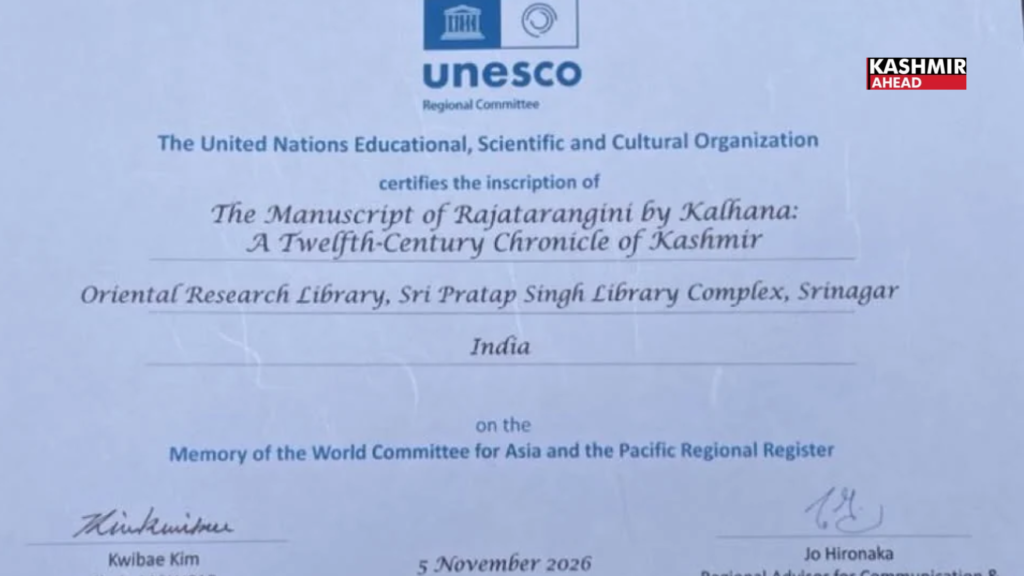
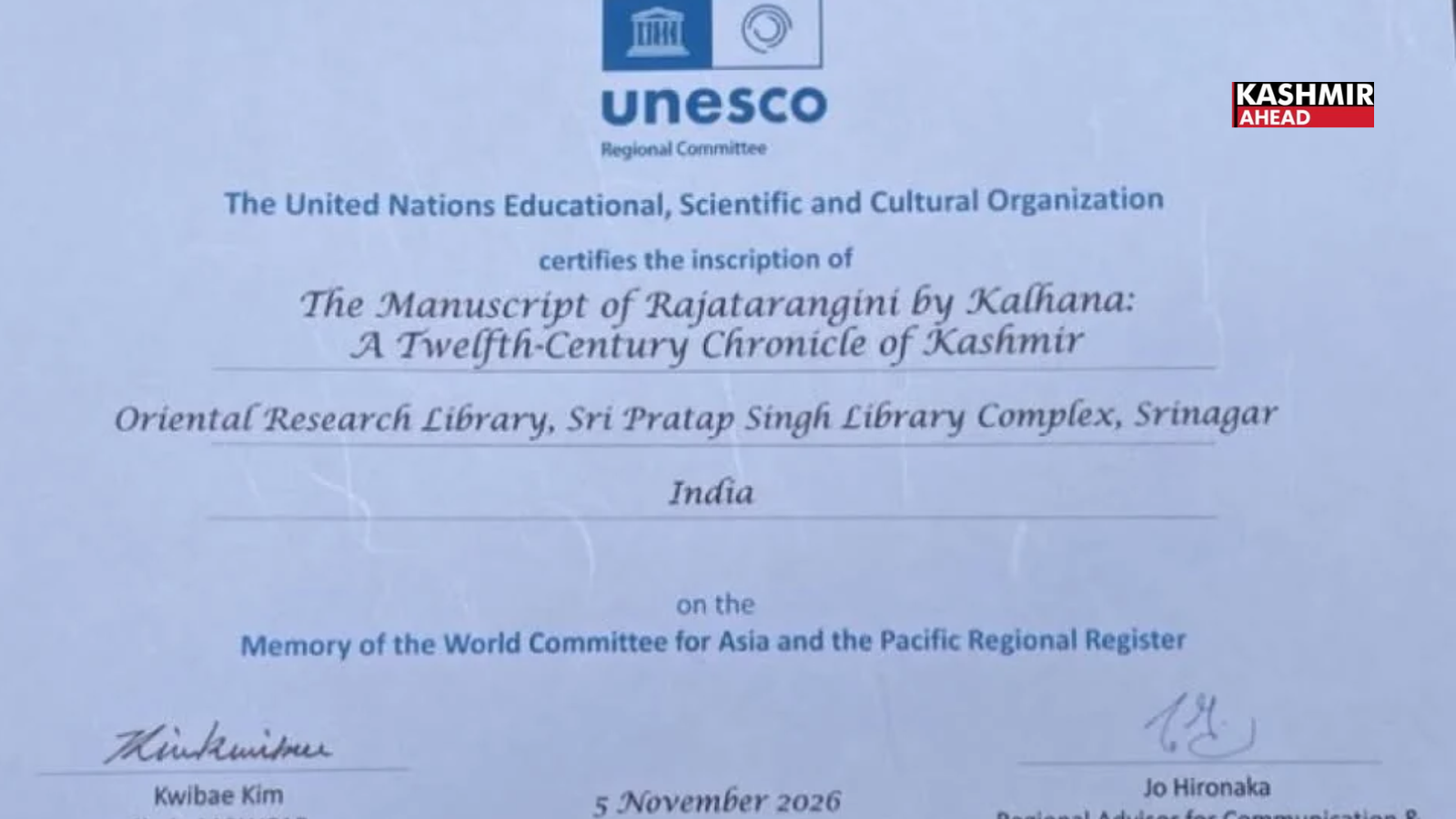
The UNESCO inscription of the manuscript preserved at the Oriental Research Library in the Sri Pratap Singh Library Complex, Srinagar—identified as “The Manuscript of Rajatarangini by Kalhana: A Twelfth-century Chronicle of Kashmir”—places this achievement in a global frame. Decided at the 11th session of the Memory of the World Committee for Asia and the Pacific in Jakarta in November 2026, the recognition (alongside manuscripts of the Mahabharata at the Bhandarkar Oriental Research Institute, Pune, and Kautilya’s Arthashastra at the Oriental Research Institute, Mysuru) raises India’s total inscriptions on the regional register to six. The Indira Gandhi National Centre for the Arts prepared the nomination dossiers. The certificate affirms the work’s value as documentary heritage that contributes to humanity’s shared memory. Written in the Sharada script on traditional Kashmiri material, the Srinagar manuscript is among the closest surviving witnesses to the original text.
This recognition carries practical and cultural weight. Manuscripts are fragile; neglect, conflict, and environmental factors have destroyed countless works. Inclusion in the Memory of the World programme strengthens arguments for conservation, digitisation, scholarly access, and public engagement. Under initiatives such as the Gyan Bharatam Mission, such inscriptions support efforts to preserve India’s manuscript heritage. For Jammu and Kashmir, it celebrates a distinctive intellectual tradition rooted in the valley—one that produced sophisticated historiography centuries before many comparable regional chronicles elsewhere in the subcontinent. It underscores Kashmir’s long-standing place within the broader Indian civilisational continuum, contributing unique historical, literary, and ethical insights.
In an age when historical memory is often contested or reduced to slogans, Rajatarangini offers a model of rigorous inquiry. Kalhana’s insistence on examining sources, acknowledging uncertainty, and judging power by its effects on ordinary people remains instructive. The work’s poetic river of kings reminds us that civilisations are sustained not only by monuments and conquests but by the patient labour of recording, reflecting upon, and transmitting the past. Its UNESCO recognition reaffirms that India’s documentary heritage—spanning epic, statecraft, and critical history—belongs to the world’s common inheritance.
The task ahead is collective. Preserving the manuscript, making reliable editions and translations widely available, incorporating the text into education and public discourse, and supporting further research are essential. Promoting Rajatarangini means more than celebration; it means ensuring that the wisdom it contains—about the responsibilities of power, the continuity of cultural life, and the possibility of honest historical reflection—reaches future generations in India and beyond. In that sense, the River of Kings continues to flow, carrying both the pride of a proud moment for Jammu and Kashmir and the nation, and the enduring responsibility to safeguard one of humanity’s remarkable achievements in historical writing.