Kashmir, September 24,2026-As millets return to Indian plates, a harder question follows them from field to kitchen: how does a buyer know that the grain in the packet is what the label says it is? Researchers now propose a four-layer technology system to answer that. It combines IoT, edge computing, cloud infrastructure and blockchain to trace millets across the supply chain.
Why traceability matters now
Millets such as jowar, bajra, ragi, kodo, kangni and kutki are being promoted as climate-smart, nutrient-dense alternatives to water-hungry staples. Experts describe them as climate-resilient crops that can replace water-heavy grains like rice, wheat and maize as temperatures rise and water becomes scarce. Their nutritional profile is a large part of the appeal. Lieutenant Governor Manoj Sinha has highlighted their dietary fibre, low glycaemic index, and content of iron, calcium, magnesium and zinc.
Growing demand brings risks familiar from other premium foods: adultera
Millets are having a moment. Once dismissed as “coarse grains,” jowar, bajra, ragi, kodo, kangni and kutki are being promoted as climate-resilient, nutrient-dense staples for a warming world. But as demand grows, one question matters more and more: can a shopper trust what is on the label?
The millet consumption story
Interest in millet consumption is rising for three reasons. Health-conscious urban buyers want fibre-rich foods with a low glycaemic index. Doctors are looking for dietary answers to lifestyle diseases such as diabetes. And planners see crops that need less water and fewer inputs than rice or wheat, which makes them a hedge against erratic monsoons and soil stress.
Rising demand also brings the usual risks of a premium food market: adulteration, blended flours sold as pure, vague “organic” claims, and origin stories nobody can check. Farmers who grow millets carefully often cannot prove it, so the price premium tends to be captured downstream.
A four-layer answer
Researchers propose a four-layer traceability architecture for millet supply chains, combining IoT, edge computing, cloud infrastructure and blockchain.
- IoT: Field sensors, batch tags and storage monitors record what happens to a crop, from soil and harvest details to humidity in the warehouse.
- Edge computing: Local devices clean and verify the data near the source, which suits rural areas with weak connectivity.
- Cloud: Validated records are consolidated, analysed and made available to processors, regulators and retailers.
- Blockchain: Key events are written to a ledger that is very hard to alter later, creating a shared, tamper-resistant history of each batch.
The consumer-facing result would be simple: scan a code and see where the grain was grown, who handled it and how it was stored.
The honest limits
Technology cannot fix everything. A blockchain protects records after they are written, not before, so bad data at the point of entry is still bad data. Sensors, third-party audits and fair incentives are needed to keep the front of the chain honest. There is also a cost problem. Smallholders cannot be expected to buy devices or manage software. Shared infrastructure through cooperatives, farmer-producer organisations and women’s self-help groups is a more realistic route than asking each farmer to digitise alone.
Policy momentum in Jammu and Kashmir
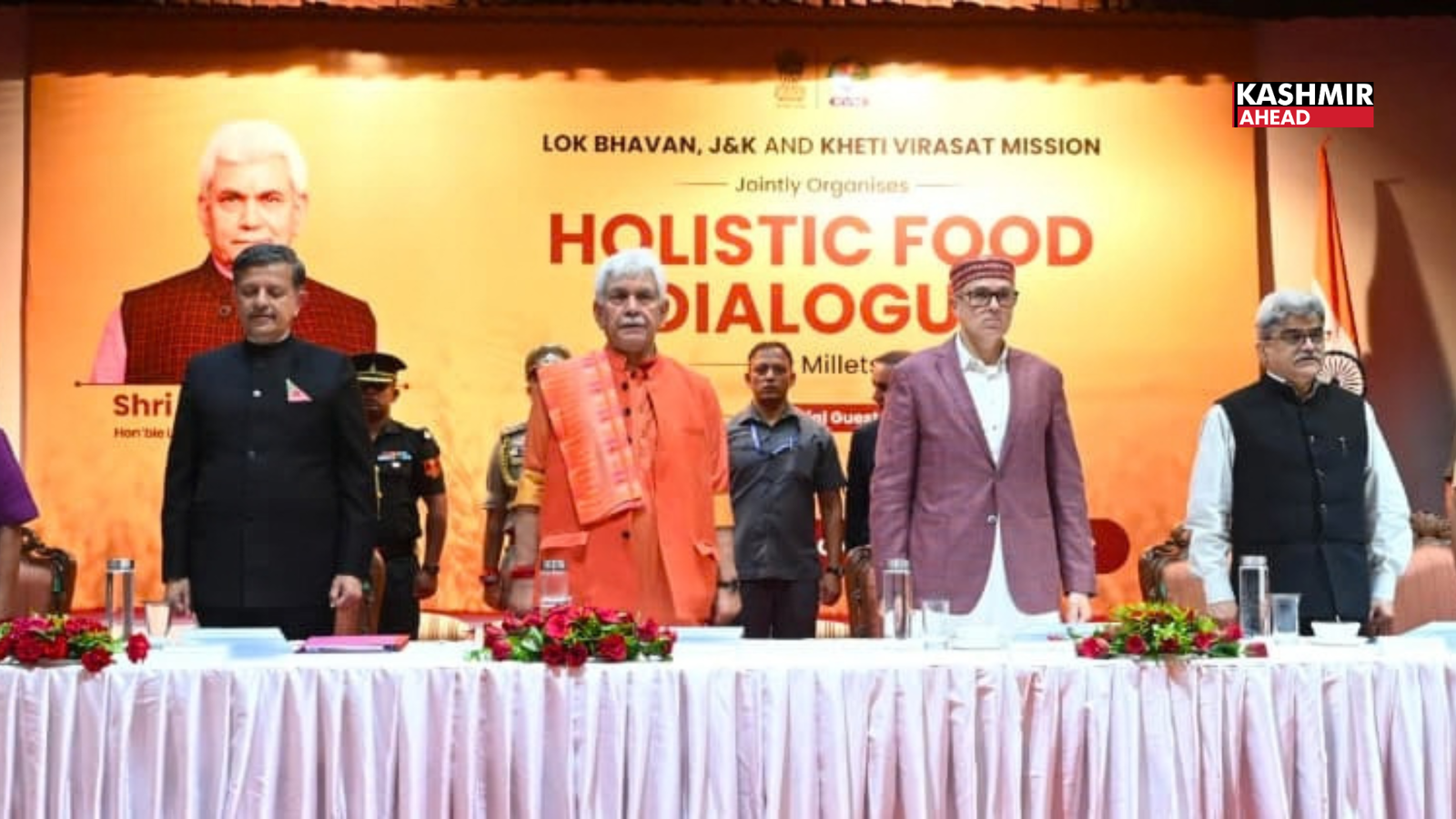
The policy side is moving quickly. Jammu and Kashmir Lieutenant Governor Manoj Sinha has spent recent days making the case for millets across the region. At national events in Jammu and Srinagar, including a “Millets for Health” dialogue at SKUAST-Jammu and a seminar at GMC Jammu, he tied the effort to the national Shree Anna vision.
His message focuses on small farmers. With more than 80 per cent of the region’s farmers being small or marginal and dependent on uncertain weather, he described the millets mission as the greatest hope for the smallest farmer. He also stressed benefits for nutrition, health and soil, and urged people to move from seminars to fields, markets and millet-based livelihoods, with particular attention to women and youth entrepreneurs.
Where policy and technology meet
That last point is where traceability becomes practical. Value addition, from millet flours to ready-to-eat snacks, only pays if buyers believe the product is authentic. A verifiable farm-to-shelf record could let a small producer in J&K prove that a batch is local and carefully handled, and command a better price for it. It could also help regulators spot fraud and help retailers withdraw a bad batch quickly instead of pulling entire product lines.
What to watch next
The four-layer model is still a blueprint, and pilots will show whether it works at the cost and scale small growers need. Success will depend on design choices: affordable hardware, simple interfaces in local languages, clear rules on who owns the data, and benefits that flow back to farmers.
If millets are to go from heritage grain to mainstream staple, trust will matter as much as taste. Technology that makes the supply chain visible could be what turns that trust into a market advantage for the farmer.
Where the two stories meet
Sinha’s call to move from seminars to markets is where traceability becomes practical. If millet-based products are to command fair prices, particularly those made by women’s groups and young entrepreneurs, buyers need confidence in their provenance. A verifiable record from farm to shelf could help a small producer in J&K show that a batch of kodo or ragi is genuinely local, chemical-free and properly handled, and get paid accordingly.
There are caveats. Smallholders may lack devices, digital literacy or reliable connectivity, and a system that piles compliance costs onto them could defeat its purpose. Any traceability scheme would need low-cost tools, shared infrastructure such as cooperatives or farmer-producer organisations, and clear rules on who owns the data.
The bottom line
The four-layer proposal is a promising blueprint rather than a finished solution. Pilots would show whether it can work at the scale and cost that small millet growers need. But the direction is sound: if millets are to move from heritage grain to mainstream staple, trust in the supply chain will matter as much as the grain itself.