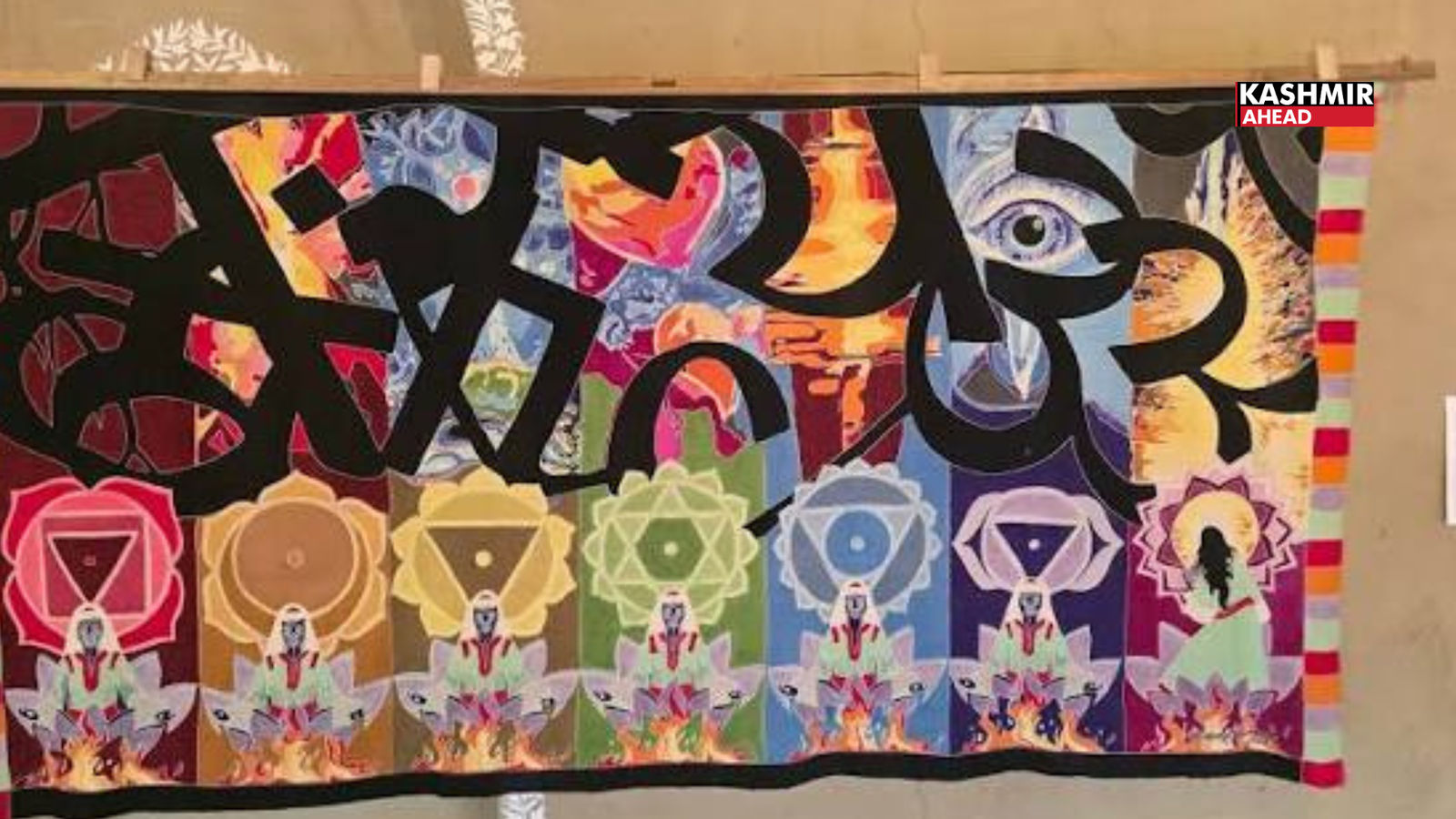
Srinagar, September 14, 2026 — Renowned Kashmiri artist Masood Hussain has turned 20 hand-spun Pashmina shawls into canvases for the timeless verses of Lal Ded, bringing the mystic poet’s centuries-old words into a striking new visual form. Titled “Vakhs of Silence,” the exhibition blends poetry, painting and traditional craftsmanship, reimagining the 14th-century poetess’s teachings for a contemporary audience.
The exhibition features approximately 20 Vakhs — the distinctive style of mystic verse, meaning “speech,” for which Lal Ded, also known as Lalleshwari, remains celebrated. Each verse has been transformed into a visual composition and hand-painted onto delicate Pashmina shawls, with English translations provided by Avtar Mota to make the work accessible to audiences unfamiliar with the original Kashmiri poetry. The project took nearly two-and-a-half years to complete.
Hussain, whose artistic practice has largely revolved around mixed media, canvas and themes drawn from Kashmir’s conflict and daily life, described painting on Pashmina as an entirely new experience for him. Unlike canvas, Pashmina is an exceptionally delicate and expensive material that leaves little room for error, and he admitted to initial hesitation before embracing the unfamiliar medium.
“The idea was to revive hand-spun and handloom Pashmina and explore what more could be done with it,” Hussain told reporters, adding that Pashmina shawls are recognised globally and remain an inseparable part of Kashmir’s identity.
As he worked, Hussain found a natural and deeper connection between the textile and Lal Ded’s poetry. He noted that Kashmir’s Pashmina tradition resonated strongly with the recurring imagery of thread, wool and weaving found throughout Lal Ded’s verses — a symbolic link between the region’s spiritual heritage and one of its most celebrated crafts.
The exhibition, now on display in Srinagar at a restored heritage space called Maqam, was curated by entrepreneur Mujtaba Kadri. The venue itself, set within the architectural vision of author-architect Sameer Hamdani, has been described as blending crafts, poetry, and built heritage into one seamless whole. Among the striking images on display is a celestial horse bearing a rider beneath a sky of constellations, alongside other compositions that turn toward themes of death, passage and the unseen — echoing Lal Ded’s philosophical preoccupations with truth and transcendence.
Beyond its artistic merit, the exhibition is also being seen as an attempt to reconnect younger generations with Lal Ded, whose poetry was once deeply woven into Kashmir’s oral tradition but has gradually faded from everyday cultural memory. By pairing her Vakhs with one of Kashmir’s most eloquent exports, Hussain hopes to spark renewed interest in both the region’s mystic literary heritage and its endangered handmade shawl tradition.
“Vakhs of Silence” stands as a rare confluence of literature, visual art and craftsmanship — a tribute to a poet who has shaped Kashmir’s spiritual and cultural identity for over six centuries, rendered anew through wool, colour and the quiet permanence of thread.