Bhaderwah,September 25,2026– In a quiet corner of Bhaderwah, a patch of land once written off as unproductive wasteland has been transformed into a flourishing vegetable garden, thanks to the dedicated efforts of students and teachers at the Government Higher Secondary School, Beararu. The initiative, driven by the school’s Eco-Club, is a shining example of how community spirit, environmental consciousness, and government policy can come together to create meaningful change.
The project aligns with the Centre’s PM POSHAN Abhiyan (Pradhan Mantri Poshan Shakti Nirman scheme), which aims to improve the nutritional outcomes of school children through the mid-day meal programme. Rather than depending solely on external supplies, the school decided to take matters into its own hands — literally — by cultivating its own vegetables using natural, chemical-free farming methods.
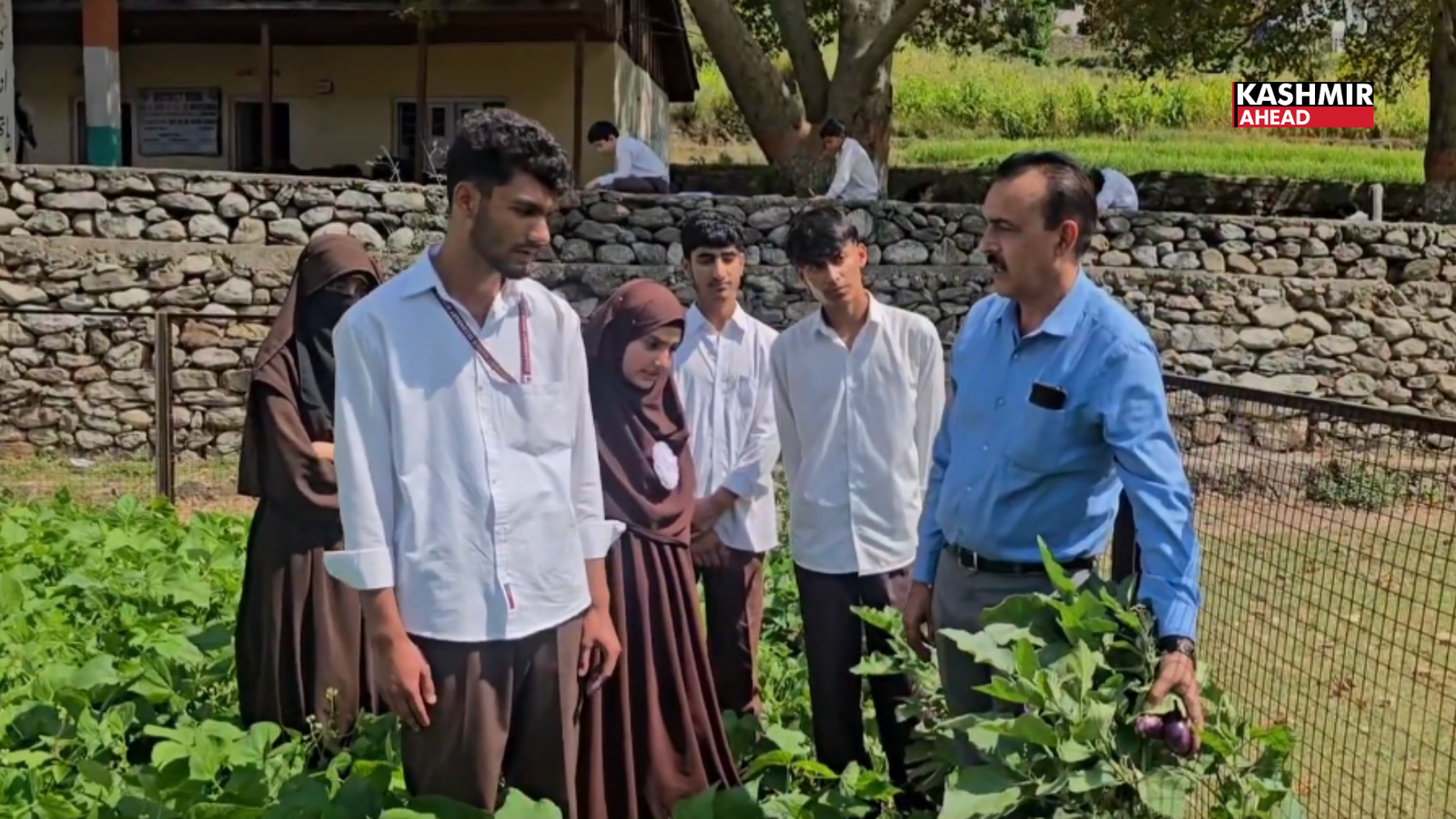
What was once barren and neglected land has now been converted into rows of thriving crops, including eggplants, leafy greens, and other seasonal vegetables. Students, guided by teachers and school staff, have taken on hands-on roles in every stage of the process — from preparing the soil and sowing seeds to weeding, watering, and eventually harvesting the produce.
Speaking about the initiative, school officials emphasized that the garden is not just about growing food, but about growing awareness. “Our goal was twofold,” said a teacher overseeing the Eco-Club. “First, to provide our students with safe, chemical-free vegetables for their daily mid-day meals, and second, to teach them the value of sustainable agriculture and environmental responsibility from a young age.”
The initiative also serves as a practical, real-world classroom. Students are learning about composting, natural pest control, soil health, and the importance of biodiversity — lessons that extend far beyond textbooks. By involving young minds directly in the farming process, the school hopes to instill lifelong habits of sustainability and self-reliance.
This natural farming model eliminates the use of synthetic fertilizers and pesticides, ensuring that the vegetables served in the mid-day meals are healthier and free from harmful chemical residues. For a region like Bhaderwah, nestled in the hills of Jammu and Kashmir, where agriculture remains a way of life for many families, the project also reinforces traditional farming values while introducing modern, eco-conscious practices.
Beyond nutrition, the initiative carries a strong environmental message. Converting unused or degraded land into productive green space helps combat soil erosion, supports local biodiversity, and reduces the school’s dependence on outside food sources — a small but significant step toward sustainability at the grassroots level.
The Eco-Club’s efforts have not gone unnoticed. Local media outlet Kashmir Ahead recently visited the school to document the initiative, capturing scenes of students and staff tending to the garden together — a visual testament to teamwork and shared purpose. The visit highlighted how a simple, community-driven idea can yield tangible benefits: fresher food, cleaner farming, and a more environmentally aware student body.
As more schools across Jammu and Kashmir look for ways to strengthen the PM POSHAN Abhiyan at the local level, the Beararu model offers a replicable blueprint. It demonstrates that with minimal resources but maximum enthusiasm, even the most unlikely spaces — wasteland included — can be transformed into productive, life-giving gardens.
For the students of Govt Higher Secondary School Beararu, the lesson is clear: sustainability isn’t just something to be studied, it’s something to be lived, planted, and harvested — one vegetable at a time.
Want me to put this into a Word document or formatted file for download/sharing?