Srinagar , November 3,2026-Kashmir’s world-famous saffron cultivation is moving towards a new era of technological innovation, with Sher-e-Kashmir University of Agricultural Sciences and Technology of Kashmir (SKUAST-K) testing artificial intelligence (AI)-powered robotic systems to modernise traditional saffron farming.
The initiative aims to introduce advanced technology into different stages of saffron cultivation, including flower picking, stigma separation and weed removal. The technology is being explored to reduce manual labour, improve operational efficiency and support farmers in maintaining the quality and productivity of the region’s prized spice.
Saffron, popularly known as the ‘Red Gold’ of Kashmir, is one of the most valuable agricultural products of the Union Territory. Its cultivation is concentrated mainly in the Pampore region of Pulwama district, where generations of farmers have preserved the traditional knowledge and practices associated with saffron production.
However, saffron cultivation involves several labour-intensive activities, particularly during the short harvesting season. Flowers need to be picked carefully, and their delicate red stigmas must be separated manually to maintain the quality of the final product. The process requires considerable time, precision and a large workforce.
The introduction of AI-powered robotics could help address some of these challenges by bringing automation into important agricultural operations.
According to researchers, producing just one kilogram of dry saffron requires separating the red stigmas from approximately 1.6 lakh flowers. This makes harvesting and post-harvest processing among the most demanding stages of saffron production. The proposed robotic systems are expected to make these operations faster and more efficient while reducing the physical burden on farmers.
AI-Powered Robots to Transform Saffron Cultivation
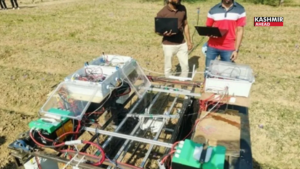
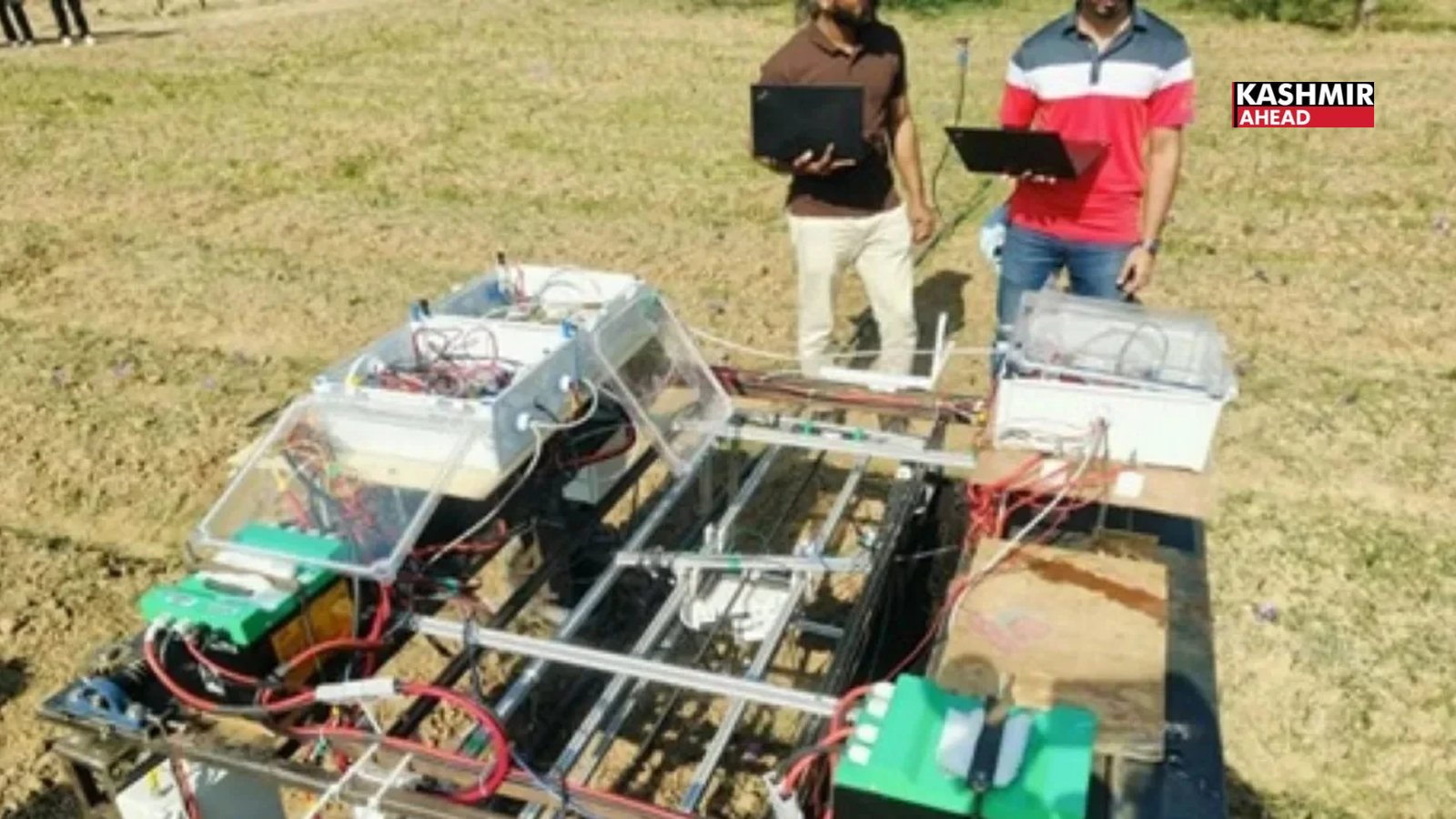
During a recent demonstration at the Advanced Research Station for Saffron and Seed Spices at Konibal, Pampore, scientists showcased experimental robotic machines developed to perform multiple agricultural operations.
One of the major innovations is a robotic flower-picking system equipped with advanced vision technology. The system is designed to identify saffron flowers and pick them with greater precision. Researchers are also developing mechanical units capable of separating the delicate red stigmas from harvested flowers, potentially reducing the time and effort involved in traditional processing.
Another important innovation is an autonomous weed-removal robot designed to identify and remove unwanted vegetation from saffron fields. The machine uses automated navigation technology and can be controlled through a mobile application, offering farmers a modern solution to one of the recurring challenges of saffron cultivation.
Prof Syed Zameer Hussain, Director Research at SKUAST-K and Chief Principal Investigator of the project, said the initial trials had produced encouraging results. Researchers are working towards making the machines available to farmers, with field-ready systems targeted for the coming year.
Collaboration with National Research Institutions
The initiative is being implemented under the Agri-Excellence Programme, supported by the Ministry of Electronics and Information Technology (MeitY), Government of India.
SKUAST-K is collaborating with several prominent national research institutions, including the Central Mechanical Engineering Research Institute (CMERI), Durgapur and Ludhiana, the Central Manufacturing Technology Institute (CMTI), Bengaluru, and the Centre for Development of Advanced Computing (C-DAC), Kolkata and Mohali.
Vice Chancellor SKUAST-K, Prof Nazir Ahmad Ganai, said the integration of mechanisation and modern technologies with traditional agricultural practices could play an important role in strengthening Kashmir’s saffron industry.
He highlighted that the shortage of agricultural labour had emerged as a major concern, with fewer young people willing to undertake physically demanding farming activities. Mechanisation could help address this challenge while encouraging younger generations to explore opportunities in modern agriculture.
Researchers will continue testing the prototypes over the coming months, with further improvements planned to ensure that the machines can operate effectively under actual field conditions.
Technology to Support Farmers and Revive Saffron Production
The project also focuses on introducing technological solutions beyond robotic harvesting and weed management. SKUAST-K has developed machinery for saffron bed preparation and corm planting, with the corm-planting equipment already operational at its research station.
The university is also exploring intercropping saffron with black cumin, locally known as Kala Jeera, to help farmers diversify agricultural activities and make better use of their land.
These initiatives are particularly significant at a time when Kashmir’s saffron industry faces challenges related to changing climatic conditions, prolonged dry spells, declining cultivated areas and labour shortages.
By introducing artificial intelligence, robotics and precision agriculture, SKUAST-K aims to make traditional saffron cultivation more efficient, sustainable and attractive to the next generation of farmers.
The ongoing research represents an important step towards connecting Kashmir’s centuries-old agricultural heritage with modern scientific innovation.
For saffron growers in Pampore and other cultivation areas, the successful adoption of these technologies could reduce labour-intensive operations, improve harvesting efficiency and strengthen the long-term sustainability of the region’s famous saffron industry.
As Kashmir’s saffron fields embrace technological innovation, AI-powered farming could open new possibilities for preserving the region’s agricultural heritage while preparing it for the future.