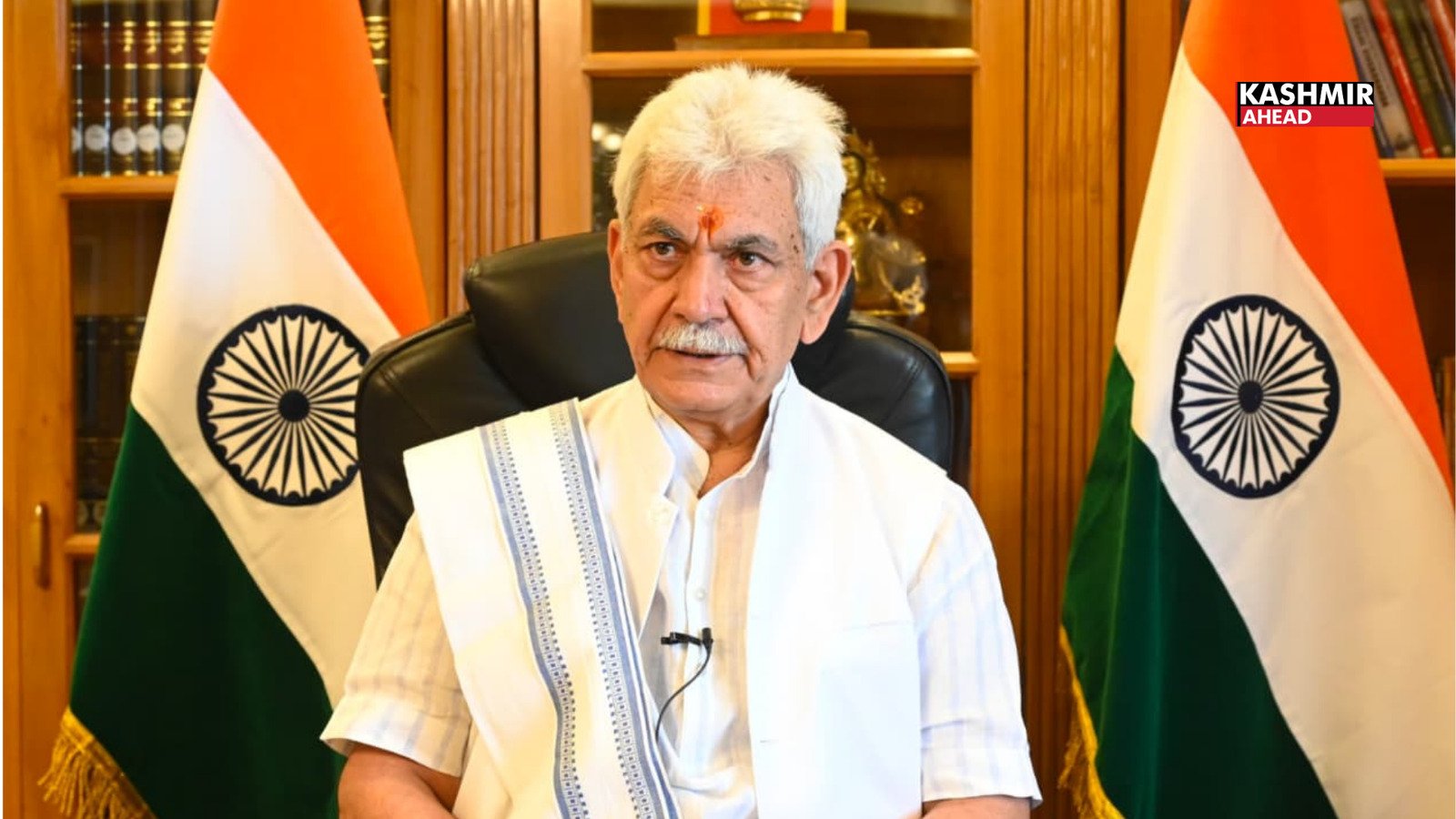
Kashmir , September 26,2026-Jammu and Kashmir continues to move forward on a path of governance-driven transformation under the leadership of Lieutenant Governor Manoj Sinha, with officials pointing to expanding infrastructure, strengthening institutions, and a sharpened focus on inclusive development across the Union Territory.
Since taking charge, Sinha’s administration has placed strong emphasis on accelerating public infrastructure. Projects such as the Srinagar Smart City initiative, worth around Rs 900 crore, along with improved road networks, tunnels, and railway lines, have progressed with strong backing from the central government, particularly the Ministry of Road Transport and Highways. Among the visible outcomes of this push, the LG recently inaugurated the newly redeveloped historic Amira Kadal pedestrian bridge in Srinagar, a project undertaken under the Smart City initiative meant to blend the city’s traditional character with modern public infrastructure.
Tourism, long considered central to Jammu and Kashmir’s economy, has also seen a marked uptick. Popular destinations such as Gulmarg, Pahalgam, and Sonmarg have drawn growing numbers of visitors, while new investment proposals have come in across the tourism, health, and IT sectors. Sports infrastructure has similarly received renewed attention, with the administration highlighting Jammu and Kashmir’s emergence as a hub for national and international sporting events, driven by a renewed focus on modern sports facilities and the nurturing of young talent.
On governance, the administration has stressed responsiveness and transparency as guiding principles. The LG has spoken of a firm resolve to address public grievances in a time-bound manner, noting that the government has worked to build an efficient public service delivery mechanism to improve ease of living for ordinary citizens, with an emphasis on ensuring growth reaches even the last person in the queue.
The Union Territory’s economic planning has also drawn attention this year. Sinha praised the 2026–27 budget as pragmatic, highlighting its focus on economic acceleration, future-ready infrastructure, and sustained growth, while balancing development with social welfare and promising significant empowerment for youth, women, and farmers. Addressing the legislative assembly’s budget session, he described the session as an opportunity to reflect on the region’s collective journey, review achievements, and chart a clear roadmap for the future, reaffirming a shared commitment to fulfilling the aspirations of the people of Jammu and Kashmir.
Security and stability remain foundational to this development narrative. Officials have repeatedly linked improved law-and-order conditions to the pace of infrastructure and economic activity across both the Kashmir and Jammu divisions, with periodic high-level reviews of development projects and security coordination between civil administration and police officials.
On youth engagement, the LG has consistently underscored education and opportunity as pillars of the region’s future. Speaking at a university convocation earlier this year, he expressed satisfaction at seeing a large number of female students receive top academic honours, reflecting broader emphasis on expanding access to opportunity for young people across the UT.
Taken together, these developments reflect the administration’s broader narrative: that Jammu and Kashmir, under sustained governance reforms, expanding infrastructure, and renewed institutional focus, is steadily advancing toward a more peaceful, progressive, and prosperous future.
At the same time, challenges persist. Job creation remains a pressing concern in the region, with sectors like horticulture, tourism, and handicrafts still serving as the primary sources of local employment — underscoring why initiatives such as skill development programs and overseas recruitment drives, including efforts seen in districts like Kulgam, are increasingly viewed as necessary complements to the UT’s broader development push.
As Jammu and Kashmir moves further into 2026, the coming months — including anticipated panchayat and local body elections — are expected to serve as a key test of how far this governance-led transformation has translated into outcomes felt by ordinary citizens across the region.