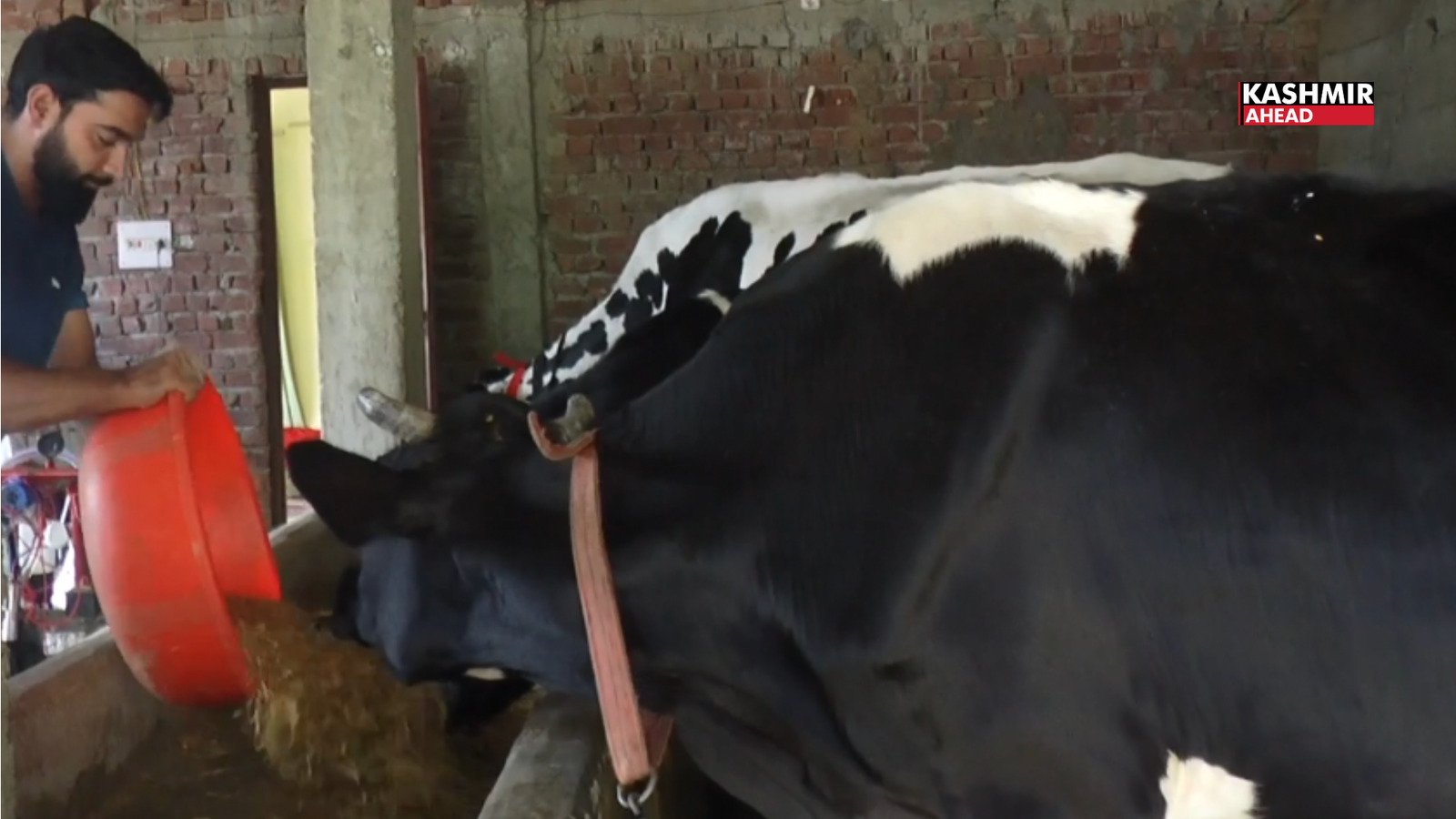
Doda , August 26,2026- Dairy farming is emerging as a strong source of livelihood in Doda district, with government schemes helping local farmers boost milk production and increase household incomes. Officials say the sector’s steady growth is transforming the rural economy of the region, offering a sustainable alternative source of income for farmers and unemployed youth alike.
Nestled in the Chenab Valley region of Jammu and Kashmir, Doda has traditionally relied on agriculture and horticulture for its rural economy. In recent years, however, dairy farming has steadily gained ground as a preferred livelihood option, aided by a combination of favourable terrain for livestock rearing, growing local demand for milk and milk products, and sustained government support through targeted schemes.
Rising Milk Production
According to data from the district administration, Doda currently produces around 3.24 lakh litres of milk daily, with 354 dairy units established across the district under various government schemes. Officials estimate that between 200 and 250 farmers are directly benefiting from these initiatives, which provide financial and technical support to set up and sustain dairy units.
The steady rise in milk production has been attributed to a combination of factors, including targeted government support, improved breeds of milch cattle, better veterinary care, and greater awareness among farmers about modern dairy management practices. Officials note that the introduction of cross-bred and high-yield cattle varieties, along with regular vaccination and health check-up camps organised by the Animal Husbandry Department, has played a significant role in improving both the quantity and quality of milk produced across the district.
The district’s dairy sector has also benefited from improved connectivity and market linkages in recent years, allowing farmers in relatively remote areas to transport milk to collection centres and local markets more efficiently. This has encouraged more households to consider dairy farming not merely as a subsidiary activity, but as a primary source of income.
A Beneficiary’s Journey
Among those who have benefited from these schemes is Sumair Ishaq Malik, a local farmer who set up a four-cow dairy unit under the Integrated Dairy Development Scheme. Malik received a subsidy of around ₹2 lakh under the scheme, along with additional support that included a milking machine, medicines, fodder, and veterinary services.
Malik’s dairy unit is among several such enterprises that have sprung up across Doda in recent years, as farmers increasingly turn to structured dairy farming as a stable and scalable source of income. Officials note that such units not only generate direct income from milk sales but also create scope for allied activities, including fodder cultivation and the sale of dairy by-products such as ghee, curd, and paneer, which often fetch better returns in local markets.
Beneficiaries like Malik say that the combination of financial assistance and technical guidance has made it considerably easier to establish and run a dairy unit compared to earlier years, when farmers often had to bear the entire cost of livestock and infrastructure on their own. With the milking machine and veterinary support provided under the scheme, Malik has been able to maintain consistent milk yields while reducing the labour and time required for daily operations.
Government Support and Schemes
The Integrated Dairy Development Scheme, under which Malik’s unit was established, is aimed at strengthening the dairy value chain by supporting farmers with capital investment, quality livestock, and access to veterinary and technical services. The scheme forms part of a broader push by the Animal Husbandry Department to promote dairy farming as a viable livelihood option in the hilly and semi-rural terrain of Doda district.
The Animal Husbandry Department has urged farmers and unemployed youth in the district to take full advantage of the Central Government schemes available to them and explore opportunities in dairy farming. Officials highlighted that such schemes are designed to lower the entry barriers for new farmers by covering a significant portion of the initial investment required to set up a dairy unit, while also providing ongoing support for animal health and productivity.
Department officials further stated that eligible beneficiaries can avail assistance for the purchase of milch animals, construction of cattle sheds, and procurement of equipment such as milking machines and fodder-cutting machines, in addition to subsidies on animal insurance and feed. Awareness camps and training sessions are also being organised at the block level to educate farmers on scientific dairy management, clean milk production practices, and the benefits of value addition to raw milk.
A Model for Rural Livelihoods
Dairy farming’s growth in Doda is being seen by local officials as a model for rural livelihood generation, particularly in a district where employment opportunities have traditionally been limited. By combining subsidy support with technical assistance, the schemes aim to ensure that beneficiaries are not just set up with initial infrastructure, but also equipped to sustain and grow their dairy enterprises over the long term.
With continued government backing and rising local participation, officials expect the number of dairy units and the volume of milk production in Doda to increase further in the coming years, strengthening the district’s rural economy and offering a reliable source of income to a growing number of farming families.