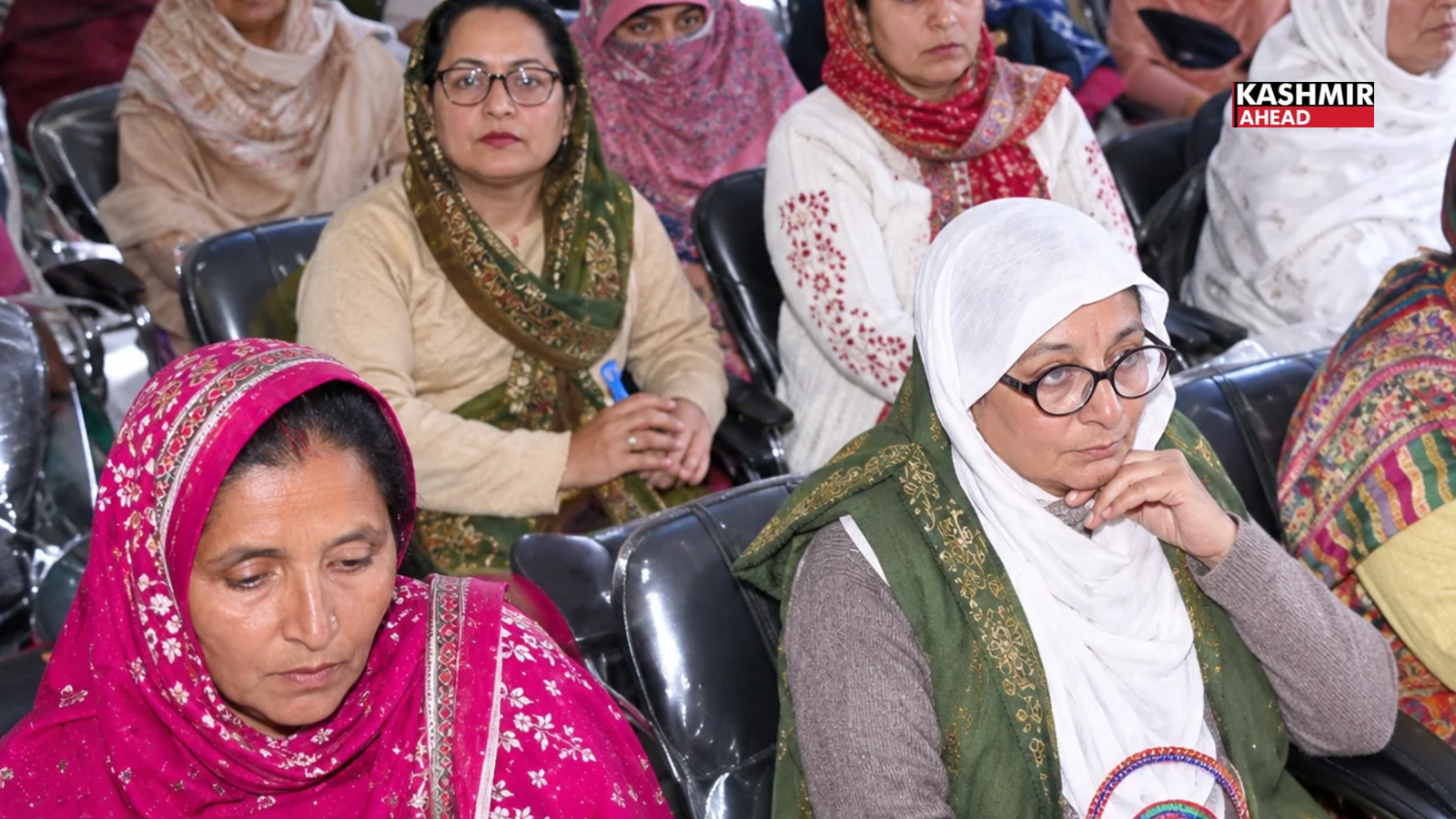
Poonch , November 17,2026- The District Institute of Education and Training (DIET), Poonch, has launched a three-day training programme for around 200 teachers from the district’s 11 educational zones. The programme aims to equip educators with child-friendly, play-based and innovative teaching techniques to strengthen foundational literacy, numeracy and overall learning among young children.
The training centres on two key themes: Balvatika, which covers Early Childhood Care and Education (ECCE) and Foundational Literacy and Numeracy (FLN), and Learning Science by Doing. Both reflect the emphasis of the National Education Policy (NEP) 2020 on strong early-years education as the base for lifelong learning.
Building strong foundations
Speaking on the occasion, resource persons and officials stressed that the early years of a child’s life are the most critical period for cognitive, emotional and social development. They said classroom practices in the foundational stage must move away from rote memorisation and towards activity-based, experiential learning.
Under the Balvatika component, teachers are being introduced to methods for creating joyful, stimulating classrooms for children entering the formal education system. Sessions cover storytelling, songs and rhymes, role play, puzzles, games and the use of locally available, low-cost materials as teaching aids. Participants are also learning how to arrange classroom spaces so that children can explore, interact and learn at their own pace.
Focus on literacy and numeracy
A major part of the training addresses FLN, which aims to ensure every child can read with comprehension and perform basic mathematical operations by the end of Grade 3. Trainers demonstrated techniques for building vocabulary, phonemic awareness and early reading skills, along with hands-on strategies for teaching number sense, counting, patterns and simple arithmetic through concrete objects and everyday situations.
Teachers were encouraged to use continuous, competency-based assessment to track each child’s progress and identify learning gaps early, so that timely remedial support can be provided.
Learning Science by Doing
The second thematic area, Learning Science by Doing, promotes curiosity, observation and inquiry among learners. Participants are taking part in practical demonstrations and simple experiments that show how scientific concepts can be taught through direct experience rather than textbook-based instruction. Trainers noted that when children handle materials, ask questions and discover answers themselves, they understand and retain concepts far better.
The sessions also encourage teachers to connect scientific ideas to the surroundings familiar to children in Poonch, from local plants and weather to household items, making learning relevant and engaging.
Interactive format
The programme is being conducted through a mix of presentations, demonstrations, group activities and peer-learning sessions. Teachers are working in groups to design their own learning materials and lesson activities, which they will present and discuss during the training. Officials said this hands-on approach ensures participants are not merely listeners but active contributors who can readily apply what they learn.
Teachers from all 11 educational zones are participating, reflecting a district-wide effort to bring uniform quality and consistency to early-grade teaching across both urban and remote areas.
Expected impact
Officials from DIET Poonch expressed hope that the training will lead to visible improvements in classroom practice and learning outcomes. They urged participants to share the knowledge with colleagues in their schools and to put the techniques to use from the very next day in their classrooms.
Teachers taking part welcomed the initiative, saying the training offered practical, easy-to-adopt ideas that could make classrooms livelier and help young learners feel more confident and motivated.
The programme concludes after three days with an interactive session in which participants will reflect on their learning and plan implementation strategies for their respective zones and schools. DIET Poonch has indicated that follow-up monitoring and academic support will be provided to help teachers sustain the new practices.
The initiative forms part of ongoing efforts to strengthen the foundational stage of education in the district, ensuring that every child receives a joyful, inclusive and high-quality start to learning.