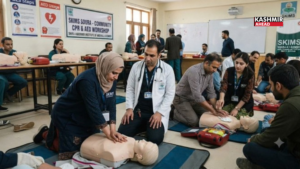
Srinagar, September 30,2026- The Sher-i-Kashmir Institute of Medical Sciences (SKIMS), Soura, has launched “CPR 360”, a programme aimed at building a community of trained first responders who can act quickly when someone suffers a cardiac emergency.
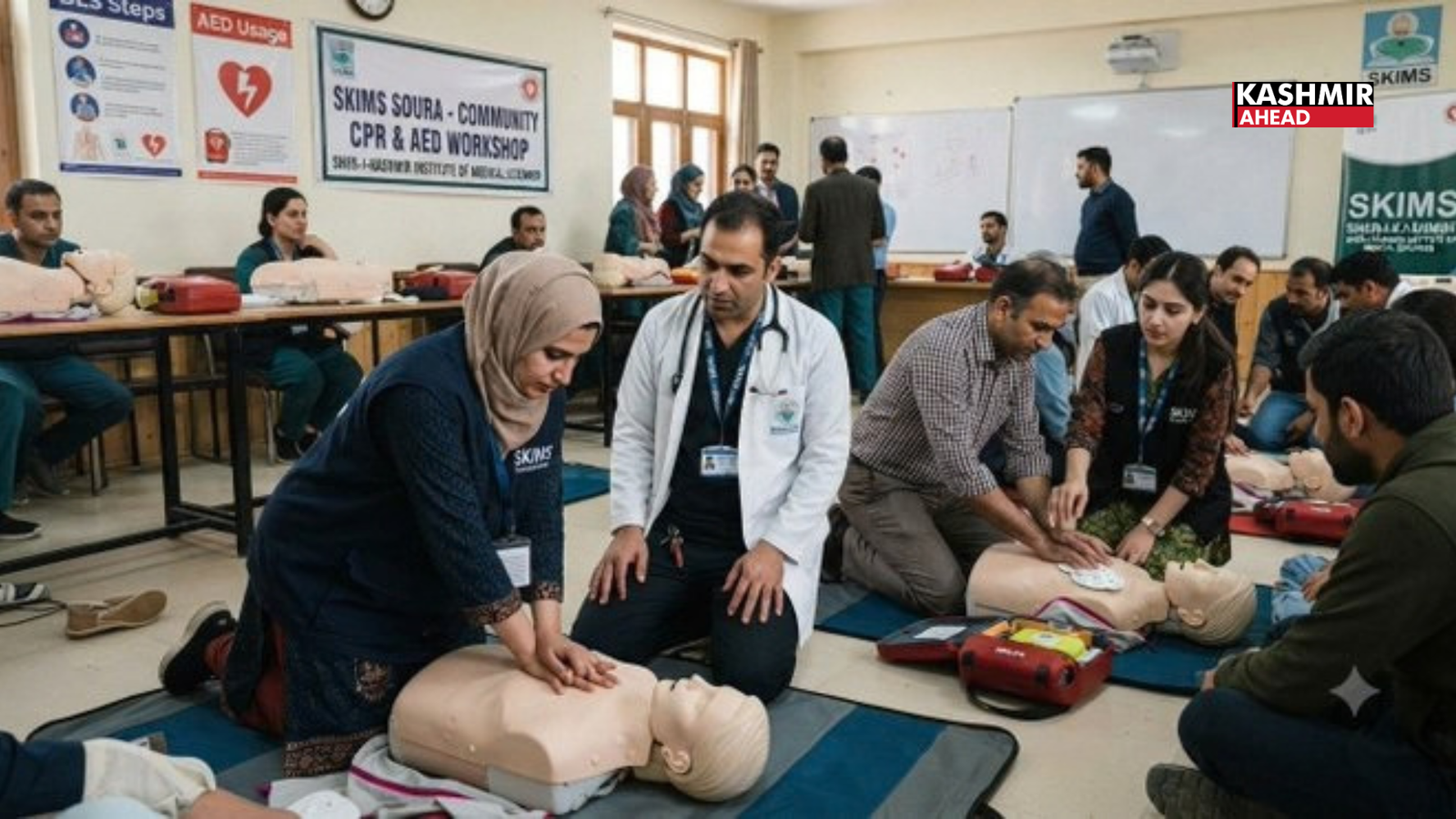
The programme will provide hands-on training in recognising cardiac emergencies, performing cardiopulmonary resuscitation (CPR), giving basic resuscitation and using automated external defibrillators (AEDs). It aims to help communities respond swiftly and effectively in the critical minutes before professional medical help arrives.
Why the First Minutes Matter
Cardiac arrest can strike without warning, whether at home, in a workplace, at a market or on the road. When the heart stops pumping effectively, blood flow to the brain and other vital organs is cut off, and each passing minute lowers the chance of survival. Ambulances and hospital care are essential, but they cannot always arrive instantly. In those first minutes, the person standing nearest often becomes the most important link in the chain of survival.
Hands-On Training
The emphasis of CPR 360 is on practical learning. Participants will be trained to recognise the warning signs of a cardiac emergency, such as sudden collapse, unresponsiveness and absent or abnormal breathing. They will learn how to call for help, begin chest compressions and use an AED correctly. Hands-on practice is important because fear of doing something wrong is often the biggest barrier that stops bystanders from stepping forward. Repeated practice builds the confidence to act.
Simple Steps That Save Lives
For a bystander, the basic response is straightforward: check whether the person responds and is breathing normally, call for emergency help, start firm and continuous chest compressions, and use an AED as soon as one is available. These actions do not replace medical treatment, but they keep the patient alive long enough for advanced care to take over. CPR 360 aims to make these steps familiar and instinctive.
Building a Community of Responders
The name CPR 360 points to a wide, all-round approach to emergency preparedness. The goal is not just to train individuals but to create a network of people across communities who can respond wherever an emergency occurs. Those who complete the training can in turn share what they have learned with family members, colleagues and neighbours, so that the skills spread well beyond the classroom.
The Role of SKIMS
SKIMS, Soura, is one of the leading tertiary care institutions in Jammu and Kashmir, and its clinicians deal with cardiac emergencies regularly. Bringing that clinical experience into community training gives the programme a strong foundation. It also reflects a growing recognition that hospitals can do more than treat patients: they can equip the public to save lives before patients ever reach the hospital door.
Why Awareness Matters
Cardiovascular disease is among the leading causes of death in India, and sudden cardiac events are reported among people of different ages. Yet awareness of CPR remains low, and many people have never seen it performed or practised it themselves. Public training programmes help close that gap. A community where more people know how to perform compressions and use an AED is better prepared for the moment when every second counts.
The Way Forward
Health experts often stress that life-saving skills should be part of everyday knowledge, much like basic first aid. Schools, colleges, offices, voluntary groups and neighbourhood organisations could all benefit from taking part in CPR 360. Wider availability of AEDs in public places, along with people trained to use them, would further strengthen the region’s emergency response.
As the programme rolls out, its success will depend on how many people come forward to learn. The message is simple: anyone can be a first responder, and a few hours of training can help save a life.