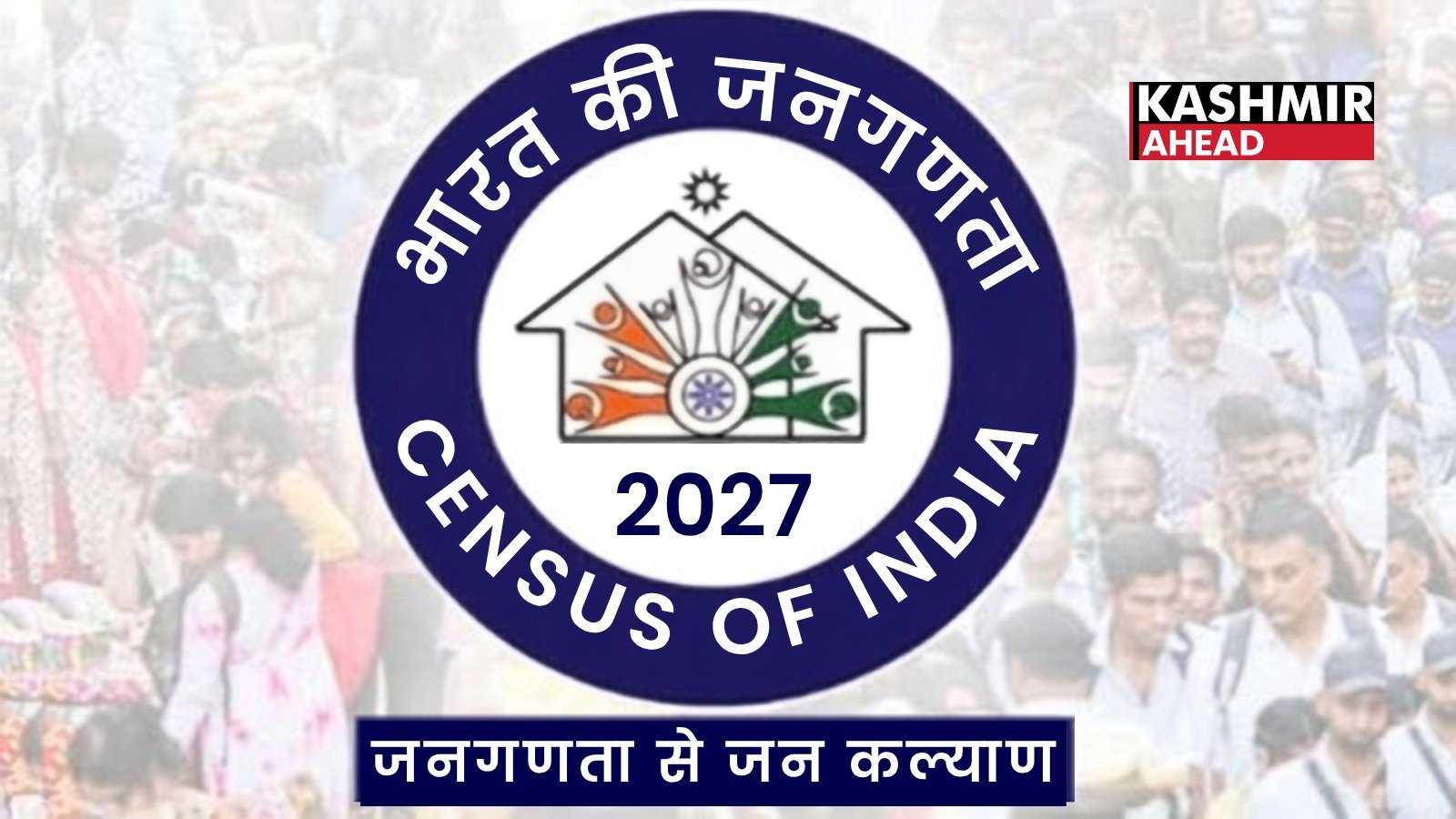
Kashmir, August 17,2026- The second phase of Census 2027 got underway on Monday in the snow-bound areas of Jammu and Kashmir and across the Union Territory of Ladakh, marking a crucial step in India’s ongoing population enumeration exercise. The phase has been deliberately advanced in these high-altitude regions to ensure complete coverage before harsh winter conditions cut off access.
Two-Stage Process: Self-Enumeration and Door-to-Door Count
The exercise will unfold in two stages. Self-enumeration (Swa-Ganna) began on August 17 and will remain open till August 31, giving residents the option to digitally submit their own household and personal details through the official Census portal. This will be followed by door-to-door population enumeration, to be carried out by trained enumerators and supervisors from September 1 to September 30.
Addressing a press conference in Leh, Amit Sharma, Chief Principal Census Officer and Director of Census Operations for Jammu and Kashmir and Ladakh, said population enumeration is the most critical stage of the Census process, as it determines the country’s actual population figures along with key demographic and socio-economic data.
16 Districts in J&K, All of Ladakh Covered
Officials said 16 of Jammu and Kashmir’s 20 districts have been identified as partially snow-bound and will be covered under this phase, while the entirety of Ladakh — owing to its high altitude and terrain — has been classified as snow-bound for census purposes. According to official data, self-enumeration will be available to residents of 1,115 villages and three municipalities across the snow-bound, non-synchronous areas of Jammu and Kashmir. Doda leads with the highest number of such villages, followed by Kishtwar, Baramulla, Ramban, and Udhampur, among other districts. Enumeration in the remaining plain areas of Jammu and Kashmir, along with the rest of the country, will take place later as per the national schedule, expected in February 2027.
Geo-Fencing to Ensure Accuracy
To maintain accuracy, the self-enumeration system has been equipped with geo-fencing technology, making it mandatory for residents to be physically present within their notified snow-bound area while submitting their details online. Officials clarified that a resident from a snow-bound village currently residing elsewhere, such as in Srinagar or Jammu, will not be able to submit information through the portal from outside the designated zone.
Comprehensive Questionnaire, Including Caste Data
The Population Enumeration phase will cover approximately 40 questions relating to demographic details, fertility, occupation, and other socio-economic parameters. Notably, this marks the first Census since Independence to include a dedicated caste enumeration component, a significant addition to the exercise nationwide.
For Ladakh, the official Census reference date has been notified as midnight of October 1, 2026, while for the rest of the country, including the plains of Jammu and Kashmir, it is expected to be March 1, 2027, subject to formal notification. A revisional round for verification and correction of data will be conducted from October 1 to October 5, 2026.
Administration Gears Up
Ahead of the launch, Jammu and Kashmir Chief Secretary Atal Dulloo chaired a coordination meeting to finalise preparations, directing district administrations to ensure the timely appointment of enumerators and supervisors, with preference for personnel possessing strong technological proficiency. Officials in all 16 snow-bound districts of J&K, along with Leh and Kargil in Ladakh, have completed the necessary notifications, training, and field-level preparations.
Call for Public Participation
Authorities have urged residents across the identified regions to actively participate in the exercise and provide accurate, complete information to ensure a reliable and comprehensive Census 2027. Officials expressed confidence that people would extend the same level of cooperation witnessed during the first phase of the Census, reaffirming the importance of every citizen’s contribution to building an accurate national population record.