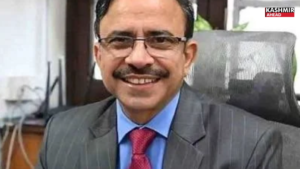
Jammu, November 26,2026- Jammu and Kashmir Chief Secretary Dr. Sajjan Singh Yadav has informed that a fresh proposal seeking the construction of additional border bunkers in vulnerable areas of the Union Territory has been submitted to the Ministry of Home Affairs (MHA). The proposal is aimed at strengthening civilian protection and improving safety infrastructure for people living along the Line of Control (LoC).
The Chief Secretary shared the information while interacting with residents during a Block Diwas-cum-Public Grievances Redressal Camp at Vibrant Village Bhawani in Nowshera block of Rajouri district. During the interaction, residents highlighted several issues concerning border security, infrastructure development, healthcare, education and livelihood opportunities.
Responding to the concerns, Dr. Yadav said that the proposal for additional border bunkers had already been forwarded to the Ministry of Home Affairs and was at an advanced stage of consideration. The proposed bunkers are expected to address the safety requirements of residents living in vulnerable border villages.
Strengthening Civilian Safety Along the LoC
Border bunkers play an important role in protecting civilians during cross-border firing and shelling. For families living close to the Line of Control, these shelters provide essential protection and allow residents to take refuge during emergency situations.
Rajouri district has already witnessed substantial construction of underground bunkers to strengthen civilian safety. As per official figures shared during the programme, 2,783 underground bunkers have been constructed along the Line of Control in the district.
Of these, 1,528 bunkers were constructed by the Rural Development Department, while the remaining 1,255 were completed by the Public Works Department.
However, residents in several border areas continue to seek additional protective infrastructure, particularly in locations where existing facilities may not adequately meet local requirements. The fresh proposal submitted to the MHA is expected to address these demands, subject to approval by the concerned authorities.
The issue of civilian safety in border villages has remained significant, especially following security-related incidents in Jammu and Kashmir in recent years.
Development of Maa Mangla Mata Shrine
Apart from border security, the Chief Secretary reviewed various development-related demands raised by residents and public representatives.
One of the key issues discussed was the development of the revered Maa Mangla Mata Shrine. Taking note of the demand, Dr. Yadav directed Deputy Commissioner Rajouri Dr. Devansh Yadav to prepare a comprehensive development blueprint for the shrine.
The proposed plan will focus on improving facilities for devotees while exploring opportunities to promote religious tourism and ecotourism in the region.
Residents also demanded shrine status for Maa Mangla Mata Temple and proposed the organisation of a Border Tourism Mela to attract visitors, encourage local participation and generate employment opportunities for people living in the area.
Road Connectivity and Basic Infrastructure
Improvement of road connectivity also featured prominently during the public interaction. Residents demanded the double-laning of the Nowshera-Jhangar road to improve transportation and facilitate smoother movement in the region.
Other issues raised included better agricultural storage facilities, availability of quality seeds and the fixation of rates for maize and wheat seeds.
The Chief Secretary asked the concerned departments to examine the demands and take appropriate action within their respective jurisdictions.
Healthcare and Education Among Key Priorities
Residents highlighted the need to strengthen healthcare services in Bhawani and adjoining villages. They sought the establishment of a dispensary and the provision of ambulance services to ensure timely medical assistance, particularly during emergencies.
The shortage of teaching staff in border schools was another concern raised during the programme. Residents also demanded the establishment of a Kendriya Vidyalaya to improve access to quality education for children in the area.
The Chief Secretary assured the public that their concerns would be communicated to the relevant departments for necessary consideration.
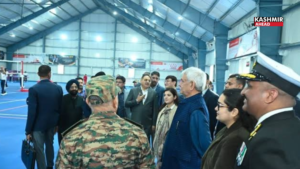
On sports infrastructure, he directed the Deputy Commissioner to identify suitable land for the proposed sports stadium at Kalsian. He also asked officials to explore the possibility of developing indoor sports facilities in schools with higher student enrolment.
Focus on Youth Employment and Welfare Schemes
Emphasising the importance of economic opportunities in border villages, Dr. Yadav encouraged local youth to explore entrepreneurship, skill development and startup initiatives.
He asked the Industries Department to sensitise young people about collateral-free loans, startup financing and various government-supported schemes that can help them establish their own businesses.
During the programme, the Chief Secretary also inspected departmental stalls displaying information about government welfare schemes and development initiatives.
He distributed sanction letters to beneficiaries under the Holistic Agriculture Development Programme (HADP) and Sheep Husbandry schemes. Engagement orders were also handed over to newly appointed Anganwadi Workers.
Block Diwas as a Platform for Public Grievances
Highlighting the importance of public outreach initiatives, Dr. Yadav said that Block Diwas, introduced on the directions of the Lieutenant Governor, provides an opportunity for citizens to directly communicate their concerns to the administration.
He stressed the importance of ensuring that public grievances are addressed through coordinated efforts by the concerned departments.
The programme was attended by senior civil and police officers, including Deputy Commissioner Rajouri Dr. Devansh Yadav and DIG Sandeep Wazir.
The submission of the fresh proposal for additional border bunkers to the Ministry of Home Affairs remains an important development for residents of vulnerable border areas. Alongside security infrastructure, the administration’s discussions on healthcare, education, road connectivity, tourism and employment highlighted several priorities for improving the quality of life in Rajouri’s border villages.