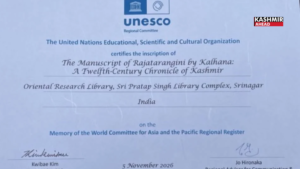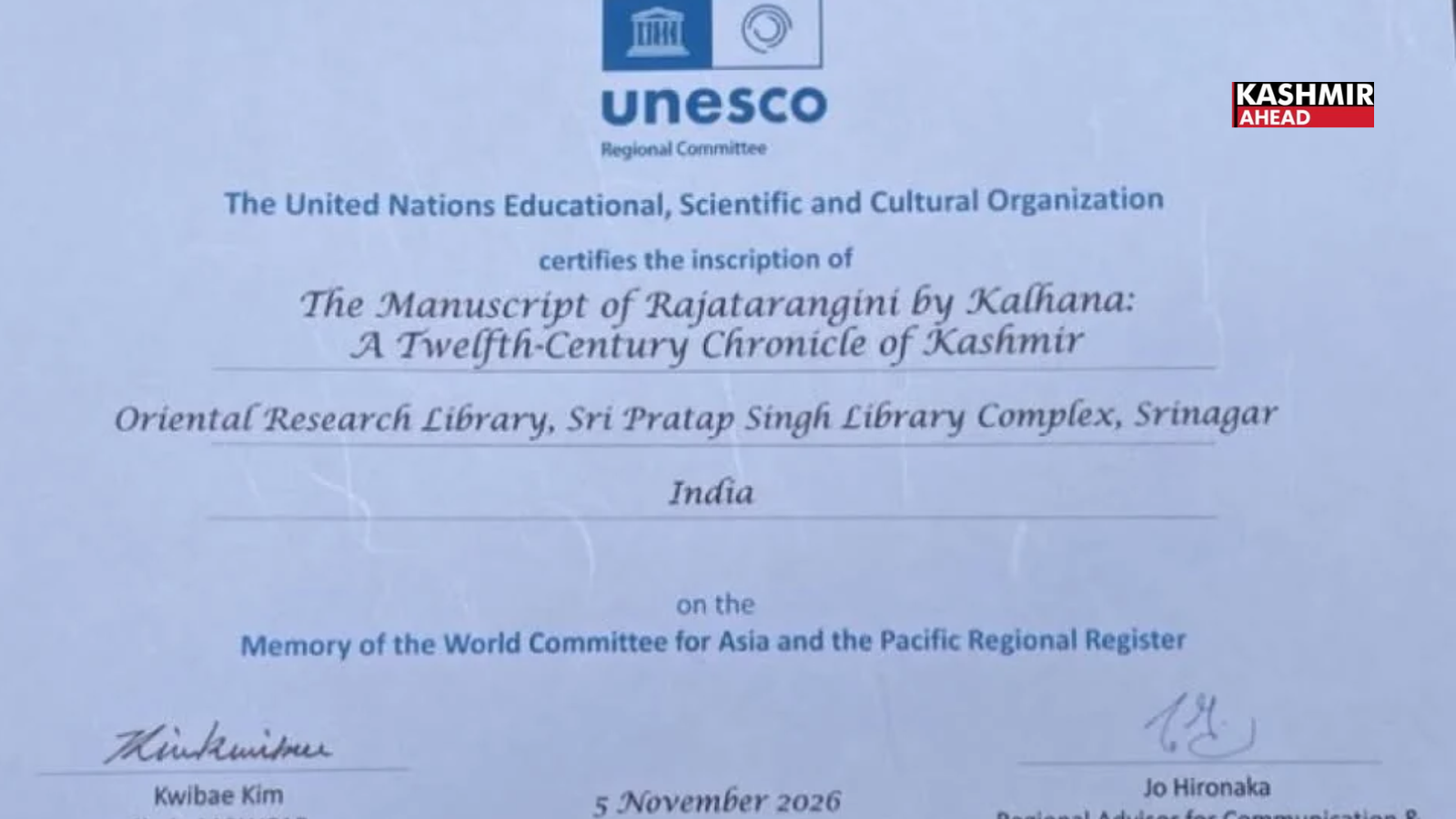
Srinagar, November 6,2026- In a historic moment for Jammu and Kashmir and India’s cultural heritage, Kalhaṇa’s 12th-century Sanskrit chronicle Rajatarangini has received international recognition after being inscribed in UNESCO’s Memory of the World Asia-Pacific Regional Register. The recognition celebrates Kashmir’s extraordinary contribution to historical writing, literature, knowledge and India’s civilisational heritage.
The announcement marks a significant milestone for the Valley, bringing renewed international attention to one of its most valuable historical and literary treasures. The manuscript, preserved at the Oriental Research Library in the Sri Pratap Singh Library Complex in Srinagar, has been recognised alongside two other important Indian works, the Mahabharata and Kautilya’s Arthashastra.
The decision was taken during the 11th session of the Memory of the World Committee for Asia and the Pacific (MOWCAP), held in Jakarta, Indonesia. The inscriptions acknowledge the historical, literary, philosophical and intellectual importance of India’s documentary heritage. With these additions, India’s total number of inscriptions in the UNESCO Asia-Pacific Regional Register has increased to six.
Rajatarangini: A Historic Record of Kashmir
Written by the renowned Kashmiri scholar and historian Kalhaṇa during the 12th century, Rajatarangini, meaning ‘River of Kings’, is regarded as one of the most significant historical chronicles of the Indian subcontinent.
Composed in Sanskrit around 1148–1149 CE, the work documents the history of Kashmir through successive kings and dynasties. It provides accounts of royal successions, political developments, conflicts, administration, social conditions and the cultural traditions that shaped the Valley over centuries.
The chronicle is particularly important because of Kalhaṇa’s approach to historical documentation. Rather than simply praising rulers and recording royal achievements, he attempted to examine historical events through earlier records, available sources and critical observations.
The work consists of eight books, known as Tarangas, containing approximately 7,826 verses. It traces Kashmir’s history from its legendary beginnings to the period of King Jayasimha, who ruled during Kalhaṇa’s lifetime.
Its historical depth and literary quality make Rajatarangini an exceptional record of Kashmir’s past and an important source for researchers, historians and scholars studying the region’s political and cultural evolution.
UNESCO Recognition Highlights Kashmir’s Intellectual Heritage
The inclusion of Rajatarangini in UNESCO’s Memory of the World Asia-Pacific Regional Register highlights the importance of preserving historical manuscripts and making valuable documentary heritage accessible to future generations.
The recognition also acknowledges Kashmir’s longstanding tradition of scholarship, literature and intellectual inquiry. For centuries, the Valley has remained an important centre of learning, philosophical thought, Sanskrit literature and cultural exchange.
The manuscript’s preservation at the Oriental Research Library in Srinagar further highlights the importance of local institutions in safeguarding rare historical documents and maintaining connections with the region’s past.
The Indira Gandhi National Centre for the Arts (IGNCA) played an important role in preparing the nomination dossiers for Rajatarangini and the other two Indian works.
National Leaders Welcome the Recognition
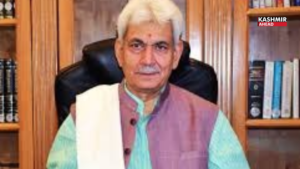
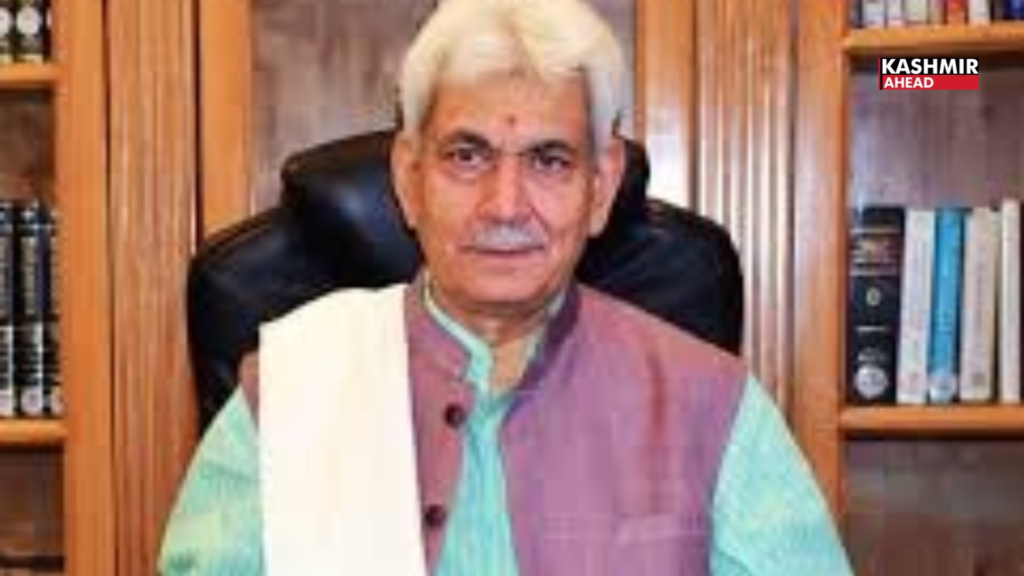
Lieutenant Governor Manoj Sinha welcomed the UNESCO recognition, describing the inclusion of Rajatarangini, the Mahabharata and Arthashastra as a proud moment for Jammu and Kashmir and the nation.
He said the recognition celebrates Jammu and Kashmir’s rich intellectual heritage and reaffirms the timeless value of India’s civilisational traditions and their contribution to humanity.
Chief Minister Omar Abdullah also congratulated the people of Jammu and Kashmir, describing the international recognition as an acknowledgement of the region’s profound historical and cultural legacy. He highlighted the importance of preserving the manuscript as an invaluable repository of Kashmir’s history and traditions.
A Recognition Beyond Borders
The UNESCO inscription is not merely an achievement for a historical manuscript; it is an acknowledgement of Kashmir’s enduring contribution to India’s literary and intellectual traditions.
Alongside Rajatarangini, the newly recognised Mahabharata represents India’s epic literary and philosophical heritage, while Kautilya’s Arthashastra reflects its ancient knowledge of governance, economics, diplomacy and statecraft.
Together, these works represent different dimensions of India’s intellectual legacy and demonstrate the depth of knowledge developed and preserved over centuries.
For Kashmir, the recognition of Kalhaṇa’s masterpiece is particularly meaningful. It places the Valley’s historical scholarship in the international spotlight and creates an opportunity to introduce younger generations to their rich literary and cultural inheritance.
As Rajatarangini receives recognition on an international platform, the achievement serves as a reminder that Kashmir’s legacy extends far beyond its natural beauty. Its contributions to history, literature and knowledge remain an important part of India’s identity and continue to hold significance for the world.
The recognition is truly a proud moment for Kashmir, celebrating a heritage that has travelled through centuries and continues to inspire generations.