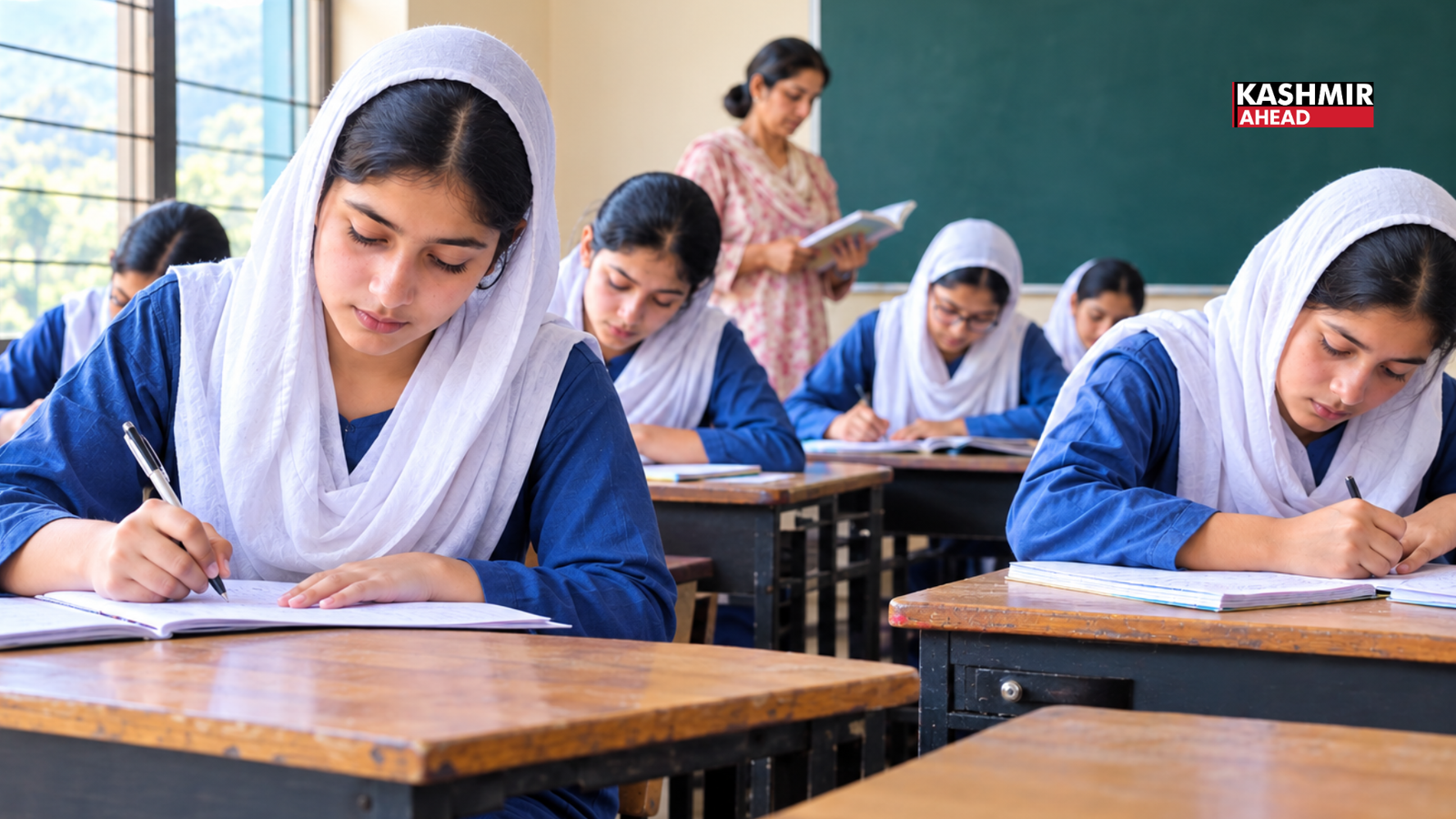
Srinagar, September 30,2026- Jammu and Kashmir’s school education sector has posted a marked improvement in academic performance for 2025-26. The Jammu and Kashmir Board of School Education (JKBOSE) reports substantially higher pass percentages in both the Class 10 and Class 12 examinations.
According to figures presented by the School Education Department, the Class 10 pass percentage rose from 79.94 per cent in 2024-25 to 86.36 per cent this year. Class 12 saw an even sharper jump, from 75.95 per cent to 86.08 per cent. That is a gain of more than six percentage points for Class 10 and over ten points for Class 12.
Rebalancing the Classroom
The department credits the gains to a set of measures aimed at strengthening classroom teaching and making better use of resources. Chief among them is the rationalisation and redeployment of teachers. The exercise seeks to distribute staff more evenly and ease shortages that had hurt instruction in some schools.
Transfer drives and other administrative steps have supported this effort, aligning teacher deployment with student numbers. Arrangements at the school and cluster levels have also been introduced so that institutions can share manpower, infrastructure and other academic resources.
Extra Help for Students Who Need It
Officials have also focused on identifying students who need additional support. Remedial teaching and extra learning sessions are being used to strengthen foundational concepts and prepare students for examinations. The Chief Education Office in Doda, for example, lists additional remedial sessions among its recent interventions, alongside work on foundational literacy, digital learning and teacher development.
Such support matters most in remote and underserved areas, where students often have fewer opportunities for academic help outside regular school hours.
Digital Learning Gains Ground
Technology is another pillar of the change. The DIKSHA-JK platform, run through SCERT J&K, offers teachers digital training, e-content and professional development resources, and it also provides learning material for students. Teachers can create and exchange digital resources on it, supporting technology-enabled teaching across schools.
Nationally, the UDISE+ 2025-26 report points to expanding digital infrastructure in schools, including greater access to computers and internet connectivity.
Clusters and Closer Monitoring
The School/Cluster Complex system is another reform intended to improve coordination. It lets schools pool facilities and resources while tightening academic and administrative cooperation.
Monitoring is also getting more attention. Regular assessment of learning outcomes, teacher availability and student performance can help the department spot gaps and respond with targeted measures. Platforms such as UDISE+ support this shift toward data-driven planning and decision-making.
Enrolment and Retention
The improved results come alongside broader efforts on enrolment, retention, infrastructure and learning outcomes. Government figures cited in recent reports indicate a decline in dropout rates. Class 12 enrolment grew from 1,03,308 students in 2024-25 to 1,10,444 in 2025-26, an increase of more than 7,000 students. Class 10 enrolment held broadly steady at around 1.45 lakh.
A Note of Perspective
Examination results are only one measure of educational quality, and a higher pass percentage does not by itself show deeper learning. Still, the figures are a meaningful indicator of progress. Better teacher deployment, remedial support, digital tools, school clustering and sharper monitoring together aim to build a more responsive, student-focused system.
For Jammu and Kashmir, the 2025-26 results mark a notable step forward and underline the need for sustained academic support in the years ahead.