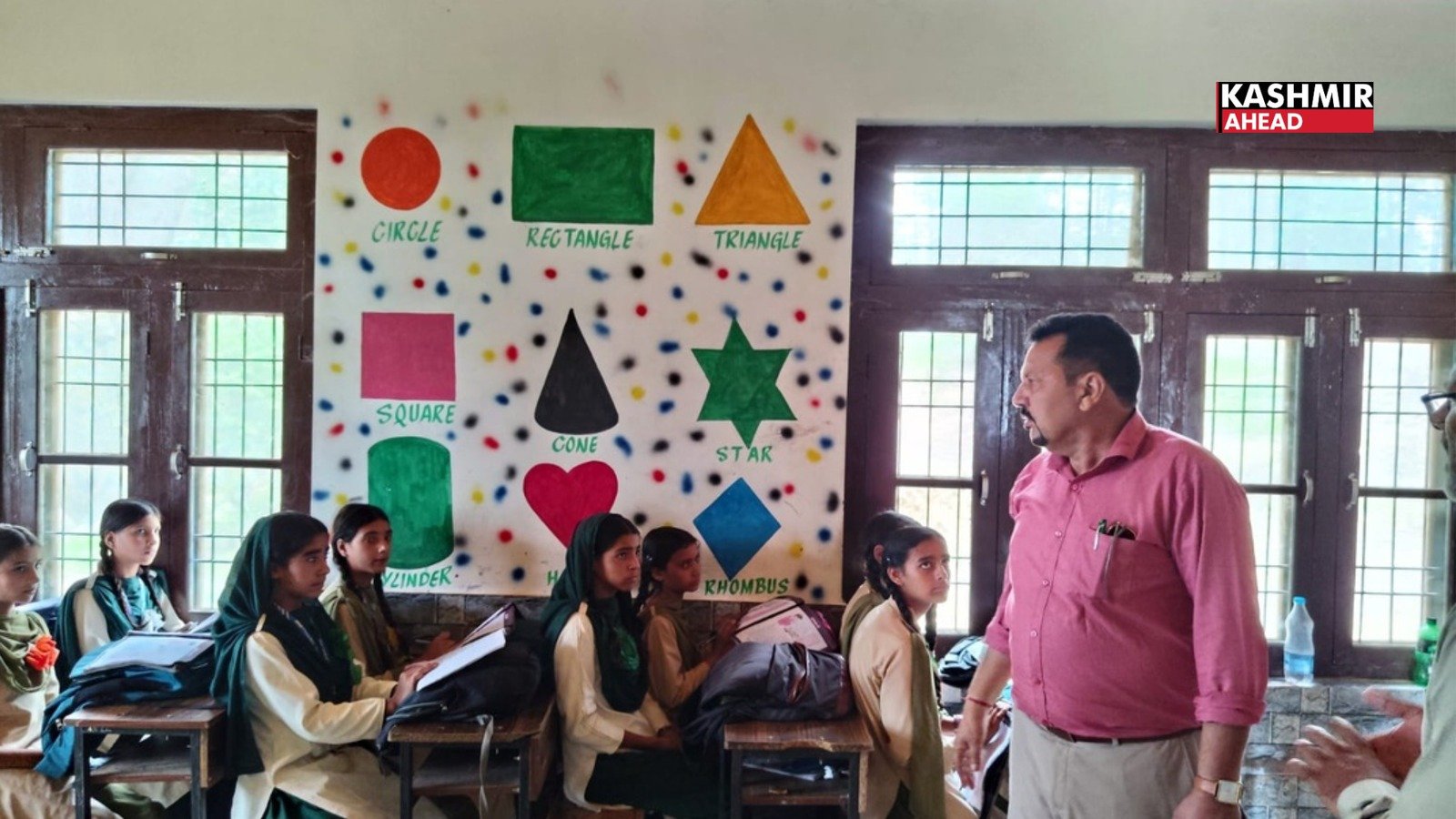
Doda, August 19,2026- In a bid to strengthen accountability and monitor the ground-level implementation of educational programmes, CEO Doda Surprise Inspection: Chief Education Officer (CEO) Doda, Bhushan Kumar Pathak, today carried out surprise inspections of two government educational institutions in Educational Zone Assar — Government High School Bulandpur and Government Upper Primary School Ranka.
The unannounced visits form part of an ongoing exercise by the Education Department to assess the day-to-day functioning of schools, review the quality of education being delivered to students, and ensure that departmental policies are being translated into action at the institutional level.
Interaction with Students and Staff
During his visit to both schools, the CEO took time to interact directly with students as well as members of the teaching staff. He sought feedback on the academic environment, the pace and quality of the curriculum being covered, and the range of co-curricular activities being conducted to support the all-round development of students.
The interaction was aimed at gauging first-hand how students perceive the teaching methods being used in their classrooms and whether the existing academic support is adequate to meet learning goals. Teachers, in turn, were given the opportunity to flag challenges they face in day-to-day instruction and school management.
Review of Classroom Practices
The CEO also reviewed ongoing classroom activities during the course of his visit. He laid particular emphasis on the adoption of effective teaching-learning practices, noting that the ultimate objective of any pedagogical reform must be measurable improvement in students’ learning outcomes. Officials present during the visit were directed to ensure that classroom instruction remains student-centric and outcome-driven, in line with the broader goals of the department.
Infrastructure and Facilities
As part of the inspection, the CEO carried out a detailed assessment of the physical infrastructure available at both schools. This included an evaluation of classrooms, sanitation facilities, drinking water availability, and other amenities that directly affect the overall learning environment for students. He assessed whether the facilities on the ground matched the standards expected under departmental norms and took note of areas requiring attention or upgrades.
Mid-Day Meal Scheme Under Scrutiny
A significant component of the inspection was the review of the Mid-Day Meal (MDM) scheme being implemented at both institutions. The CEO examined the arrangements in place for the preparation and distribution of meals, with a specific focus on the quality of food being served, hygiene standards maintained in the kitchen and serving areas, and the overall implementation of the scheme in accordance with government guidelines. Given that the Mid-Day Meal programme plays a crucial role in both student nutrition and school attendance, particular attention was paid to ensuring that the scheme is being executed without lapses.
Emphasis on Institutional Discipline
Speaking on the broader objectives of the inspection, the CEO underscored the importance of maintaining school infrastructure in good condition, fostering a conducive and disciplined classroom environment, and ensuring that all departmental initiatives — ranging from academic reforms to welfare schemes — are implemented “in letter and spirit” rather than merely on paper.
He reiterated that such surprise inspections would continue across educational zones as part of a sustained effort to strengthen institutional accountability at the school level. The exercise, he noted, is designed not only to identify gaps and shortcomings but also to recognise good practices that can be replicated across other institutions in the district.
Objective of the Exercise
Officials of the Education Department said that the surprise visits are part of a wider monitoring mechanism aimed at improving governance in the school education sector. By directly engaging with students, teachers, and on-ground realities, the department hopes to ensure that policy directives translate into tangible improvements in learning outcomes, infrastructure quality, and overall student welfare across the Assar Educational Zone and beyond.
Further such inspections are expected to be carried out in the coming weeks across other zones in the district.