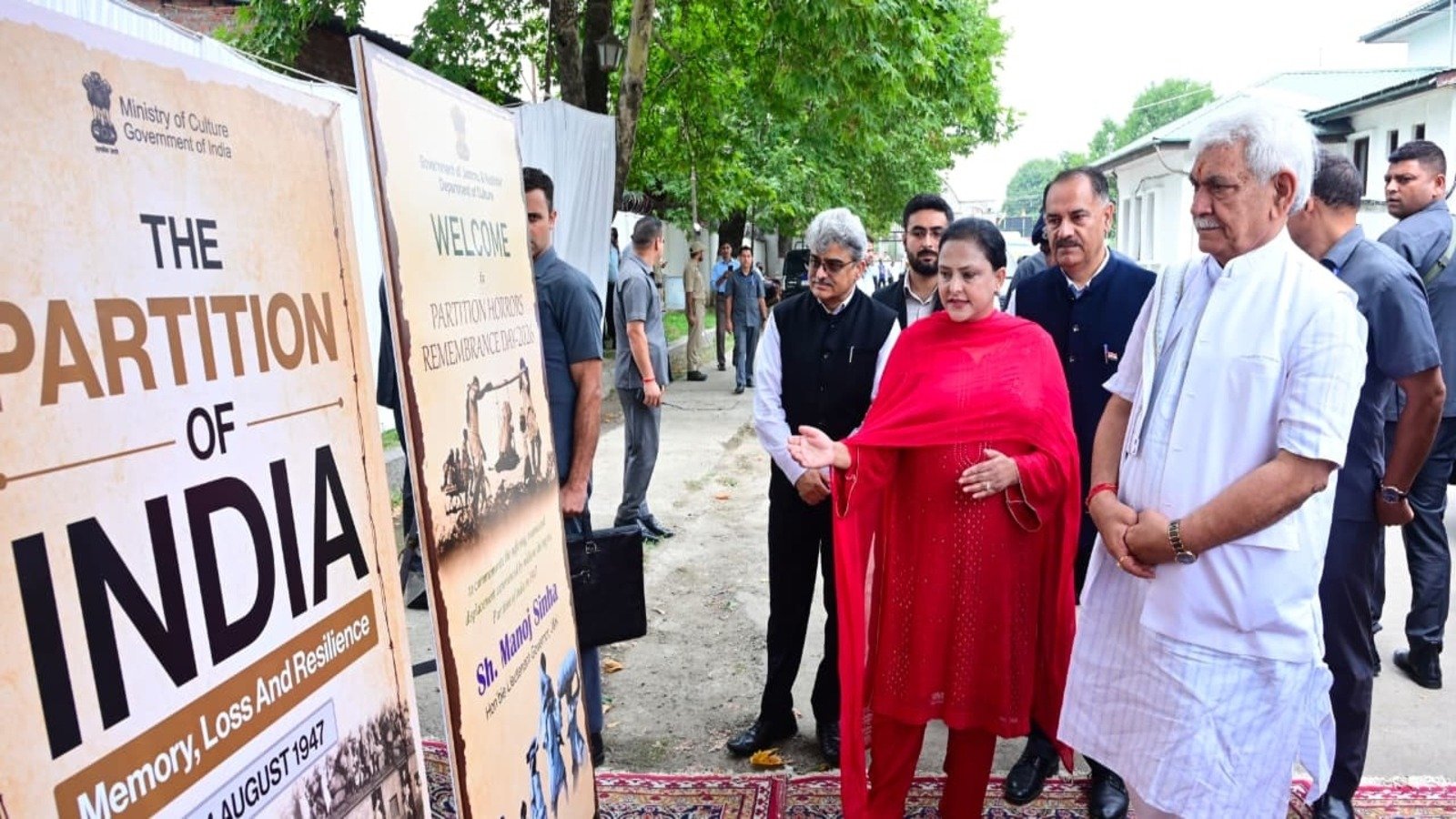
Srinagar , August 14,2026- In a solemn and deeply reflective address, Lieutenant Governor Manoj Sinha honored the millions who suffered during India’s partition while calling on the youth of Jammu and Kashmir to build a future rooted in peace and unity. The Partition Horrors Remembrance Day observance at Tagore Hall here marked a powerful reaffirmation of the nation’s commitment to healing historical wounds and fostering inclusive development.
“Decades after the partition, their sacrifice reminds us that the wound remains unhealed, lingering as a generational pain in India’s collective soul,” the Lieutenant Governor stated, emphasizing that the Partition Horrors Remembrance Day commemoration serves not merely as a historical exercise but as a solemn duty to preserve the memories of those whose voices were silenced during the tumultuous division of 1947.
Partition Victims and National Introspection: Jammu Kashmir Observance Marks Collective Memory
The Partition Horrors Remembrance Day observance provided an opportunity for citizens across the Union Territory to reflect on the immeasurable human cost of partition—the displacement of communities, the fracturing of families, and the communal violence that claimed countless lives. The Lieutenant Governor underscored that this remembrance is not confined to historical recollection but represents an active commitment to ensuring such tragedies are never repeated.
“On Partition Horrors Remembrance Day, we are not merely recalling the past but we are giving voice to those millions whose voices were taken away from them,” the Lieutenant Governor said. He pledged that the nation would preserve these memories with “complete truthfulness, honesty, and utmost sensitivity,” treating them as an “indelible chapter of our national consciousness.”
The event featured a moving theatrical performance by local artists that vividly depicted the trauma, hardship, and displacement experienced by millions during the partition. Additionally, a photo exhibition documenting partition horrors was displayed, offering visitors a visual testimony to the period’s suffering.
Youth Initiatives Kashmir: Building Bridges of Trust for National Unity
The Lieutenant Governor directed a particular appeal to the younger generation, framing their role as custodians of peace and architects of progress. He urged youth to learn from the painful lessons of partition and to reject the divisions and communal bitterness that marked that era.
“The youth of Jammu Kashmir must ensure that the mistakes of the past are never repeated in the future. Where walls were once raised, you must build bridges of trust and construct a developed India that is inclusive and empowered,” he emphasized, calling national unity and integration the foundation of collective progress.
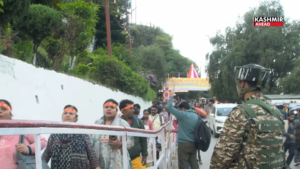
This call to action resonated through the gathering, which included senior officials, prominent citizens, and a substantial representation of youth from across the Union Territory. The appeal to younger generations represents a crucial component of youth initiatives Kashmir aimed at fostering lasting peace and development in the region.
Displaced Communities Jammu Kashmir: Honoring Article 370 Victims and Partition-Affected Families
The Lieutenant Governor extended particular tribute to families displaced from Pakistan-occupied Jammu Kashmir and Chhamb, acknowledging decades of discrimination they endured under Article 370. He noted that the revocation of Article 370 had granted these partition-affected communities full citizenship rights, ending their prolonged marginalization.
He also paid homage to those who sacrificed during the tribal invasions that occurred in the months following partition, recognizing their role in securing the territory’s integrity. “The struggle and sacrifice of countless families are an integral part of the collective memory of Jammu Kashmir,” he said.
The recognition of partition-displaced communities marks an important acknowledgment of their historical struggles and contributions to nation-building. These families have played a vital role in rebuilding their lives while maintaining their cultural heritage and identity.
National Unity and Integration: Unity in Diversity as India’s Enduring Strength
Emphasizing that India’s greatest asset lies in its cultural and linguistic diversity, the Lieutenant Governor outlined how partition represented an attempt by enemies of the nation to fracture this national unity and integration. Yet, he noted, India has “continuously moved forward with pride and confidence,” maintaining the spirit of unity despite attempts at division.
“From Kashmir to Kanyakumari, from Gujarat to Goa, from Assam to Arunachal Pradesh, India is a confluence of languages, cultures, traditions, and beliefs,” he stated, calling this diversity “the bedrock of our strength, security and collective progress.”
The concept of national unity and integration remains central to India’s democratic framework and social fabric. This emphasis on unity serves as a counterpoint to the divisions that partition attempted to create, demonstrating the nation’s commitment to inclusive growth and shared prosperity.
The occasion concluded with a two-minute silence observed in memory of all those who lost their lives during the Partition of India.