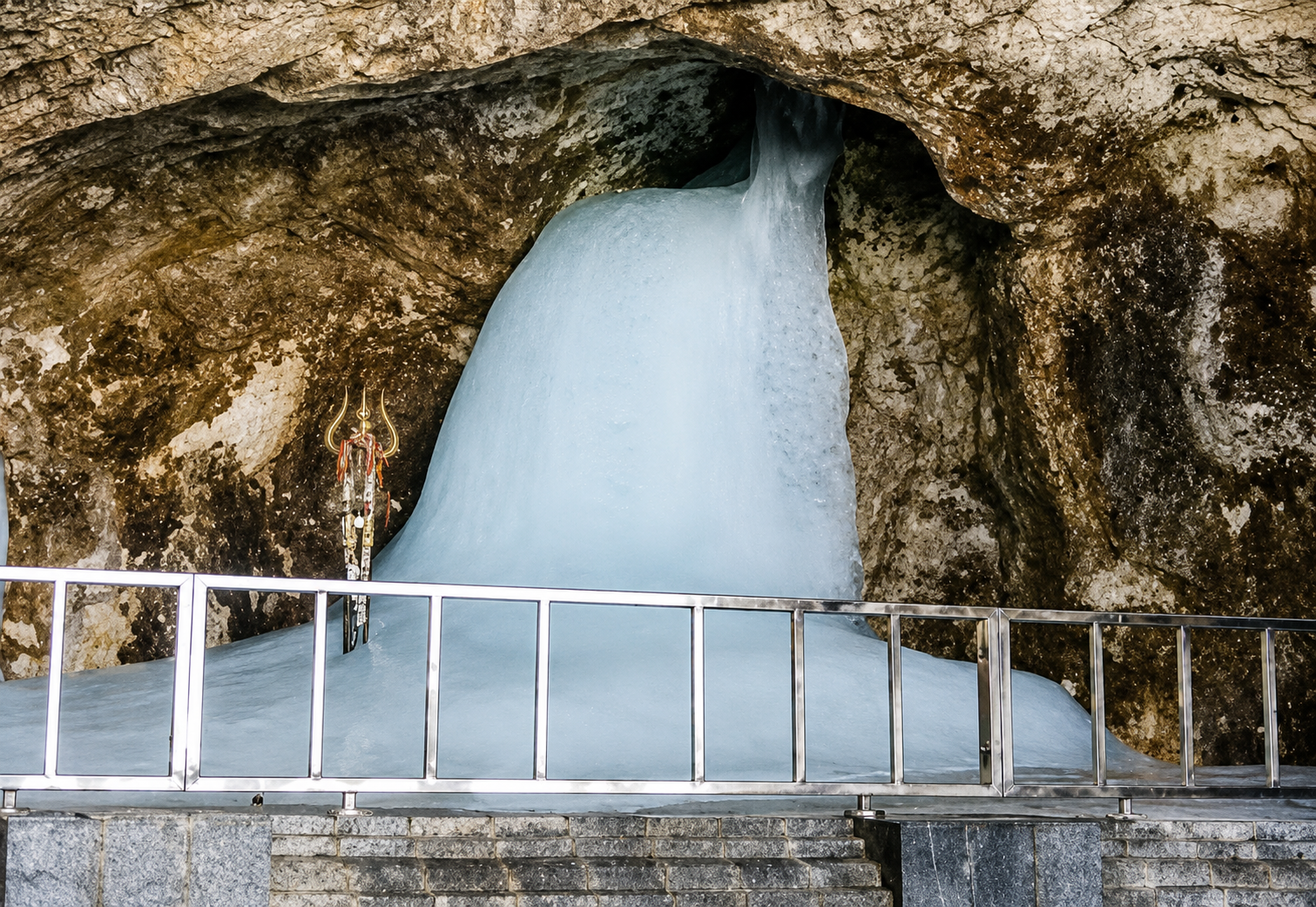
Srinagar, July 11,2026-The sacred Shri Amarnath Yatra is not only one of India’s most revered spiritual pilgrimages but also a powerful reminder of the need to protect the fragile Himalayan environment. The naturally formed Amarnath Ice Shivling, revered by millions of devotees as Baba Barfani, stands as a symbol of unwavering faith, devotion, and harmony with nature.
Nestled high in the Himalayas, the Holy Cave is located within one of the region’s most ecologically sensitive ecosystems. Every year, thousands of pilgrims undertake the challenging journey to seek the blessings of Lord Shiva while experiencing the breathtaking beauty of the mountains.
Scientists have observed that the size and formation of the naturally occurring Ice Shivling vary each year depending on weather conditions, temperature, snowfall, and humidity. Environmental experts caution that climate change, rising temperatures, and increasing human activity can impact the delicate Himalayan ecosystem, underscoring the importance of sustainable pilgrimage practices.
Authorities and environmentalists have consistently urged pilgrims to make the Yatra eco-friendly by avoiding plastic waste, using designated disposal facilities, protecting natural water sources, and respecting the pristine surroundings. Responsible tourism and collective environmental stewardship are considered essential to preserving the sanctity of the pilgrimage route.
The Shri Amarnath Yatra continues to inspire millions with its message of faith, resilience, and spiritual awakening. Alongside devotion, it also serves as a reminder that protecting nature is a shared responsibility. Preserving the fragile Himalayan landscape today will ensure that future generations can continue to experience the divine journey to the Holy Cave of Baba Barfani.