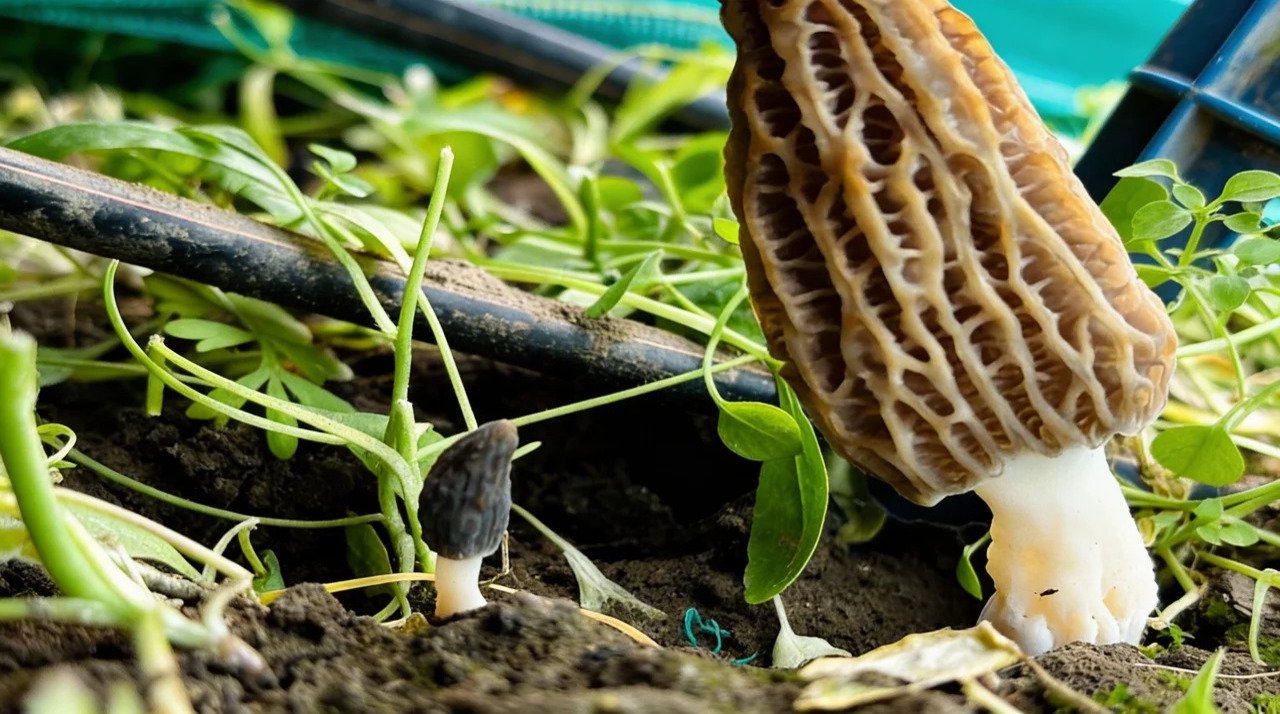
Srinagar, April 10,2026- In a major scientific breakthrough, researchers at Sher-e-Kashmir University of Agricultural Sciences and Technology of Kashmir have successfully cultivated Gucchi mushrooms considered the costliest mushrooms in the world inside a controlled greenhouse environment.
Traditionally found in the wild forests of the Himalayan region, especially in parts of Kashmir, Gucchi mushrooms are highly prized for their unique flavor, medicinal properties, and high market value. Their natural growth has long depended on specific climatic conditions, making them rare and difficult to cultivate—until now.
Scientists at SKUAST-K have achieved this milestone after years of research and experimentation, replicating the mushroom’s natural habitat within a greenhouse. This controlled cultivation method ensures better yield, consistency, and scalability, potentially transforming the economic landscape for local farmers.
Experts believe the development could reduce dependency on wild harvesting, which is both unpredictable and labor-intensive, while also protecting forest ecosystems. More importantly, it opens up new avenues for commercial cultivation, enabling farmers to earn significantly higher incomes through scientific farming techniques.
“This breakthrough is a game-changer for the agriculture sector in Jammu & Kashmir. It will not only boost farmers’ income but also position the region as a hub for high-value mushroom cultivation,” officials said.
The success of greenhouse-grown Gucchi is expected to benefit rural communities by promoting sustainable agriculture, entrepreneurship, and agri-innovation. With proper training and support, farmers can adopt this model to tap into national and international markets where demand for Gucchi remains consistently high.
This achievement further cements SKUAST-K’s role as a leading institution in agricultural research and innovation, bringing cutting-edge solutions to traditional farming challenges.