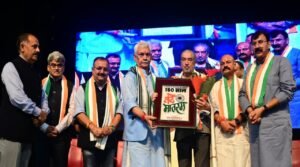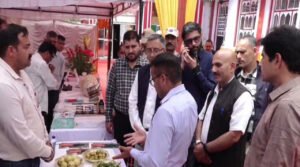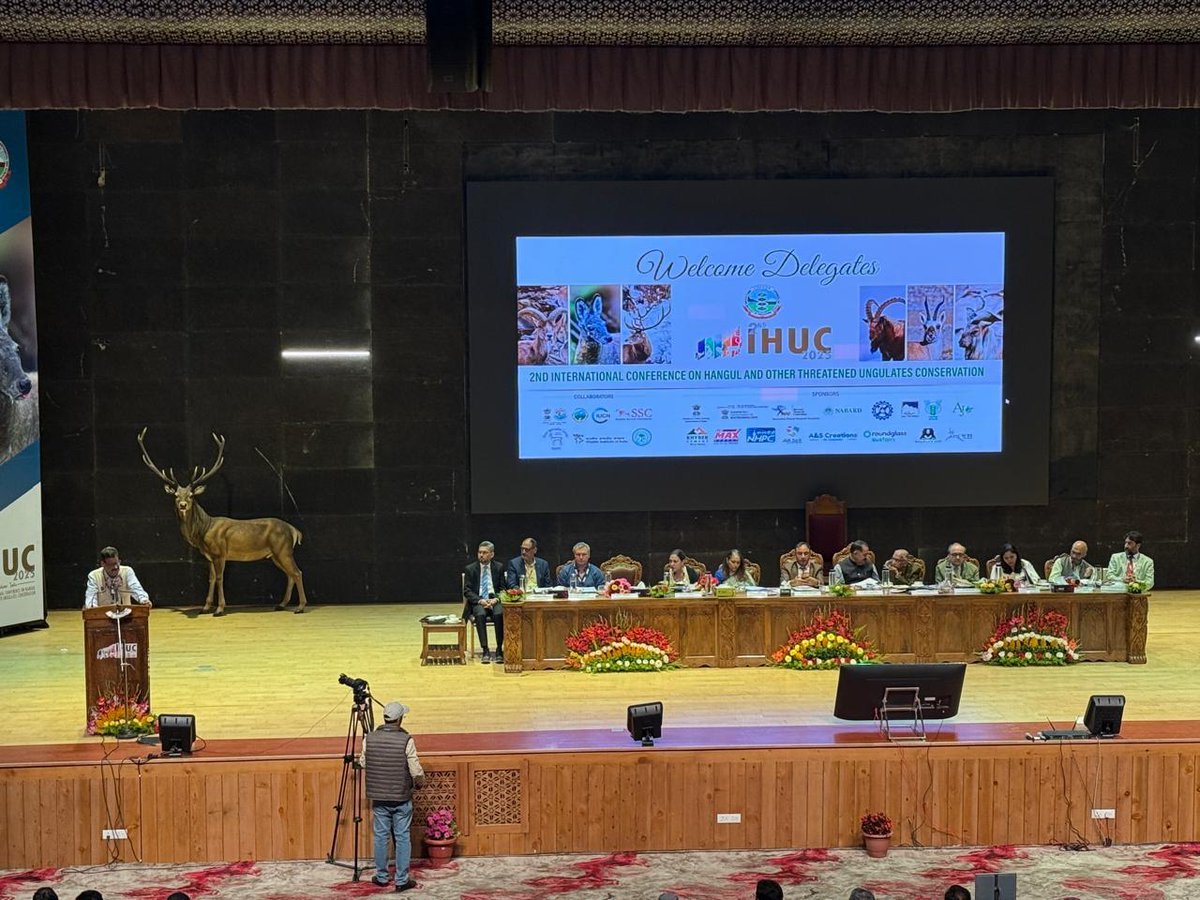
On September 11, 2025- The 2nd International Conference on Hangul and Other Threatened Ungulate Conservation (2IHUC 2025) at Sher-e-Kashmir University of Agricultural Sciences and Technology (SKUAST-K), Srinagar, enters its second day at the Shalimar Convention Centre. This three-day event, which began on September 10, continues to foster critical dialogue among global scientists, wildlife managers, policymakers, and local communities to secure the future of the critically endangered Hangul (Kashmir stag, Cervus hanglu hanglu) and other threatened ungulates like the Bukhara and Yarkand deer.
Key Focus Areas for Day 2
- Research Sharing: Experts from institutions like the Wildlife Institute of India (WII) and the IUCN Deer Specialist Group are presenting new findings on Hangul population dynamics, genetic diversity, and habitat challenges. Discussions include data from the 2023 Hangul census, which estimated ~275 individuals in Dachigam National Park.
- Management Strategies: Sessions are exploring innovative approaches like captive breeding, reintroduction programs, and habitat restoration to counter threats such as habitat fragmentation, poaching, and human-wildlife conflict.
- Collaborative Conservation: Emphasis on partnerships between SKUAST-K, WII, IUCN, and local communities to develop sustainable models, including eco-tourism and community-led monitoring to reduce conflicts and support livelihoods.
- Climate and Ecosystem Challenges: Addressing climate change impacts and predation pressures (e.g., from leopards) on Hangul and other ungulates, with a focus on creating wildlife corridors to connect fragmented habitats like Dachigam and Overa-Aru Wildlife Sanctuary.
Significance
The Hangul, a cultural and ecological icon of Jammu and Kashmir, faces extinction risks due to its dwindling population, restricted primarily to Dachigam and adjacent areas. Listed as critically endangered on the IUCN Red List, its conservation is a global priority. The conference aims to produce actionable policies to tackle habitat degradation, human encroachment, and climate-related threats, ensuring the species’ long-term survival.
What to Expect Today
Day 2 features workshops, panel discussions, and presentations to refine conservation strategies. Stakeholders are collaborating to draft recommendations for policy frameworks and on-ground actions, building on insights from Day 1’s inaugural addresses by SKUAST-K’s Vice-Chancellor Prof. Nazir Ahmad Ganai, Commissioner Sheetal Nanda, and international experts like Dr. Susana González (IUCN)