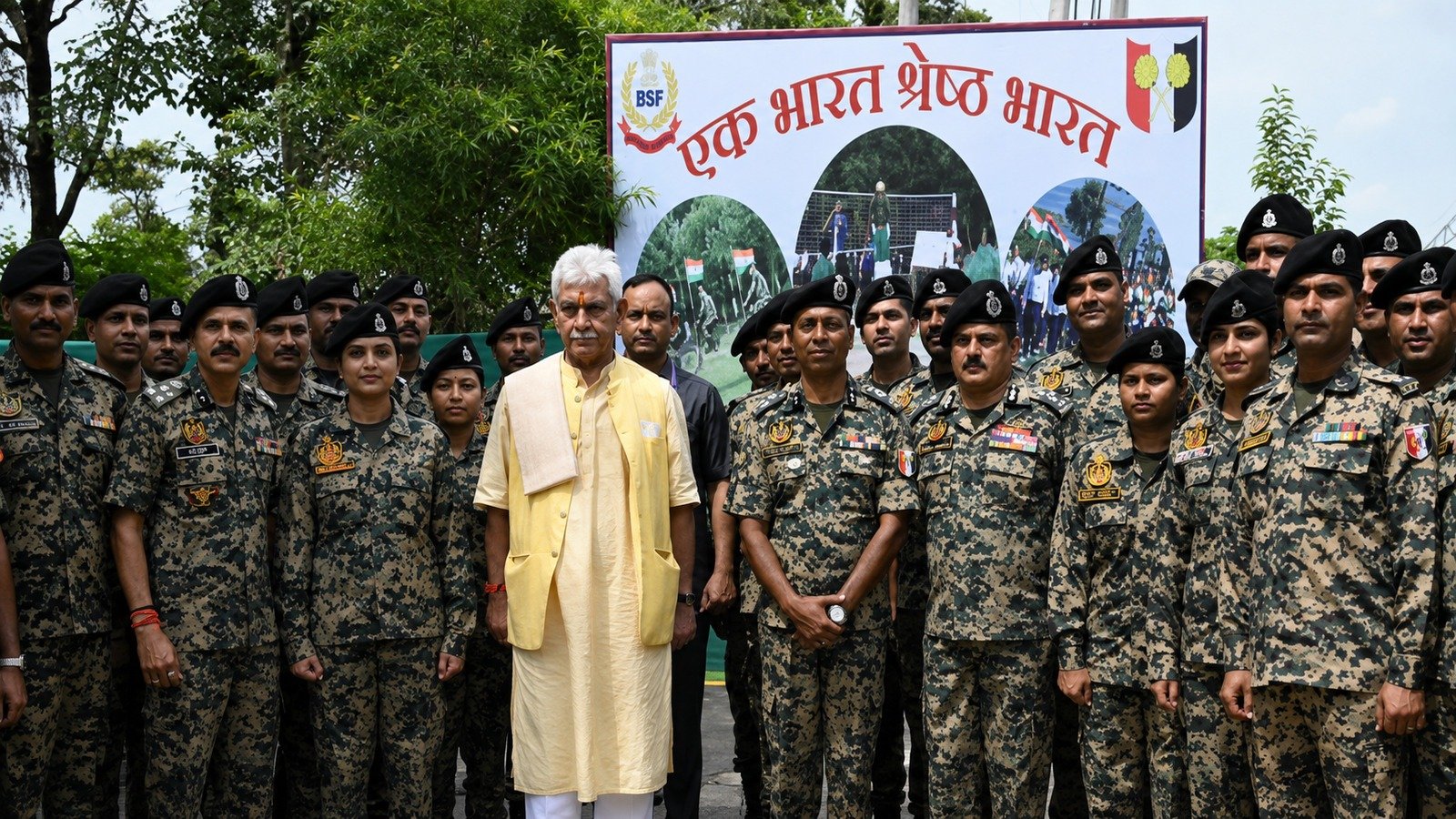
Jammu, August 20, 2026- Lieutenant Governor Manoj Sinha today visited Karol Krishna, a border village in Kathua district, as part of the government’s continuing outreach under the Vibrant Village Programme-Phase 2 (VVP-2). Karol Krishna, along with five neighbouring villages — Rathua, Gujjar Chak, Gajnal, Bobiya and Kadiyala — falls under the scheme, which aims to transform India’s frontier settlements into models of development rather than areas defined by isolation.
The administration said the approach is intended to make border villages more resilient, economically active and better connected with the rest of Jammu and Kashmir. By combining infrastructure development with employment, education and welfare initiatives, the programme seeks to ensure that residents in frontier areas have access to opportunities comparable to those available elsewhere.
“First Villages, Not Last Villages”
Addressing residents from all six strategic villages covered under VVP-2, Sinha pushed back against the long-standing framing of border settlements as remote or peripheral. He described them instead as the frontline of the nation’s identity, insisting that for decades the word “border” had carried an unfair connotation of distance from governance priorities. That perception, he said, has shifted decisively over the past several years under the current central leadership, with border villages now firmly part of the mainstream development agenda.
He went further, suggesting that any account of India’s development story should logically begin in villages like Karol Krishna and its neighbours — places where, in his words, the country’s border breathes and the national flag flies.
Infrastructure Gains Since 2019
Sinha pointed to concrete infrastructure milestones achieved in Kathua district since 2019, noting that all 216 border villages in the district now have road connectivity and complete electrification. He added that telecommunication and television access, once patchy or altogether absent in these areas, now reaches every household in the district’s border belt. He framed these figures not merely as statistics, but as tangible markers of change in residents’ daily lives.
Economic and Social Indicators
Beyond infrastructure, the Lieutenant Governor cited a broader set of socio-economic indicators reflecting change in the border region: a sharp decline in poverty levels, migration to cities roughly halved compared to previous years, and rural incomes rising by around 30 percent. He also noted that unemployment in these areas has been reduced to nearly half its earlier levels, alongside the construction of more than 2,000 individual and community bunkers built to safeguard border families during periods of tension. Sinha set an ambitious benchmark going forward, stating that the goal should be to bring the entire local population above the poverty line.
Women-Led Growth and Youth Aspirations
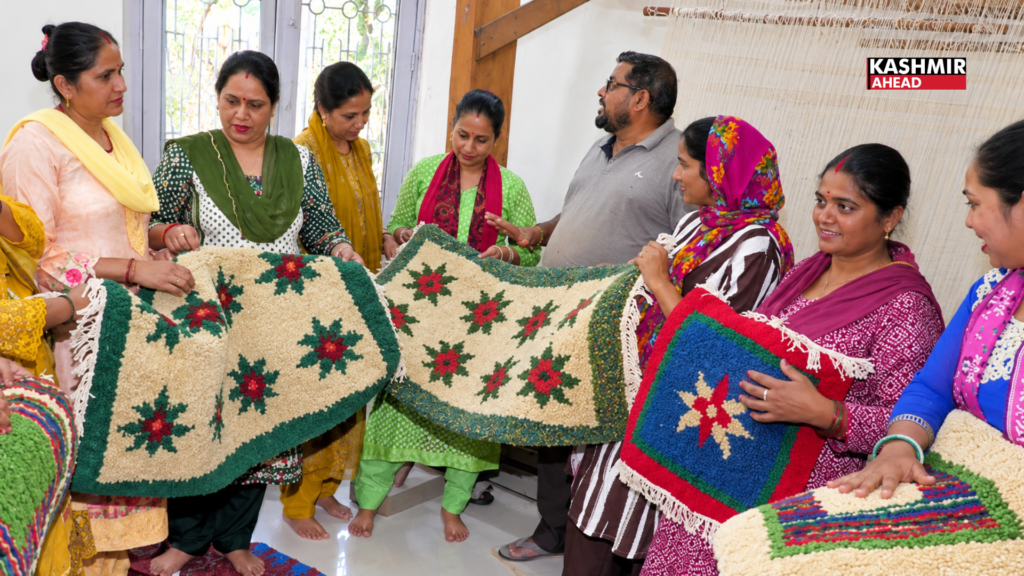
The visit also highlighted the role of women in reshaping the border economy. Sinha commended the contribution of self-help groups formed under the National Rural Livelihood Mission, noting that more than 1,300 such groups have been established in the region, benefiting over 12,000 families. Women in these villages, he said, are increasingly engaged in tailoring, embroidery, handicrafts and small enterprises — activities that are strengthening both individual households and the wider village economy.
Turning to the younger generation, the Lieutenant Governor encouraged youth in border villages to hold ambitions as large as those of their counterparts in metropolitan cities. He pointed to improvements in local government schools, including the introduction of digital classrooms, vocational training programmes and the restoration of full academic sessions, as steps aimed at closing the gap in educational opportunity between border areas and urban centres.
A Programme Rolled Out Village by Village
During the visit, Sinha also distributed benefits under various government welfare schemes to local families and handed appointment letters to youth from the area — part of a pattern of ground-level engagement that has accompanied his visits to Vibrant Villages across Jammu and Kashmir in recent months. With Karol Krishna now added to that list, the administration continues to position the programme as central to its broader push to integrate the region’s frontier communities into the state’s development narrative.