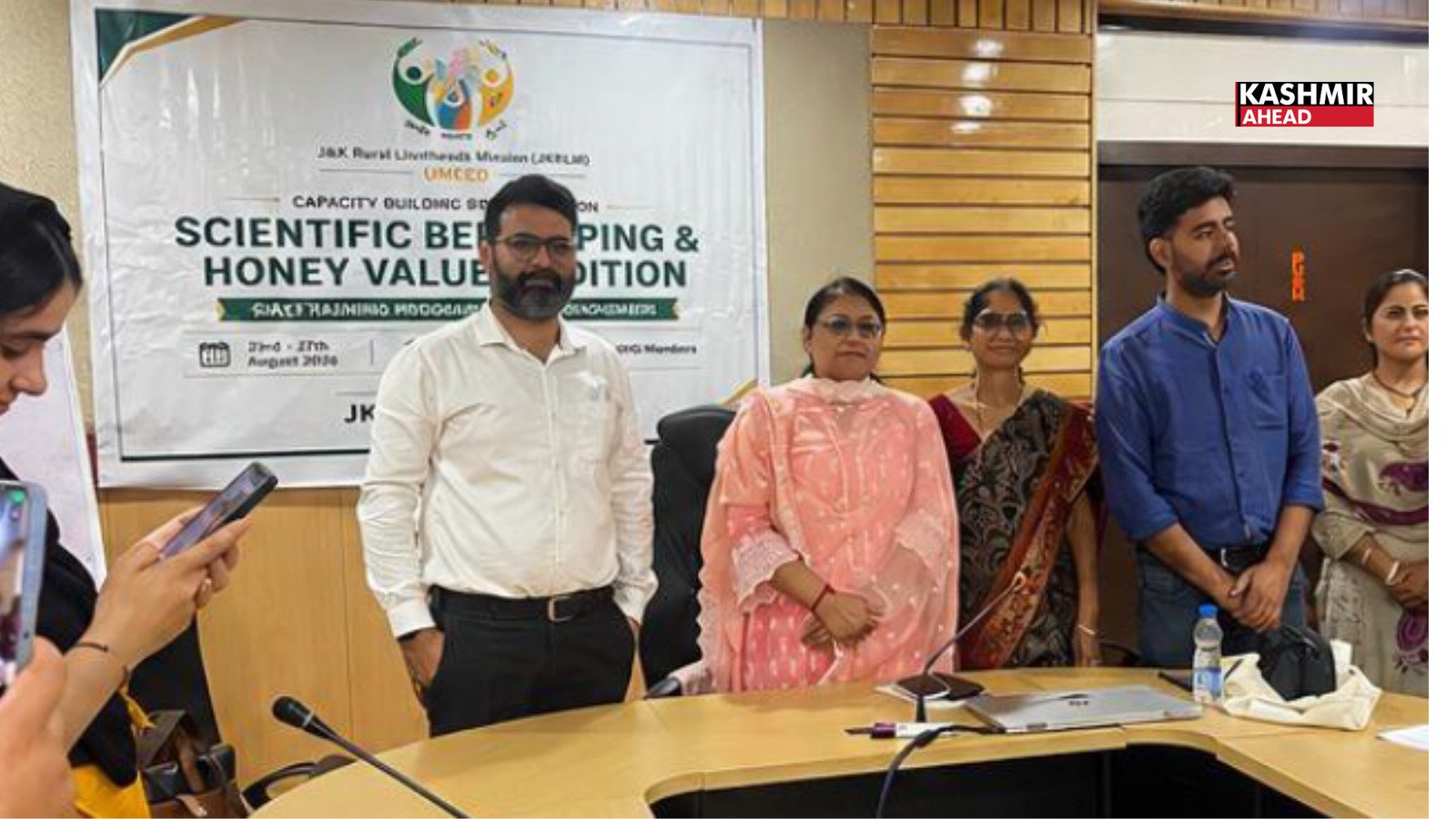
Kashmir, August 24,2026- In a fresh push under the ongoing JKRLM Beekeeping Training drive for SHG members, Mission Director of the Jammu & Kashmir Rural Livelihoods Mission (JKRLM), Dr. Shubhra Sharma, inaugurated a five-day Capacity Building Programme on Scientific Beekeeping and Honey Value Addition, running from August 23 to 27, 2026. Organised as part of the #NationalCampaignonEntrepreneurship and rolled out under the aegis of DAY-NRLM, the initiative aims to equip rural women with the technical and entrepreneurial skills needed to build sustainable, women-led enterprises centred around apiculture.
Speaking at the inaugural session, Dr. Sharma underscored that beekeeping presents a low-investment, high-return livelihood opportunity that aligns closely with the region’s agro-climatic strengths. She noted that with the right training in scientific hive management, honey extraction, and value-added product development, SHG members can transition from subsistence-level activity to organised, income-generating micro-enterprises.
The programme forms part of a broader push by JKRLM to diversify non-farm livelihood options for rural women across Jammu and Kashmir. This effort dovetails with the Mission’s wider entrepreneurship agenda — JKRLM’s Start-up Village Entrepreneurship Programme (SVEP) has recently seen approval for six new project blocks worth ₹36 crore, with over 12,000 enterprises projected to come up over the next four years, expanding SVEP’s footprint from eight to fourteen districts in the Union Territory. SVEP itself operates as a sub-scheme under the Deendayal Antyodaya Yojana–National Rural Livelihoods Mission, aimed specifically at promoting non-farm entrepreneurship among Self-Help Group members and their families in rural areas.
Over the five days, participants are expected to receive hands-on training covering the full beekeeping value chain — from colony management, disease control, and seasonal hive maintenance to post-harvest processing, packaging, branding, and market linkages for honey and allied bee products such as beeswax, pollen, and propolis. This mirrors the national approach under the government’s beekeeping missions, where collective structures such as SHGs and Farmer Producer Organisations are positioned as the vehicle for diversifying the beekeeping industry, improving both the quantity and quality of honey and other hive products destined for markets. Similarly, institutional frameworks including Self Help Groups, Joint Liability Groups, Beekeepers Interested Groups, and Farmer Producer Organisations remain central to how such capacity-building and skill-development programmes are structured and supported financially.
Participants will also be introduced to hive placement strategies, seasonal migration practices for bee colonies, and quality control protocols for honey testing to meet market and export standards. Officials noted that linking these SHG-led enterprises to e-commerce platforms and local haats will be a key focus area in the coming months, ensuring produce reaches buyers beyond the immediate district.
Resource persons and subject-matter experts associated with the programme are expected to walk participants through practical demonstrations of beekeeping equipment, colony behaviour, and value-addition techniques, building on best practices drawn from established beekeeping training modules used across the country to sensitise rural communities toward apiculture as an alternative income source.
Officials associated with JKRLM said the programme is expected to directly benefit SHG members by opening a new, scalable stream of household income, particularly for women in remote and hilly terrains where traditional farm-based livelihoods face seasonal and climatic constraints. The Mission has reiterated its commitment to strengthening the honey value chain — from primary production to branded retail — as part of its larger vision of building resilient, women-anchored rural enterprises.
The training also reflects a growing national emphasis on beekeeping as a livelihood security tool, particularly given its low capital requirements, minimal land dependency, and complementary role in crop pollination and biodiversity conservation.
With this five-day capacity-building initiative, JKRLM adds another layer to its expanding basket of livelihood interventions, reinforcing the larger #NationalCampaignonEntrepreneurship objective of fostering grassroots, women-led business models rooted in local resources.