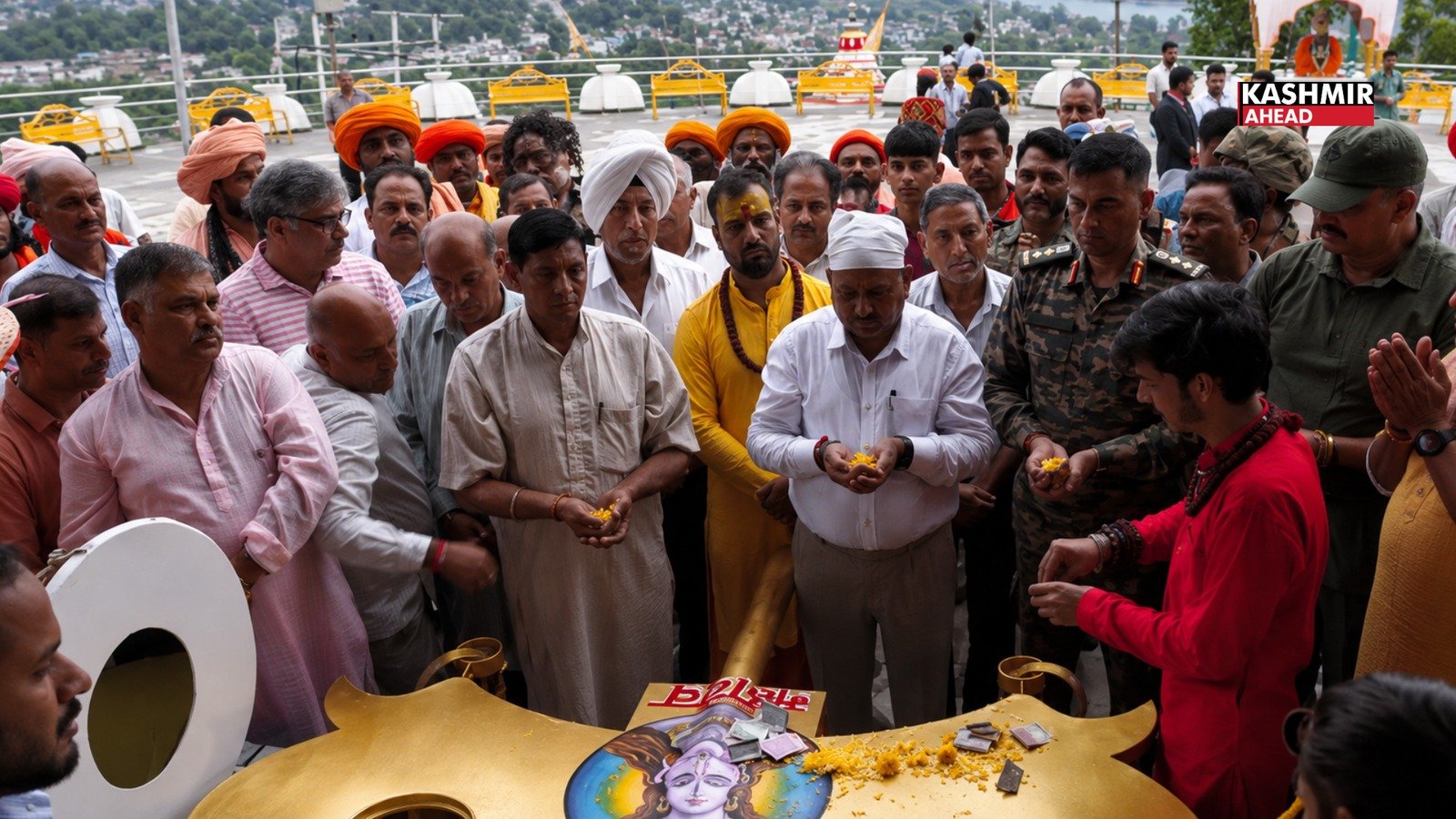
Poonch, August 17,2026-Baba Buddha Amarnath Yatra 2026 begins in Poonch after the sacred Trishul Yatra, bringing devotees together in faith, tradition and communal harmony. A ceremonial ‘Trishul Yatra’ was taken out from the Navagraha Temple in Poonch on Sunday, marking a solemn precursor to the much-awaited Baba Buddha Amarnath Chhari Yatra, which commenced from Jammu on Monday. The procession, organised as part of the annual religious observances surrounding the pilgrimage, drew devotees from across faiths who joined in with fervour and devotion.
A Precursor to the Main Pilgrimage
Speaking about the significance of the procession, Nishu Gupta, organiser of the Baba Buddha Amarnath Chhari Yatra, said the Trishul Yatra was held in memory of the late Yashpal Sharma, a gesture that has become an annual tradition ahead of the main pilgrimage. “As a precursor to the Baba Buddha Amarnath Yatra commencing tomorrow, a ‘Trishul Yatra’ is organised here in memory of the late Yashpal Sharma,” Gupta said, describing the procession as both a religious and community event that sets the tone for the larger pilgrimage.
The procession began from a temple situated close to the Line of Control (LoC) and made its way through the town before concluding at a designated location in Poonch, where the sacred Trishul was formally worshipped through a ritualistic ceremony. Devotees carried the Trishul with chants and religious fervour, with the route lined by locals who came out to witness and participate in the observance.
Interfaith Participation Marks the Procession
A notable feature of the Trishul Yatra was the participation of people from different faiths, reflecting the communal harmony that has traditionally surrounded the Baba Buddha Amarnath pilgrimage in the border district. Gupta highlighted this aspect, noting that residents from various religious communities came together to take part, reinforcing the spirit of unity that defines the region’s religious calendar, and appealed to devotees across the country to join the upcoming yatra in large numbers.
Baba Buddha Amarnath Yatra Now Underway
The Trishul Yatra preceded the formal commencement of the annual Baba Buddha Amarnath Yatra, whose first batch of pilgrims departed from the Bhagwati Nagar base camp in Jammu, with devotees expected to reach Poonch district by evening. The pilgrimage is being coordinated by the Jammu and Kashmir administration in association with the Vishwa Hindu Parishad (VHP) and Bajrang Dal, with elaborate security arrangements put in place along the route to ensure the safe and smooth movement of devotees.
The ancient Baba Buddha Amarnath shrine, located in the Mandi area along the Pulasti river in Poonch’s Loran Valley, sits nearly 4,600 feet above sea level, about 290 kilometres from Jammu. Popular belief holds that the pilgrimage to Baba Amarnath in Kashmir is incomplete without a visit here, lending the Poonch pilgrimage its own deep spiritual significance among devotees of Lord Shiva.
Chhari Yatra and Culmination
As part of the pilgrimage calendar, the traditional Chhari Yatra — the ceremonial procession carrying the holy mace — is scheduled to take place on August 26, with the overall yatra concluding on August 28, coinciding with Raksha Bandhan. The shrine, unlike its high-altitude counterpart in Kashmir, remains accessible throughout the year, drawing pilgrims not only during the annual Sawan season but across different times as well.
A Tradition Rooted in History
The Budha Amarnath Yatra traces its organised origins back generations, having been regularised and expanded during Dogra rule under local rulers between 1852 and 1939. It remains one of the most significant religious observances in the Poonch region, drawing pilgrims from across the country who undertake the journey as an act of faith and cultural continuity along the border belt.
With the Trishul Yatra setting a devotional tone and the main pilgrimage now underway, officials expressed confidence that this year’s yatra would see strong participation, continuing the tradition of faith that has bound generations of devotees to the Poonch hills.