Srinagar, October 24,2025:Chief Secretary Atal Dulloo today chaired a meeting to review the progress and impact of the ‘Nasha Mukt J&K Abhiyan’, an intensive anti-drug awareness campaign spearheaded by the Department of Information and Public Relations (DIPR) across Jammu and Kashmir.
The meeting was attended by the Director General of Police, Principal Secretary Home, Commissioner Secretaries of Information and Social Welfare, Divisional Commissioners of Jammu and Kashmir, Inspector General of Police (Crime), Secretaries of Health and Rural Development, Directors of Information and School Education, and other senior officers. Deputy Commissioners of all districts participated through video conferencing.
During the meeting, the Chief Secretary emphasized the need for a sustained, community-driven awareness campaign involving Panchayati Raj Institutions (PRIs), Urban Local Bodies (ULBs), and schools across J&K. He underscored the importance of capacity building at the grassroots level and directed that resource persons be trained through IMHANS, drawing participants from paramedical staff, school teachers, and members of Self Help Groups (SHGs). These trained individuals, he said, would serve as counsellors in Primary Health Centres, schools, and rural communities to effectively combat substance abuse.
He asked the Deputy Commissioners to identify suitable local resources in coordination with concerned departments and directed the Health Department to design training modules for the counsellors. He further suggested seeking assistance from NITI Aayog to ensure quality training and strengthen the overall implementation framework.
The Chief Secretary also instructed the concerned departments to audit calls received on anti-drug helpline numbers to assess the nature of assistance being provided to victims and their families. He reviewed district-wise implementation of the Abhiyan, taking feedback from Deputy Commissioners on public response and the progress of planned activities. Stressing the importance of rehabilitation, he asked the districts to ensure continuous guidance and dignified reintegration of individuals recovering from substance abuse by offering self-employment opportunities and other support.
On this occasion, Commissioner Secretary Information Department, M. Raju, gave a detailed presentation on the outreach and impact of the ‘Nasha Mukt J&K Abhiyan’, which aims to make Jammu and Kashmir a truly drug-free region. He informed that since the programme’s launch on April 5 this year, the department has conducted sustained IEC (Information, Education and Communication) campaigns involving social icons, influencers, and youth role models. The initiatives included SMS campaigns, debates, competitions, podcasts, and infographics to spread awareness about the harmful effects of drug abuse.
He revealed that out of 7,847 planned activities, 6,985 have already been completed across the UT, engaging nearly 3.5 lakh participants and sending over 1.11 lakh direct messages to the public. The campaign included 4,569 events in Panchayats, 556 in ULBs, and 1,860 in educational institutions. Notably, 93 individuals in Kashmir Division and 24 in Jammu Division have been successfully rehabilitated through self-employment or higher education opportunities.
Inspector General of Police (Crime), Sujit Singh, briefed the meeting on complementary efforts by the Police Department in collaboration with other agencies. He informed that a dedicated toll-free helpline (1933 – MANAS) is operational to extend counselling and assistance to drug victims. Awareness drives and capacity-building programmes organized during the year have engaged around 3.5 lakh participants. The department is also mobilizing youth volunteers as “Drug Yodhas” to promote peer-led awareness, with 100 youth champions recognized for their proactive contributions.
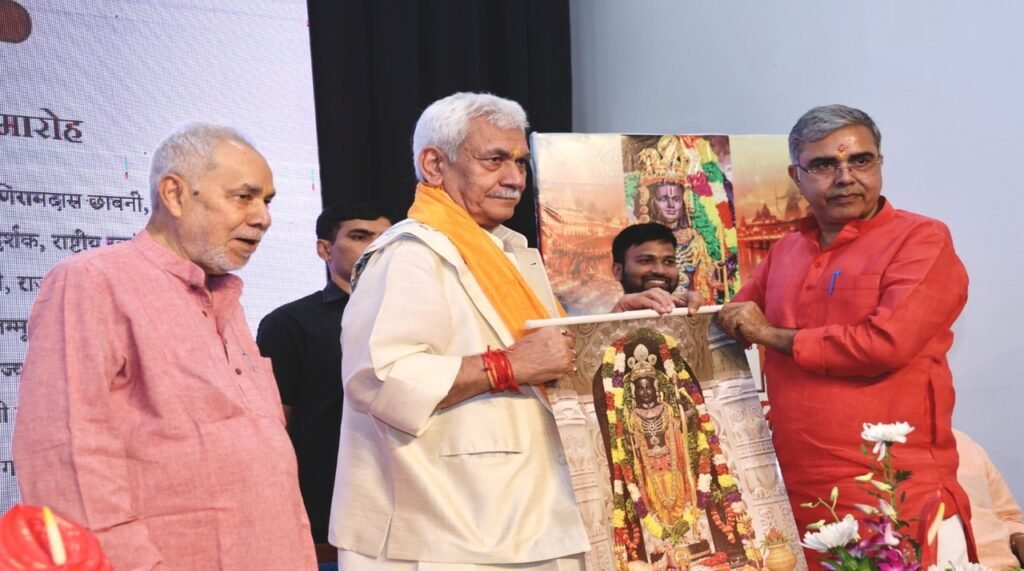
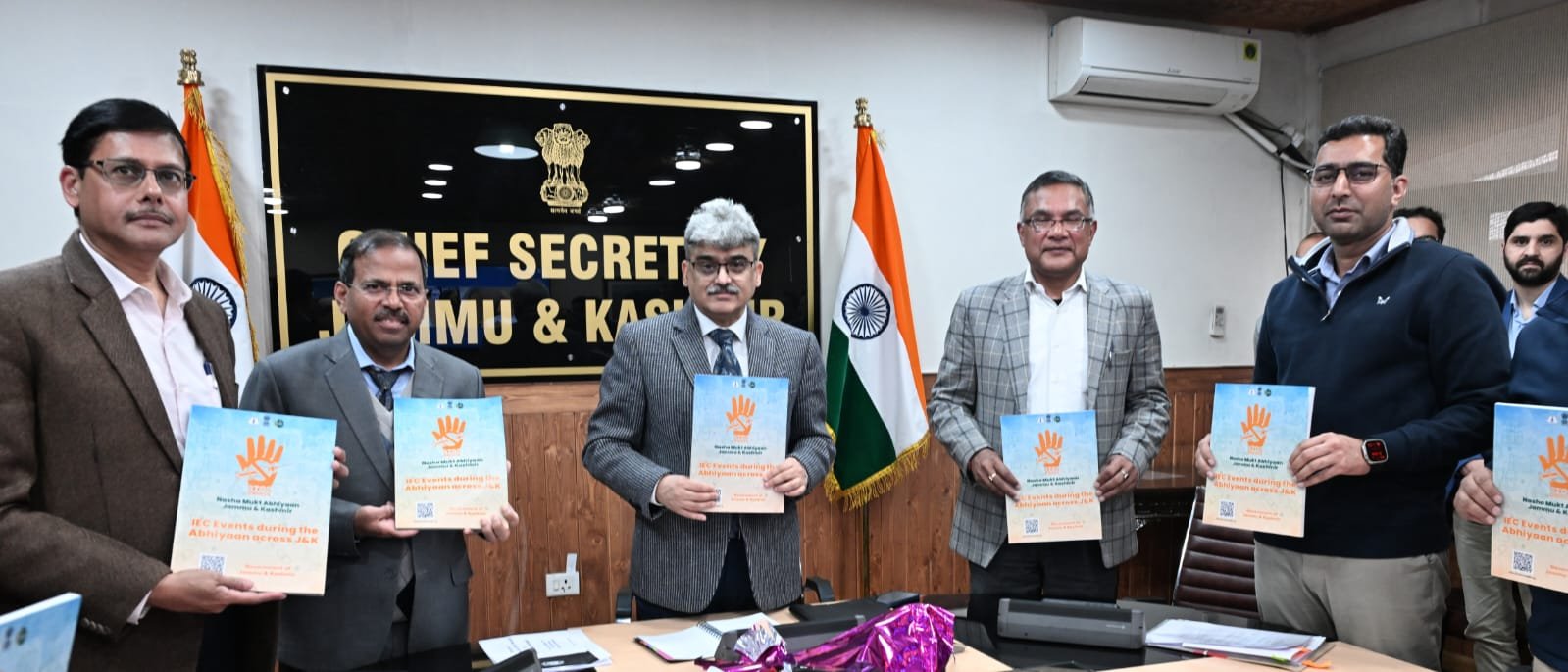
On the occasion, the Chief Secretary released the “Jammu & Kashmir Nasha Mukt Abhiyan” compendium, documenting the campaign’s activities, milestones, and success stories. He appreciated the efforts of the Information Department and all stakeholders in steering this vital social movement aimed at protecting youth and securing a drug-free future for Jammu and Kashmir.
The Chief Secretary reiterated that collective and sustained efforts at every level—from schools and local institutions to law enforcement and health systems—are crucial to eradicating the menace of drug abuse and ensuring the well-being of future generations across J&K.