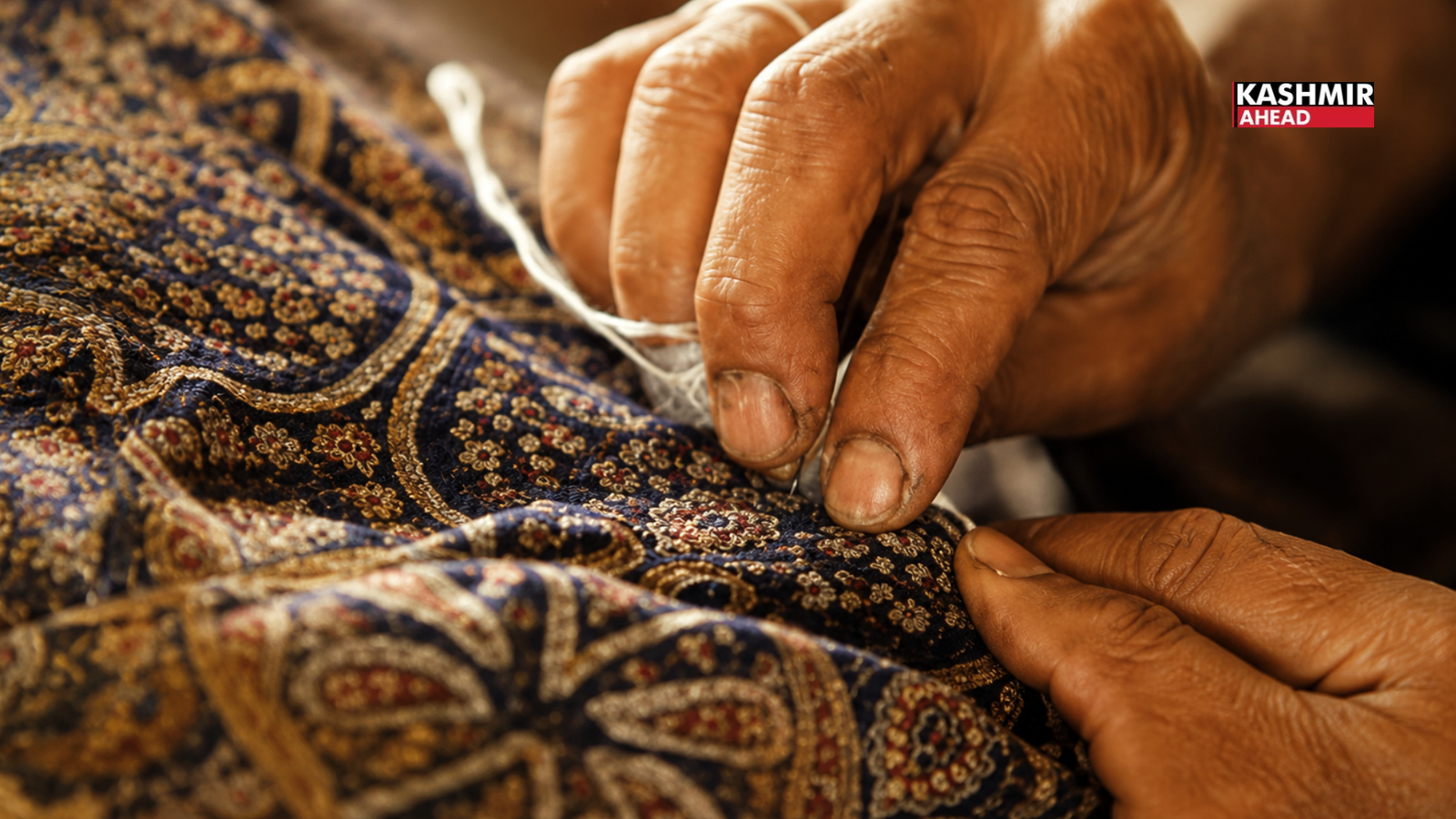
Srinagar, November 27,2026-For nearly five decades, Ghulam Mohi ud din Wani, a master artisan from Zadibal in Srinagar, has dedicated his life to preserving Kashmir’s intricate Sozni embroidery, a centuries-old craft renowned for its delicate needlework, fine detailing and artistic beauty. However, despite spending almost 50 years keeping the traditional art alive, Wani says the lack of government support, recognition and interest among the younger generation threatens its future.
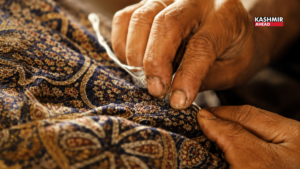
Known for its intricate patterns and painstaking craftsmanship, Sozni embroidery is among Kashmir’s most treasured traditional textile arts. The craft requires exceptional patience, precision and years of practice, with artisans spending weeks or even months completing elaborate designs on shawls and other fabrics.
For Wani, Sozni embroidery is more than an occupation. It is a lifelong commitment to preserving an artistic legacy passed down through generations. Having spent nearly half a century mastering the delicate needlework, he has witnessed the changing circumstances of the handicraft sector and the growing challenges faced by traditional artisans.
Five Decades of Dedication
Wani’s journey reflects the dedication and perseverance required to master Kashmir’s traditional embroidery techniques. Working with fine needles and threads, he creates intricate patterns that reflect the region’s rich artistic heritage.
Sozni embroidery is particularly valued for its detailed motifs, fine stitches and elaborate designs. Unlike machine-produced patterns, the traditional process depends entirely on the artisan’s skill, concentration and experience.
Each piece represents countless hours of labour, with even the smallest details requiring careful attention. The craft demands years of training before an artisan can achieve the precision and consistency associated with high-quality Sozni work.
For Wani, continuing this tradition has been a way of keeping Kashmir’s cultural identity alive.
Concerns Over Government Support
Despite his decades of contribution, Wani expresses disappointment over what he describes as inadequate government attention and recognition for traditional artisans.
He believes that craftsmen who have spent their entire lives preserving Kashmir’s handicraft heritage deserve greater institutional support, appreciation and opportunities to sustain their livelihoods.
Traditional artisans often face challenges related to declining demand, changing market preferences, competition from machine-made products and limited access to wider markets. These difficulties can make it increasingly challenging for skilled craftsmen to continue their work and encourage younger people to enter the profession.
Wani’s concerns highlight the need for stronger initiatives to support traditional artisans, improve market access and ensure that genuine handmade products receive the recognition they deserve.
A Tradition Without a Successor?
One of Wani’s biggest worries is the uncertain future of Sozni embroidery within his own family.
After dedicating nearly 50 years to the craft, he fears that his knowledge and skills may not be passed on to the next generation. He says his children have shown little interest in learning the intricate art, leaving him uncertain about who will carry forward his legacy.
His concern reflects a larger challenge confronting several traditional handicrafts in Kashmir, where younger generations are increasingly exploring other career opportunities rather than pursuing time-consuming traditional occupations.
Learning Sozni embroidery requires patience, dedication and years of practice. Without sustained interest among young people, the transfer of specialised skills from experienced artisans to new learners becomes increasingly difficult.
Preserving Kashmir’s Artistic Heritage
Kashmir’s handicraft traditions are an important part of its cultural identity and contribute significantly to its reputation across national and international markets. Sozni embroidery, with its distinctive craftsmanship, remains a symbol of the region’s artistic excellence.
However, preserving such traditions requires more than celebrating finished products. It also demands investment in the people who create them.
Greater recognition, artisan-focused welfare measures, skill-development programmes, training opportunities and better marketing platforms could encourage younger generations to take up traditional crafts.
Wani’s story is a reminder that behind every exquisite embroidered shawl lies the dedication of an artisan whose skills have been shaped through years of hard work.
As the master craftsman from Zadibal continues his journey with the needle and thread, his biggest wish remains that Kashmir’s centuries-old Sozni embroidery tradition does not disappear with his generation.