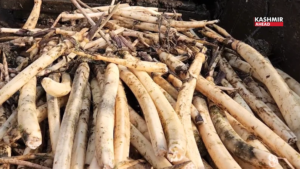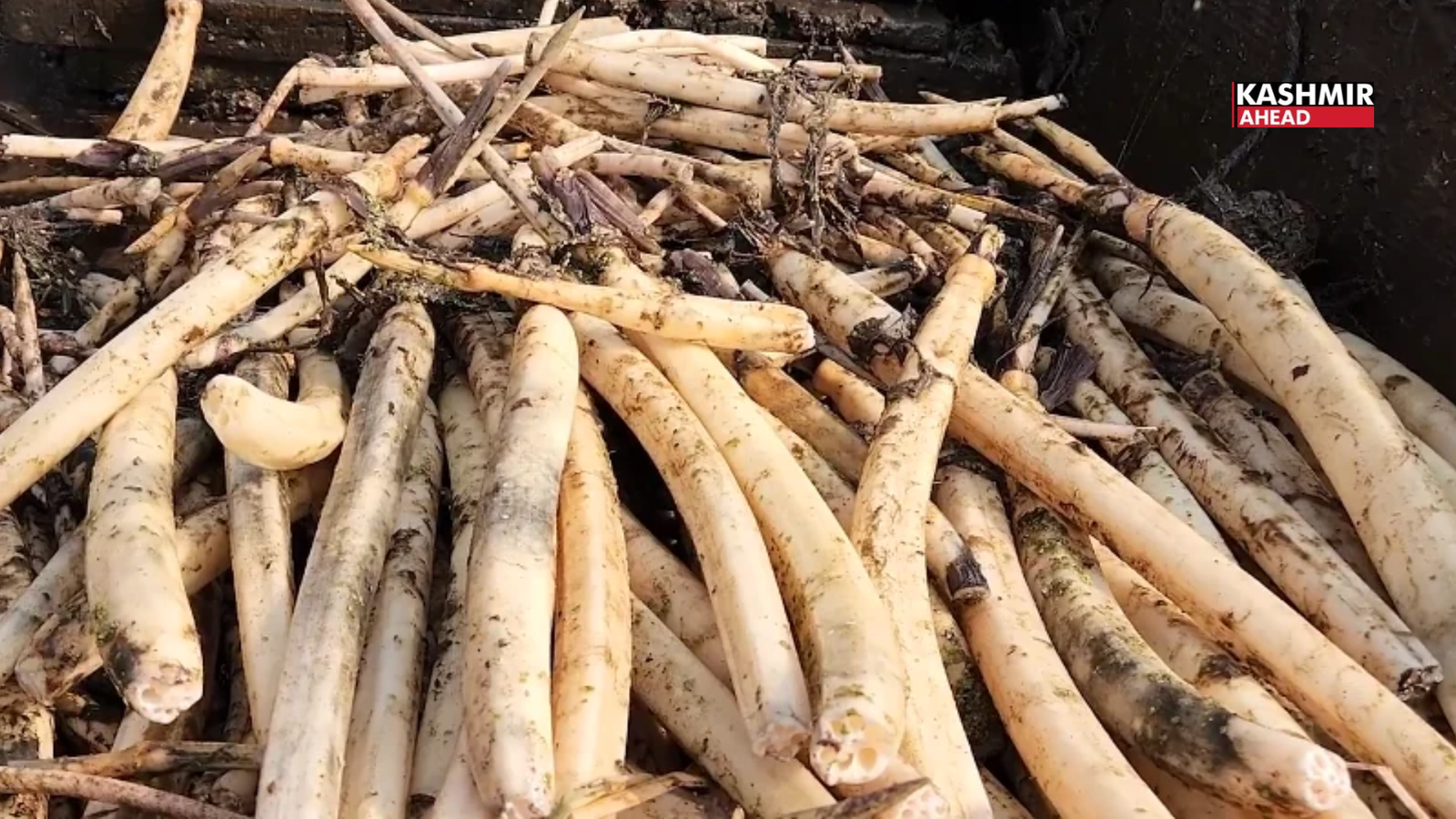
Srinagar, November 25,2026- Amid the calm waters of Anchar Lake on the outskirts of Srinagar, local growers continue a centuries-old agricultural tradition that remains deeply connected to Kashmir’s culture, cuisine and rural livelihood. As the harvesting season progresses, farmers can be seen navigating the shallow waters of the lake to collect lotus stems, locally known as Nadru, an important ingredient in traditional Kashmiri food.
The harvesting of Nadru is more than an agricultural activity for the local communities. It represents a longstanding relationship between the people of Kashmir and its wetlands, where generations of families have depended on natural water resources for their livelihood.
Anchar Lake: A Natural Hub of Nadru Cultivation
Located on the outskirts of Srinagar, Anchar Lake is among the wetlands that support traditional aquatic vegetation and provide livelihood opportunities to local communities. Its shallow waters and wetland environment create suitable conditions for the growth of lotus plants, whose stems are harvested by local growers.
During the harvesting season, farmers enter the lake waters, often working for several hours to collect the edible stems. The process requires experience, patience and familiarity with the wetland ecosystem.
Unlike conventional farming, Nadru harvesting involves working directly in water. Growers carefully locate the lotus plants, pull out their stems from beneath the water and collect them for cleaning, sorting and transportation to local markets.
For many families, this seasonal activity provides an important source of income and helps sustain traditional occupations that have been practised for generations.
Nadru: An Essential Part of Kashmiri Cuisine
Lotus stem, popularly known as Nadru in Kashmir, occupies a special place in the region’s culinary traditions. It is widely consumed across the Valley and features in several traditional dishes prepared in Kashmiri households.
From Nadru Yakhni, cooked with yoghurt and aromatic spices, to Nadru Palak and other local preparations, the vegetable is valued for its distinctive taste and texture.
Its popularity extends beyond households, with Nadru regularly available in vegetable markets across Srinagar and other parts of Jammu and Kashmir.
For local growers, the demand for fresh lotus stems creates opportunities to earn through traditional wetland-based activities. The harvested produce is supplied to markets, where it reaches households, restaurants and food establishments.
Generations Preserve a Centuries-Old Tradition
The Nadru harvest at Anchar Lake reflects the traditional knowledge passed down through generations of Kashmiri communities. Many growers have learned the techniques of harvesting from their parents and elders, keeping the occupation alive despite changing economic conditions and modern agricultural practices.
The work is physically demanding, requiring farmers to spend extended periods in cold and muddy waters. However, their continued participation highlights the importance of traditional livelihoods in sustaining rural economies.
For these communities, the lake is not merely a water body but an important natural resource that supports their daily lives.
Wetland Conservation Remains Important
The continued harvesting of Nadru also highlights the importance of protecting Kashmir’s wetlands. Lakes and wetlands play a significant role in maintaining ecological balance, supporting biodiversity and providing livelihood opportunities.
Environmental pressures, including pollution, encroachment and changes in water quality, can affect wetland ecosystems and the communities dependent on them.
Sustainable management and conservation efforts are therefore essential to ensure that traditional activities such as Nadru harvesting can continue without disturbing the natural environment.
A Glimpse of Kashmir’s Living Heritage
The ongoing Nadru harvest at Anchar Lake offers a glimpse into a side of Kashmir that is closely connected to nature, tradition and community life.
As growers move through the shallow waters collecting lotus stems, they carry forward a centuries-old practice that continues to contribute to the region’s food culture and local economy.
The scenes from Anchar Lake serve as a reminder that Kashmir’s heritage is not limited to its landscapes and monuments but also lives through the everyday work, skills and traditions of its people.
The scenes from Anchar Lake serve as a reminder that Kashmir’s heritage is not limited to its landscapes and monuments but also lives through the everyday work, skills and traditions of its people.