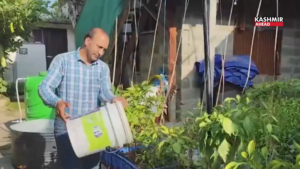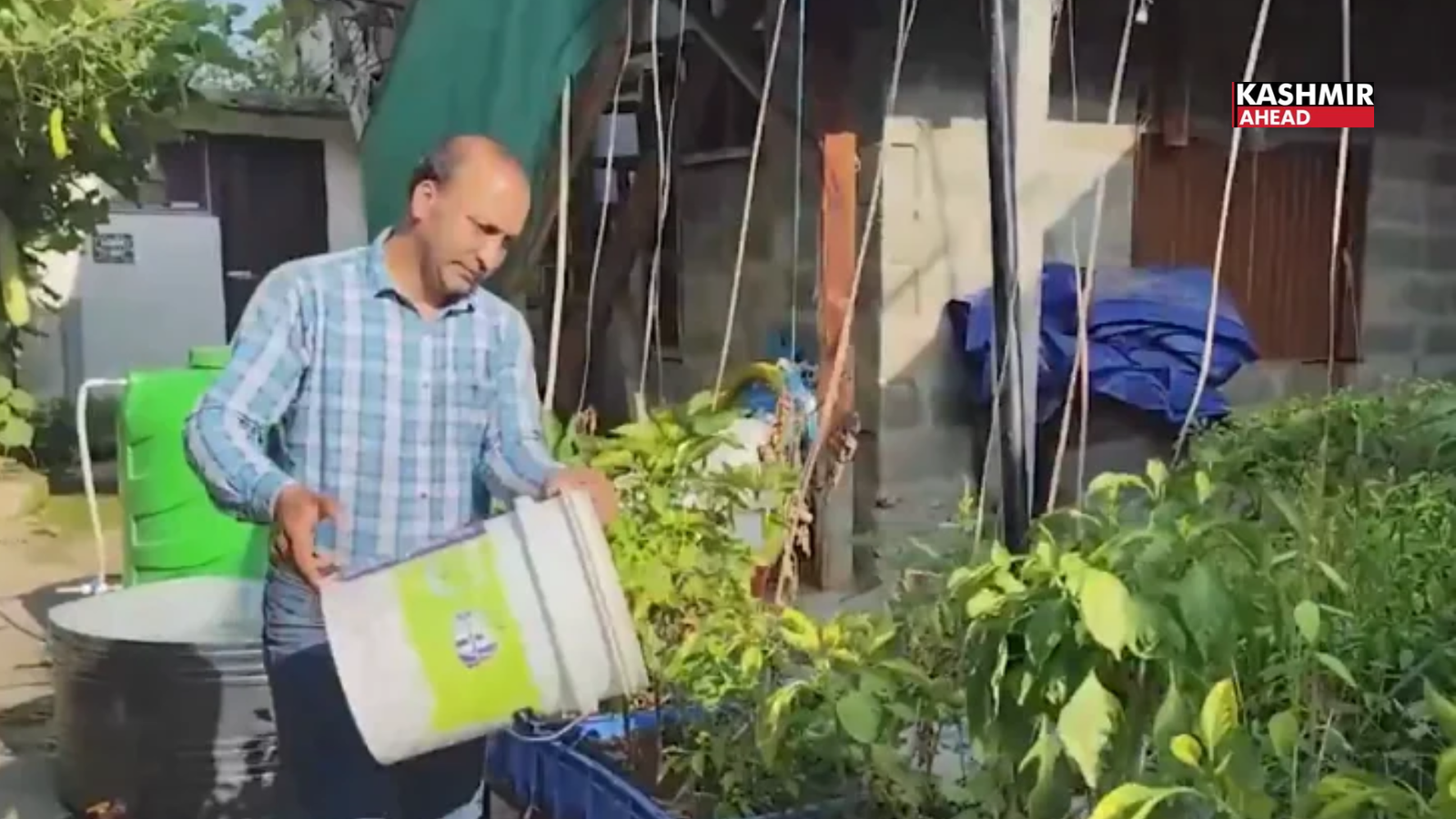
Through dedication, hard work and the effective utilisation of government schemes, Gauhar has transformed a small mushroom cultivation initiative into a growing agricultural enterprise, creating employment opportunities for others and encouraging local youth to explore modern farming practices.
Gauhar began his journey in mushroom cultivation in 2007 with just 70 trays in a small room at his home. What started as a modest effort gradually developed into a successful business. Today, he operates mushroom cultivation across more than 500 trays, marking a significant expansion from his initial setup.
His journey reflects how determination, practical knowledge and institutional support can help individuals build sustainable livelihoods through agriculture, even with limited resources.
Speaking about his journey, Gauhar Ali Lone said that government schemes and departmental assistance had played an important role in his progress. He acknowledged that various government initiatives provided him with the necessary support to expand his activities and strengthen his agricultural enterprise.
“I have benefited from many schemes. That is why I have progressed so much, having started this work in 2007. I started the Integrated Farming System right in my own home,” Gauhar said.
His experience highlights the importance of government support in promoting entrepreneurship and encouraging people to adopt innovative agricultural practices. Financial assistance, technical guidance and awareness about available schemes can help farmers and aspiring entrepreneurs overcome initial challenges and expand their businesses.
Apart from mushroom cultivation, Gauhar has also ventured into an Integrated Farming System, an approach that combines different agricultural and allied activities to make better use of available resources. Such farming models help diversify income sources, improve productivity and reduce dependence on a single agricultural activity.
Integrated farming is increasingly gaining importance in Jammu and Kashmir, where climatic conditions and available agricultural resources offer opportunities for multiple farming activities. By combining different components of agriculture, farmers can improve resource utilisation and create additional income opportunities.
Gauhar’s initiative has also contributed to employment generation, demonstrating how small agricultural enterprises can develop into livelihood opportunities for other people. His work offers encouragement to unemployed youth, particularly those living in rural areas, to consider agriculture as a viable business rather than limiting themselves to conventional employment options.
Mushroom cultivation, in particular, has considerable potential in Kashmir due to growing market demand and opportunities for small-scale production. It can be undertaken with comparatively limited space, making it an attractive option for individuals interested in starting their own ventures.
His success story also underlines the importance of agricultural awareness, skill development and access to government welfare schemes in strengthening the rural economy.
From starting with only 70 trays in a small room to managing more than 500 trays, Gauhar Ali Lone has demonstrated that consistent efforts and the right support can turn a small initiative into a sustainable enterprise.
Today, the ‘Mushroom Man’ of Tangmarg stands as an example of agricultural entrepreneurship in Jammu and Kashmir, inspiring others to explore modern farming techniques, become self-reliant and contribute to employment generation in their communities.