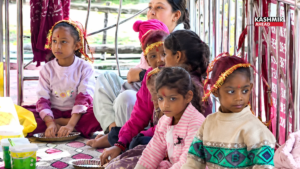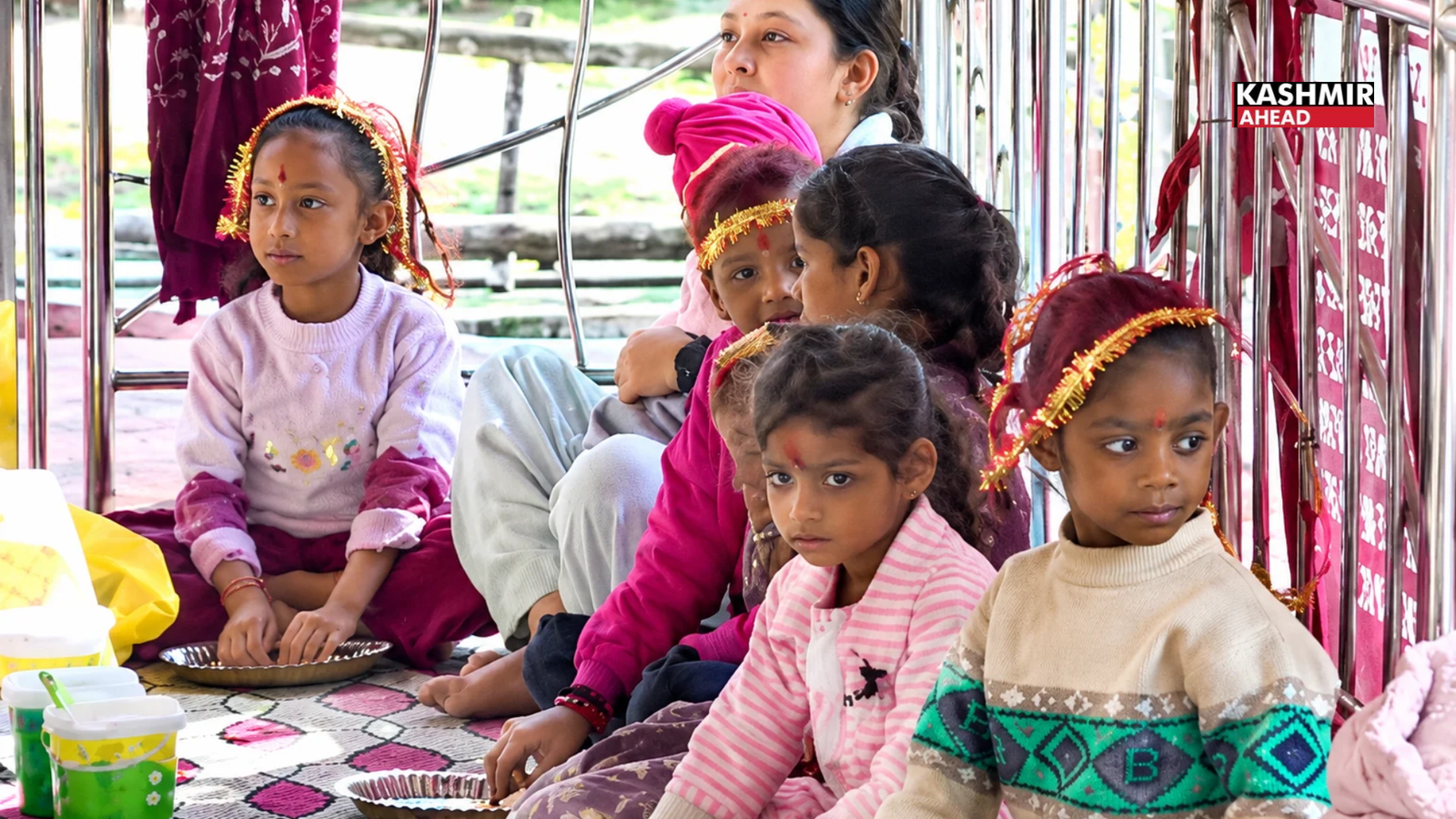
Kashmir , October 19,2026-Bells, bhajans and the scent of havan smoke filled the Durga Nag temple in Srinagar as devotees marked Durga Ashtami, the eighth day of Navratri. The shrine, set near Dalgate in the heart of the city, is one of the valley’s most cherished places of worship for the Kashmiri Pandit community, and the festival brought it to life once again.
An old shrine with a living tradition
Durga Nag is widely believed to be more than seven centuries old. Its name points to a sacred spring, or nag, a feature common to many of Kashmir’s ancient shrines, where reverence for water and reverence for the goddess have long gone together. A Shiv Lingam was installed on the premises in 2013, adding another layer to a site that has grown with the community’s devotion.
For centuries the temple also had a practical role. Pilgrims heading up to the Shankaracharya temple above the city used it as a base camp, resting and praying here before the climb. That sense of the shrine as a meeting point has survived. Each Navratri, families arrive to offer flowers, light lamps and seek blessings, while the temple’s trust arranges the rituals that give the days their structure.
Why Ashtami stands apart
Of Navratri’s nine nights, Ashtami is considered among the most powerful. It commemorates the goddess’s victory over the forces of darkness, and devotees treat it as a day to ask for courage, protection and clarity of purpose. Many fast until the evening rituals are complete. In parts of northern India the day is also marked by honouring young girls with food and gifts, while in Kashmir the havan takes centre stage.
At Durga Nag, the havan is an annual fixture. Offerings are made into a sacred fire while priests chant and devotees sing hymns to Mata Durga. Prayers are said not only for families but for the peace of Kashmir, the country and the world, a wider hope that has long been part of the temple’s observances.
More than a ceremony
For Kashmiri Pandits, most of whom left the valley in the early 1990s, a festival at a temple in Srinagar is rarely only a religious event. It is also a reunion. Elders return to places of memory, children learn customs they might otherwise know only from stories, and the community renews its bond with the land that shaped its culture. The temple becomes a bridge between a displaced past and a hopeful future.
The setting carries a quieter message as well. The shrine is kept running with the help of people from different faiths, and its trustees have often described it as an example of the coexistence Kashmir takes pride in. In a region too often described only through conflict, this picture of shared effort and mutual respect deserves attention.
Looking ahead
Occasions like Ashtami raise practical questions alongside spiritual ones. Heritage shrines need steady care, from structural upkeep to keeping the spring and its surroundings clean. Visiting devotees need safe, comfortable access, especially on crowded festival days. And younger members of the community need reasons and opportunities to stay connected to the tradition, whether they live in the valley or far from it.
Those who gathered at Durga Nag would probably say the answer begins with the simple act of showing up, year after year. As Navratri draws to a close and Dussehra approaches, the temple has again done what it has done for centuries: offered a place where faith, memory and hope for peace come together.