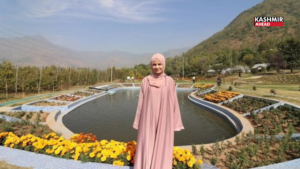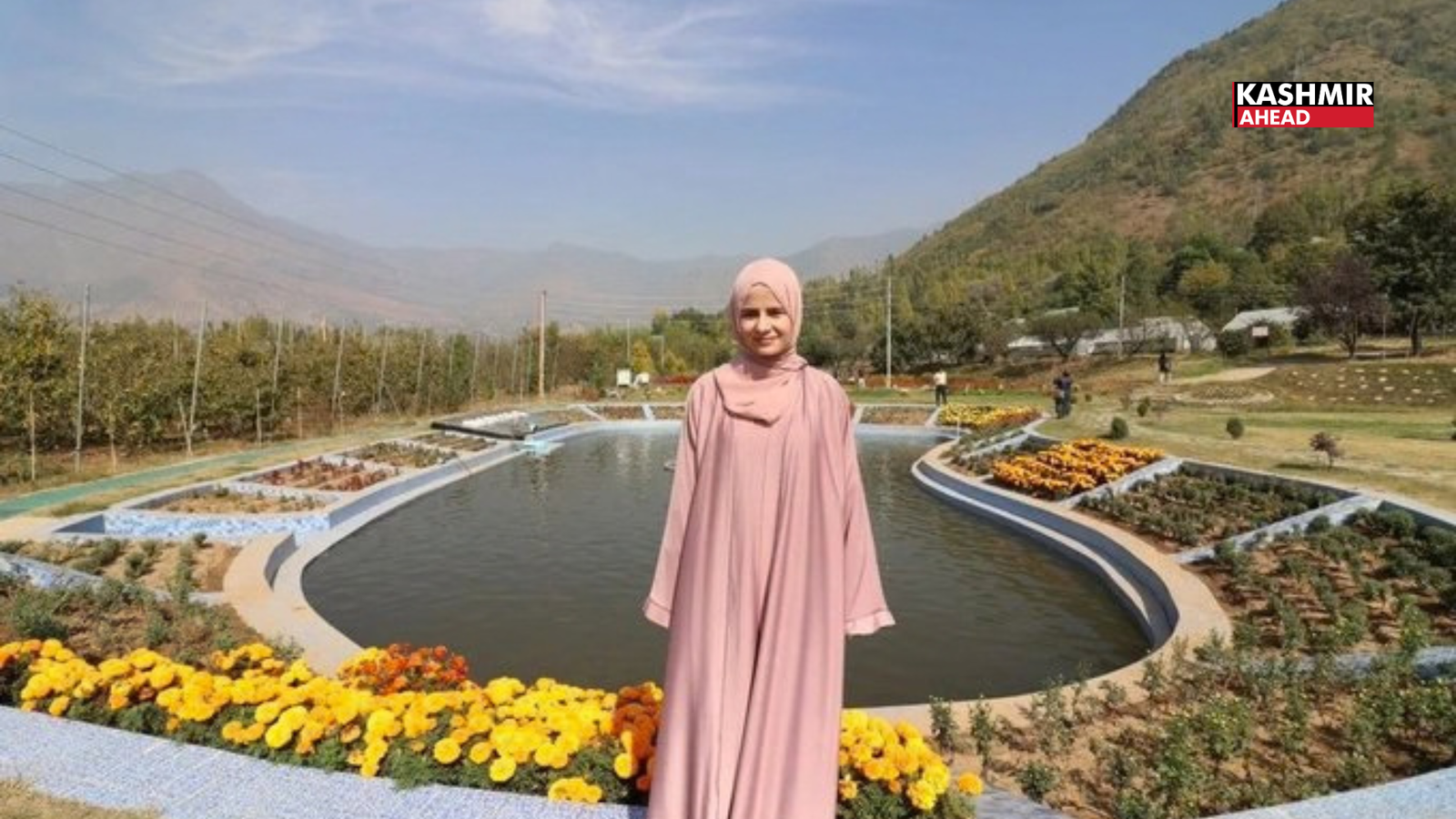
Kashmir, October 6,2026-A student of the Sher-e-Kashmir University of Agricultural Sciences and Technology of Kashmir (SKUAST-K), Jaan Arbina Rouf, has developed and propagated 19 varieties of chrysanthemum, adding new colour to the Valley beyond its famous tulip season. She has planted around 1.5 lakh planting materials, with an estimated return of ₹11 lakh in just two months.
Kashmir is best known for its spring tulips, saffron fields and summer orchards. Autumn, by contrast, is usually seen as a quiet season. Chrysanthemums, which thrive in cooler weather and flower as temperatures fall, can change that. By working with 19 varieties, Jaan Arbina Rouf has shown that autumn can be a season of bloom, with a wide range of shades, shapes and sizes in the fields.
Propagation is the heart of the work. Chrysanthemums are commonly multiplied through cuttings and suckers, which produce plants that are true to the parent variety. Raising around 1.5 lakh planting materials points to a well-organised, large-scale operation rather than a small experiment. Such material can be supplied to nurseries, growers and landscaping projects, giving other farmers an easy way to enter the sector.
The financial result is striking. An estimated return of ₹11 lakh in two months is a strong figure for a young entrepreneur, and it suggests that floriculture can be a rewarding option when quality planting material is produced at scale. Since the figure is an estimate, the final returns will depend on sales and market conditions, but the early numbers are encouraging.
The story also reflects the role of institutions like SKUAST-K. Agricultural universities do more than teach. They give students access to research, technical guidance and a practical environment in which ideas can be tested. When a student turns that learning into a working enterprise, it shows how education can lead directly to employment and income.
For Kashmir, the benefits could reach well beyond one individual. Floriculture is a growing field in the region, with rising demand for cut flowers, potted plants and garden material for weddings, festivals, hotels and public spaces. Chrysanthemums are popular in many parts of India, particularly around the autumn and winter festive season, and local production can reduce dependence on flowers brought in from outside the Valley.
A wider chrysanthemum industry could also help tourism. Visitors who come for tulips in spring might return in autumn for flower displays in gardens, parks and nurseries. This would help spread tourist activity more evenly across the year and give local businesses another reason to welcome visitors outside the traditional peak months.
There are opportunities for young people too. Many graduates in agriculture and allied sciences look for ways to build careers close to home. Floriculture requires relatively modest land compared with many crops and can deliver good returns per unit area, making it attractive for small landholders and first-time entrepreneurs. Jaan Arbina Rouf’s example shows that a combination of scientific knowledge, hard work and market awareness can open real possibilities.
Challenges remain, including access to markets, cold storage and transport, and the need for training in post-harvest handling. Support from government schemes, universities and private partners could help new growers overcome these hurdles.
Even so, this is an encouraging story. It blends innovation, floriculture and entrepreneurship, and it adds a new chapter to Kashmir’s reputation as a land of flowers. As the chrysanthemums come into bloom this autumn, they carry a message that the Valley’s colours need not end with the tulip season.