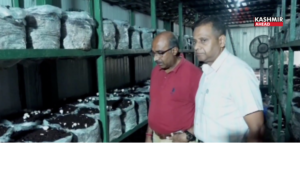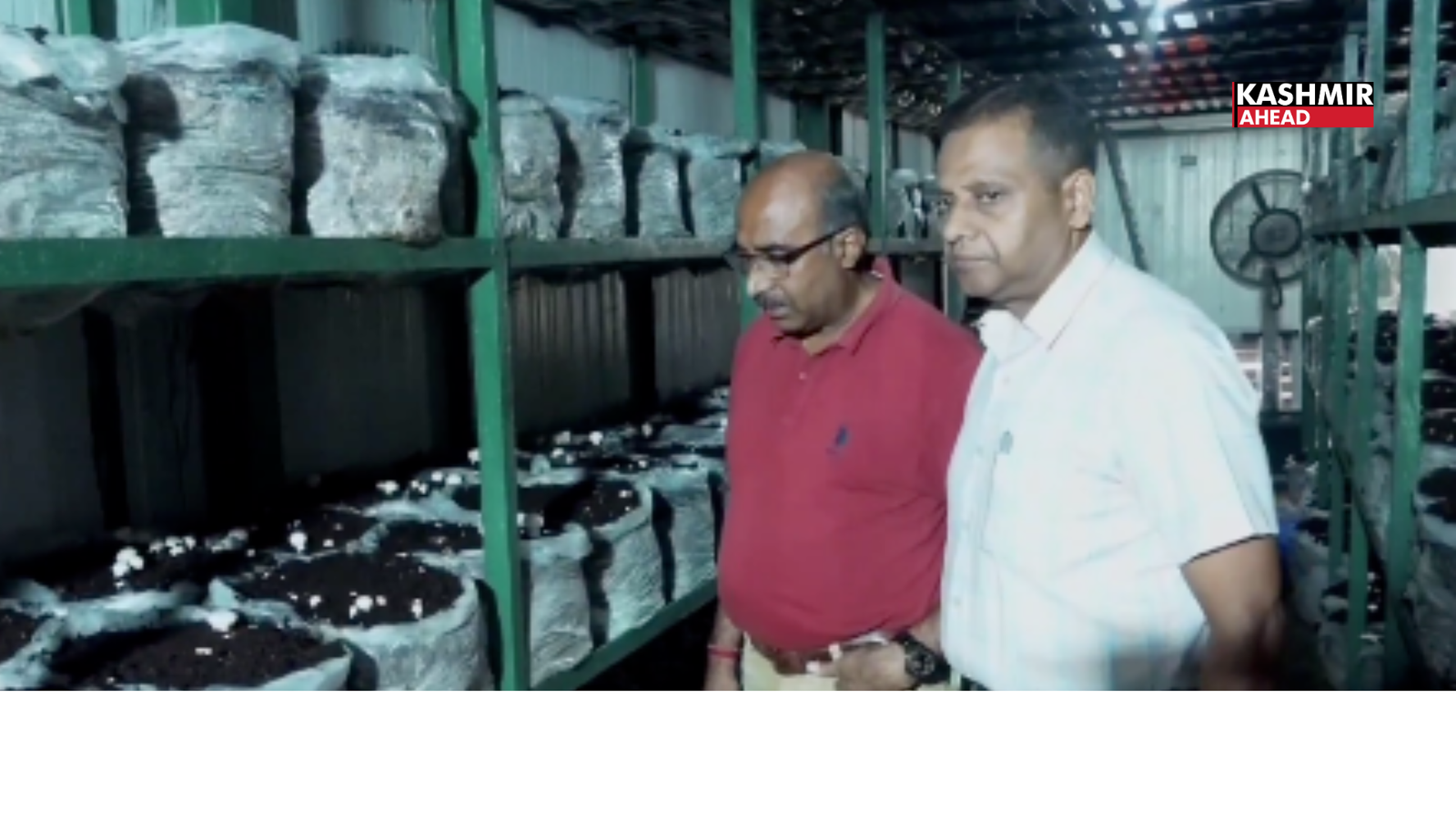
Jammu, October 5,2026–The Agriculture Office at Talab Tillo in Jammu held a two-day mushroom cultivation training in Jammu, drawing between 50 and 60 farmers. The programme aimed to equip growers with the knowledge needed to begin mushroom farming this season, create self-employment and raise their incomes.
Mushroom Development Officer Arun Gupta said most farmers in Jammu and Kashmir have small landholdings and earn limited income from paddy, wheat and vegetables. Against this backdrop, he said, farmers need additional sources of earning, and mushroom farming offers one such option.
Small landholdings are a common challenge for farmers across the Union Territory. With limited land, income from conventional crops often remains modest, and many families look for ways to supplement their earnings without leaving their villages. Mushroom farming is widely regarded as well suited to such conditions. It does not depend on large tracts of land and can be taken up in a modest indoor space, which makes it accessible to small and marginal farmers. As a result, it is often promoted as a way to diversify income without major changes to existing farm activity.
The two-day programme covered the main aspects of mushroom cultivation, including how to grow the crop, how to care for it and the benefits it offers. This kind of practical orientation helps farmers understand the process from the beginning and gives them the confidence to start on their own. Participants were encouraged to begin cultivation this season so that they can benefit at the earliest. Training of this kind also gives farmers a chance to interact directly with departmental officials, ask questions and clarify doubts before investing time and money.
One of the central aims of the programme is to promote self-employment. Mushroom farming can be started on a small scale and expanded gradually as experience and income grow. This makes it attractive not only for farmers but also for members of farm families, including women and young people, who are looking for productive work close to home. Moreover, a steady supplementary income can help households meet everyday expenses and reduce dependence on a single crop cycle. Therefore, skill-based training of this kind is seen as a useful step towards building rural livelihoods.
Programmes like this reflect the department’s effort to take technical knowledge directly to farmers. By organising training at the local level, officials make it easier for growers to learn new practices and adopt them in their own surroundings. The turnout of 50 to 60 farmers shows that there is real interest among growers in options that can improve their earnings. It also shows that farmers are willing to look beyond traditional crops when they are given clear guidance and practical information.
Observers note that the success of such initiatives depends on follow-up support. Guidance after training, access to quality inputs and help with marketing can make the difference between learning a skill and turning it into a dependable source of income. Farmers who are new to mushroom farming may also benefit from continued contact with departmental experts, who can help them solve problems as they arise. Sharing experience among growers can further strengthen the effort, as those who start early can guide others in their community.
If participants put their training into practice this season, mushroom farming could become a regular source of income for many households in the region. Even small units, if managed well, can add to family earnings and create work for those who might otherwise have limited options.
As farmers look beyond paddy, wheat and vegetables for additional income, such programmes offer a practical way forward. With proper guidance and sustained support, mushroom cultivation training in Jammu can help raise incomes, create self-employment and strengthen the rural economy of Jammu and Kashmir.