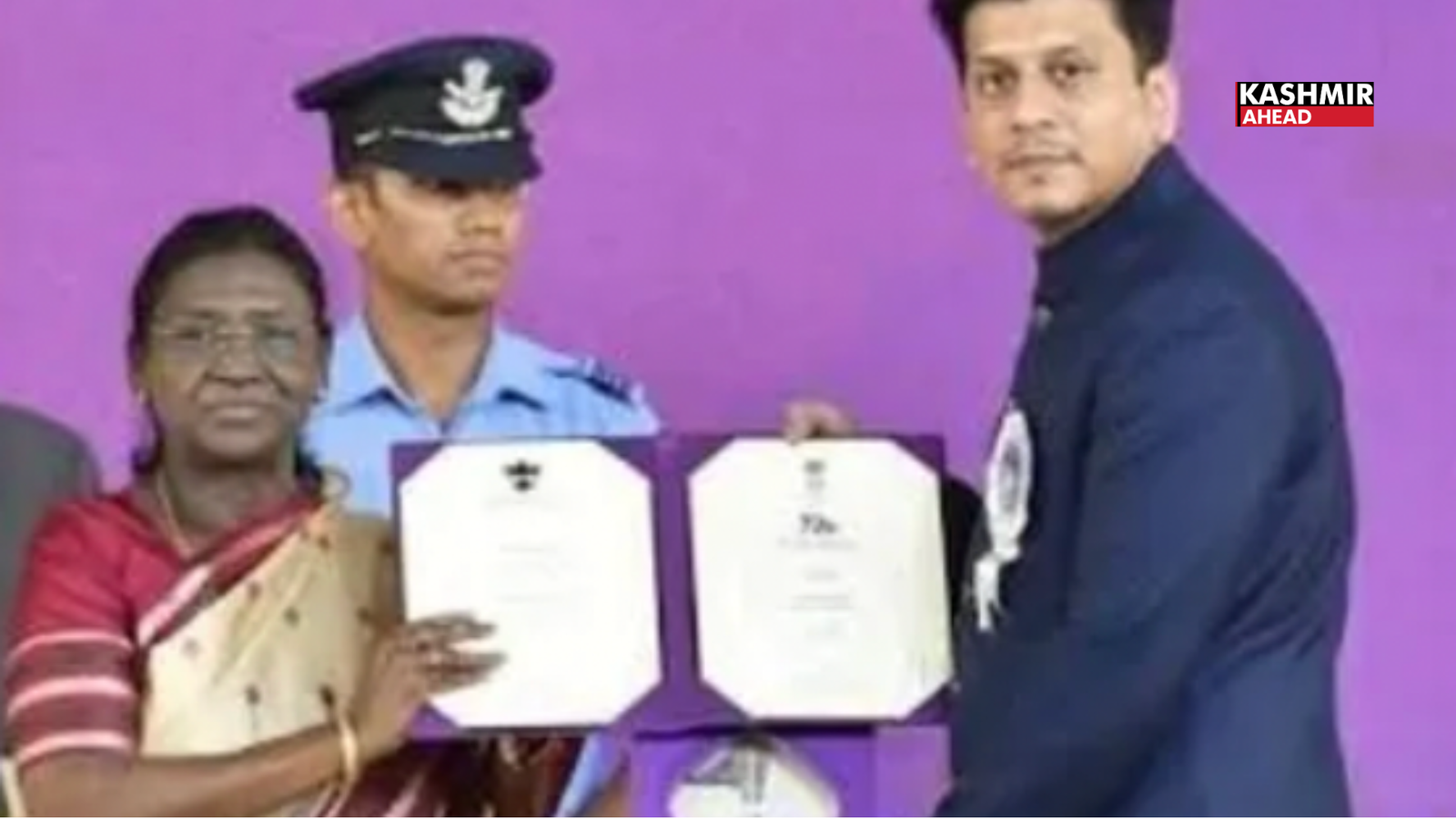
Srinagar, September 23,2026-In a moment of immense pride for Kashmir’s storytelling tradition, filmmaker Faraz Ali’s short film “Obur” has clinched the Best Script Award at the prestigious 72nd National Film Awards, bringing national recognition to a story rooted deeply in the valley’s landscape, language, and lived experience.
Shot across the picturesque meadows of Doodhpathri and the historic city of Srinagar, “Obur” is a bilingual production blending Hindi and Kashmiri, reflecting the layered cultural identity of the region. The film’s recognition at India’s highest cinematic honor marks a significant milestone not just for its creative team, but for the broader landscape of regional and independent filmmaking emerging from Kashmir.
The National Film Awards, instituted by the Government of India and among the oldest and most respected film honors in the country, recognize excellence across categories including direction, acting, screenplay, cinematography, and regional cinema. A win in the Best Script category is particularly significant, as it honors the strength of storytelling and narrative craft — the very foundation upon which any successful film is built.
For “Obur,” this recognition validates years of effort by Faraz Ali and his team to tell a story that is authentically Kashmiri in its setting, sensibility, and soul, while making it accessible to a wider Hindi-speaking audience. The choice to film in Doodhpathri — a serene, high-altitude meadow often dubbed the “Switzerland of Kashmir” — and in Srinagar, the region’s cultural and historical heart, lends the film a visual authenticity that mirrors its narrative depth.
Details of the film’s plot remain closely tied to themes that resonate with Kashmiri life, though the makers have largely let the film’s craftsmanship speak through its recognition rather than extensive promotional messaging. What is clear, however, is that “Obur” joins a growing list of films that are helping reshape perceptions of Kashmir in Indian cinema — moving away from narratives solely defined by conflict, and instead spotlighting the region’s culture, language, landscapes, and human stories.
This win arrives at a time when regional cinema across India is receiving greater institutional support and audience appreciation, with National Film Award recognitions increasingly going to stories that showcase India’s linguistic and cultural diversity. For Kashmir specifically, a region whose cinematic voice has historically been underrepresented on national platforms, “Obur’s” success serves as an encouraging signal for emerging filmmakers, writers, and technicians from the valley who aspire to tell their own stories.
Industry observers note that awards like this often catalyze further opportunities — encouraging investment in regional productions, opening doors for young talent, and inspiring a new generation of Kashmiri storytellers to pursue filmmaking as a serious creative and professional pursuit. The recognition of “Obur” could well serve as a stepping stone for more Hindi-Kashmiri collaborative projects that bridge linguistic and cultural narratives while staying true to their regional roots.
For residents of Doodhpathri and Srinagar, the news carries an added layer of local pride, as their landscapes and city now stand associated with a nationally awarded piece of cinema. It reinforces the idea that Kashmir’s mountains, meadows, and streets are not just backdrops, but active participants in stories waiting to be told.
As “Obur” continues to receive attention following its National Film Award win, it stands as a testament to the power of regional storytelling — proving that stories rooted in a specific place and language can resonate on the biggest stages, carrying with them the culture, texture, and spirit of the land they come from.