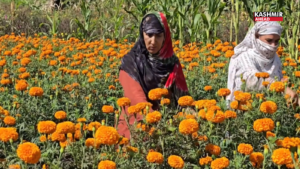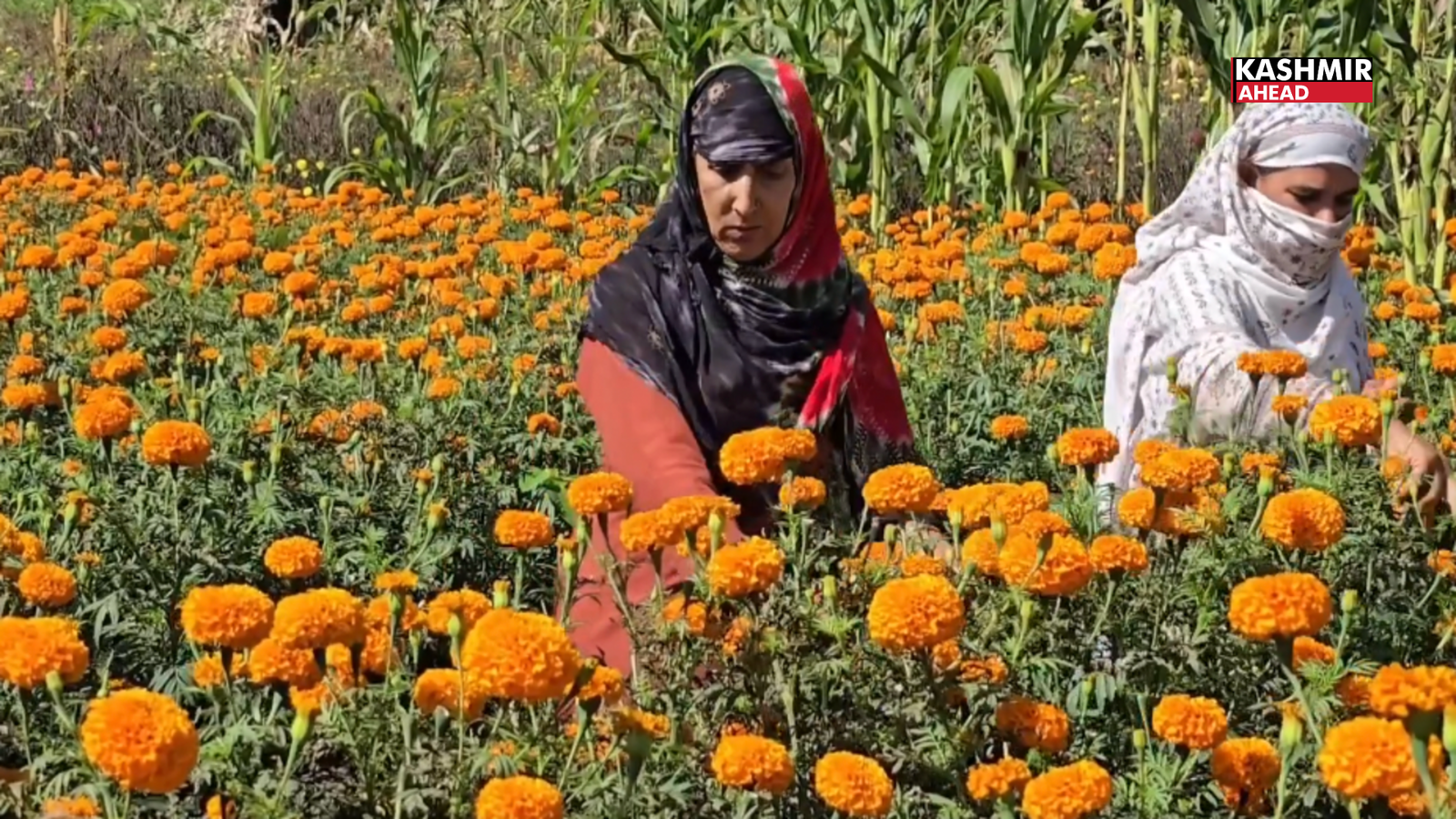
Bhaderwah, September 23,2026- In the hilly terrain of Bhaderwah, a quiet agricultural revolution has taken root. Gajoth village, once known for its paddy and maize fields, has transformed into what locals now proudly call the “Marigold Capital” of Jammu and Kashmir, as floriculture reshapes the region’s rural economy.
At the heart of this transformation is farmer Rafaqat Hussain Sheikh, whose decision in 2010 to abandon traditional crops in favor of marigold cultivation has become a template for agricultural success in the Chenab Valley region. What began as an experiment has grown into a full-fledged enterprise, with Sheikh now cultivating marigolds across 30 kanals of land and earning an annual income of ₹4–5 lakh — a figure that far exceeds what conventional paddy and maize farming typically yielded in the area.
Sheikh’s pivot away from staple crops reflects a broader recognition among Bhaderwah’s farming community that traditional agriculture, while culturally entrenched, was no longer delivering the returns needed to sustain rural households. Marigold, valued for its use in religious ceremonies, festivals, weddings, and decorative garlands, offers a much higher per-acre return than food grains, particularly given the steady demand from markets across Jammu and neighboring regions.
The ripple effect of Sheikh’s success has been substantial. Inspired by his earnings and the relatively low input costs associated with flower farming, an estimated 400 to 500 farmers in and around Gajoth have since adopted marigold cultivation. What was once a marginal crop grown in small kitchen gardens has now become one of the dominant agricultural activities in the area, altering the visual and economic landscape of the village.
Floriculture’s rise in Gajoth is part of a larger pattern being observed across Jammu and Kashmir, where farmers are increasingly diversifying into horticulture, floriculture, and cash crops to escape the low margins of traditional farming. Marigold cultivation, in particular, has proven attractive because of its relatively short growing cycle, minimal dependence on expensive inputs, and consistent market demand, especially during festival seasons when prices for flowers spike considerably.
Local agricultural officials note that the shift also carries indirect benefits for the region. Flower cultivation tends to require more manual labor than mechanized grain farming, creating seasonal employment opportunities for landless laborers and women in the village. Additionally, the compact nature of flower farming allows even small and marginal landholders to participate meaningfully, unlike some cash crops that require larger tracts of land to be profitable.
For a region like Bhaderwah, nestled in the Chenab Valley and historically reliant on subsistence farming, tourism, and seasonal migration for livelihood, the marigold boom represents a rare instance of homegrown economic innovation. It has also sparked conversations among local authorities and agricultural extension officers about the potential for formal support mechanisms — including cold storage facilities, market linkages, and processing units for flower-based products — that could further boost farmer incomes.
As more farmers in Gajoth and neighboring villages take note of Sheikh’s earnings, the marigold economy appears poised for continued expansion. What started as one farmer’s gamble to break away from conventional cropping patterns has, over more than a decade, blossomed into a defining feature of the local economy — turning fields that once produced grain into a vibrant carpet of orange and yellow blooms that now define Gajoth’s identity across the Union Territory.