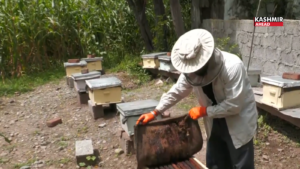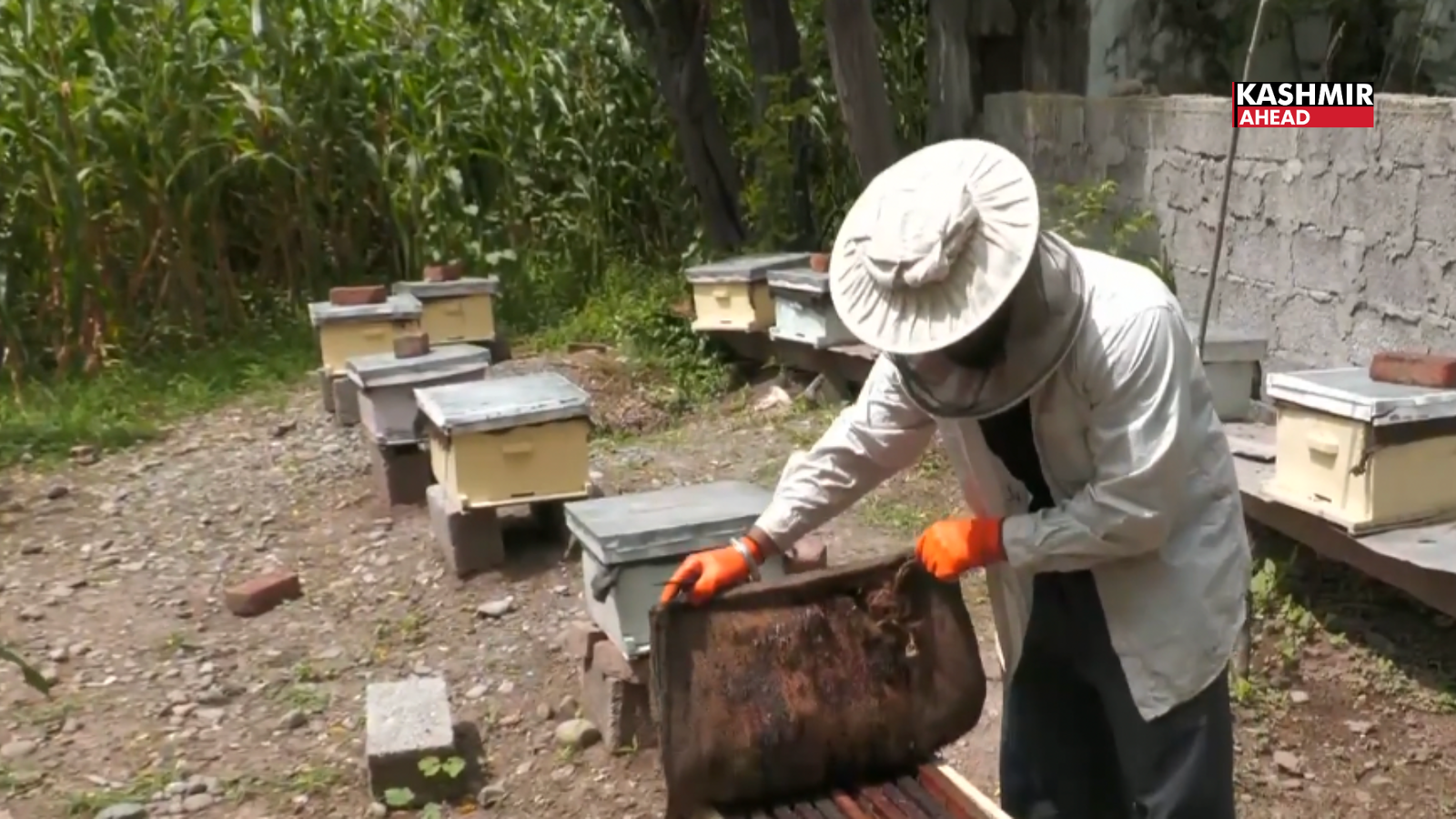
Poonch, September 23 ,2026- In the quiet village of Degwar, nestled in the hills of Poonch district, a local farmer has found an unexpected path to prosperity through organic honey production. Amarjeet Singh, who took up beekeeping with guidance from the Agriculture Department, has emerged as a shining example of how government-backed initiatives can transform traditional farming livelihoods in the region.
Singh’s journey into apiculture began after he learned about the opportunity through the Agriculture Department, which has been actively promoting beekeeping as a viable and profitable venture for farmers in Jammu & Kashmir. What started as an experiment on his farm has since grown into a thriving enterprise, producing pure organic honey that has drawn attention for both its quality and the success of the initiative.
Speaking about his experience, Amarjeet Singh expressed deep gratitude toward the department for introducing him to this opportunity. “I would like to thank the department; it was through their information that we learned about this and adopted it,” he said. He described the government scheme as a well-structured program designed to genuinely support farmers. “This is an excellent government scheme that includes provisions for subsidies and other benefits,” Singh noted, highlighting how financial assistance eased the initial burden of setting up the beekeeping operation.
Beyond the monetary support, Singh emphasized the sustained engagement he has received from department officials since starting the venture. “The department also visits us regularly to provide updates,” he said, pointing to the ongoing relationship between the farmers and the officials guiding them through the process. This consistent support system, he explained, has played a crucial role in ensuring the success of the project.
Reflecting on the outcomes, Singh admitted that the results exceeded his own expectations. “While we didn’t expect such a high level of success, the results have been outstanding,” he said. The honey produced on his farm has reportedly found strong demand, validating the department’s push toward organic beekeeping as an alternative income source for farmers in the hilly terrains of Poonch.
A key aspect of the program, according to Singh, is the technical oversight provided to safeguard the health of the bee colonies. “Department officials visit periodically to inspect the hives for any diseases,” he explained, underscoring the importance of expert monitoring in maintaining healthy hives and ensuring consistent honey yields. This proactive disease-management approach has helped prevent losses that might otherwise discourage farmers from continuing with the practice.
Encouraged by his own success, Singh has become an advocate for expanding organic honey production across the region. “I urge that this product be promoted, that its production be encouraged in our region, and that it be used as widely as possible,” he said, calling on authorities and fellow farmers alike to recognize the potential of beekeeping as a sustainable livelihood option.
Officials from the Agriculture Department have noted that such success stories serve as valuable case studies for encouraging wider adoption of beekeeping among farmers in Poonch and other districts of Jammu & Kashmir. The initiative aligns with broader efforts to diversify agricultural income sources, particularly in areas where traditional crop farming faces challenges due to terrain and climate.
With organic honey gaining popularity among health-conscious consumers, farmers like Amarjeet Singh are well-positioned to benefit from both the growing market demand and continued institutional support. His experience in Degwar village stands as a testament to what can be achieved when government schemes are effectively implemented and embraced by the farming community, offering a promising blueprint for rural economic development through apiculture in the region.